
Most transit damage to plated metal souvenirs is not caused by the journey itself but by the packaging decisions made before the container was sealed. Buyers who treat packaging as a line item on the purchase order rather than a technical specification lose the argument at the moment the container is opened. The practical answer is to name the packaging standard, the conditioning regime and the plating standard in the order document, then hold the arrival inspection to the same terms. No factory can guarantee a sea shipment, but a buyer can guarantee that the acceptance rules were written down before the goods left the dock.

What actually damages plated metal souvenirs in transit
A zinc alloy die casting does not corrode because it was cast badly. It corrodes because a protective coating system was applied to a surface that later spent weeks in a damp, salty, poorly ventilated space. Understanding the damage mechanism matters because it decides which packaging specification actually solves the problem, and which packaging merely makes the container look professional.
Zinc itself is not an inert material. The International Lead and Zinc Study Group describes it as “a moderately reactive metal that will combine with oxygen and other non-metals and will react with dilute acids to release hydrogen”. Its physical data are fixed and verifiable: atomic number 30, density 7140 kg/m3, melting point 420 degrees Celsius, boiling point 907 degrees Celsius. The same body notes that zinc’s effectiveness in protecting steel against corrosion by galvanising is well recognised, while its ability to die cast complicated components makes zinc indispensable in a multitude of industry and household products. Both facts matter here. The die casting is what makes the part look like a souvenir rather than a machined slug, and the corrosion behaviour of zinc is what your customer notices first when a keychain arrives with an orange bloom on it.
The decorative coating stack is what stands between that reactive base metal and sea air. A conventional bright decorative finish on a zinc die casting is a copper plus nickel plus chromium system, the coating family specified in BS EN ISO 1456:2009, and that standard also sets the corrosion test methods a buyer can write into a purchase order. Hexavalent chromium is being replaced by trivalent chromium for environmental reasons under the RoHS and End-of-Life Vehicle directives. This matters commercially because the plating specification, not the casting specification, determines whether the finish survives a damp container. A buyer who specifies only “gold plating” has specified nothing measurable.
Three damage mechanisms account for most arrival complaints on plated souvenir lines:
Condensation and salt carry-over
Condensation forms when a warm, humid air mass meets a cold surface, and it forms inside sealed containers every time the cargo moves from a daytime yard temperature into a chilled hold or into a refrigerated slot on the vessel. The liquid film that results carries dissolved salt from the container surfaces, and salt is hygroscopic, so it pulls moisture out of the surrounding air and keeps the surface wet long after the temperature has equalised. That is the mechanism behind the white or grey powdery deposit that buyers describe as white rust, and behind the spotting that appears on the plating rather than as pitting in the base metal.
Salt spray in the hold
A container that has carried cargo through a marine environment, or that has been stored on an open quay for a period, can present the load with a salt-laden atmosphere. Combined with the condensation film, this produces the electrolytic conditions under which a breach in the coating becomes a visible corrosion site. This is precisely why buyers who ship to coastal destinations and buyers who ship inland face different risk profiles with the same product and the same carton.
Mechanical damage that opens the coating
Dents, abrasion and crushing do not cause corrosion on their own, but they create the breach. A polished edge, a burr left at a trimmed gate, or a crushed corner that has pushed the plating into the base metal is an initiation site. Once the coating is breached, the same humidity and salt that would have been harmless to an intact surface now work on the exposed zinc. This is why the two failure types appear together in real claims, and why a packaging specification that handles only moisture but not impact will still deliver spotted goods.
The consequence for buyers is a timing problem. Corrosion damage that is visible at the container door was almost certainly initiated weeks earlier, in conditions that were never under any party’s direct control at the moment of opening. The arrival inspection can only establish what is present and how bad it is. Whether the supplier is responsible depends entirely on what the purchase order said about packaging, conditioning and acceptance, which is why the next sections deal with the documents rather than with the chemistry.

The standards that describe a shipping environment, and what they deliberately omit
When a buyer asks a factory to guarantee that goods will arrive undamaged, the honest answer is that no published standard describes sea freight in the way a buyer might expect. The standards that do exist fall into two groups: practices for testing shipping units against a distribution environment, and standards for conditioning a package before testing. Both are useful, and both are more useful when the buyer understands what they leave out.
ASTM D4169 is the reference most often named in this context. Its current published title is Standard Practice for Performance Testing of Shipping Containers and Systems, and it is developed by ASTM committee D10, subcommittee D10.21. The -22 edition carries DOI 10.1520/D4169-22, spans 17 pages and sits under ICS code 55.040. Buyers should note that the ASTM version selector shows D4169-23E01 as the active edition, while the D4169-22 page itself carries a standard historical banner last updated in February 2024. When a contract names D4169, the edition year needs to be stated.
Scope clause 1.1 gives the intent plainly: the practice “provides a uniform basis of evaluating, in a laboratory, the ability of shipping units to withstand the distribution environment”. The mechanism is a test plan built from a sequence of anticipated hazard elements encountered in various distribution cycles. Clause 1.2 points single parcel shipments to Practice D7386, and clause 1.3 records that the suitability of the practice for hazardous materials has not been determined. Clause 4.1 is the operational requirement that a buyer will care about most: the tests “should be performed sequentially on the same containers in the order given”, and where the practice is used as a performance test the shipping unit must remain unopened until the sequence of tests is complete. A test where the box is opened and reclosed between drop stages is not a D4169 performance test.
What the public page does not contain is as important as what it does. There is no temperature and humidity figure, no conditioning duration, no drop height, no distribution cycle table and no assurance level listing on the published page. Those sit inside the purchased document. Any buyer who writes a purchase order clause such as “packaging to withstand 48 hours at 90 percent relative humidity” has written a number that no buyer can verify against the standard, and any factory that accepts such a clause has accepted an obligation it cannot measure.
The ISO counterpart is ISO 4180:2019, Packaging — Complete, filled transport packages — General rules for the compilation of performance test schedules. It is the second edition, published in November 2019, 21 pages, prepared by ISO technical committee 122 subcommittee 3 under ICS 55.180.40. Its scope covers complete, filled transport packages intended for use within any distribution system except for the packages used for dangerous goods. Its structure is the part that matters commercially: distribution systems, then hazards, then tests including levels of intensity, then determination of criteria for acceptance, then two compilation cases. Case one assumes the distribution system is well defined and the intensity of hazards is known. Case two assumes the opposite and derives test schedules from the test specimen mass and the forecast destination.
The BSI publication of the same standard makes the individual test standards visible in its contents list, which is where a packaging requirement acquires its precision. Conditioning for the test is delegated to ISO 2233, low pressure testing to ISO 2873, horizontal impact to ISO 2244, vertical impact to ISO 2248, random vibration to ISO 13355, and stacking to ISO 2234 and ISO 12048. A purchase order that names ISO 4180 and the applicable test standards is therefore specifying a procedure that a competent packaging laboratory can execute and reproduce. That is the difference between a requirement and a wish.
ISO 2233:2000 is the conditioning standard at the centre of that list, Packaging — Complete, filled transport packages and unit loads — Conditioning for testing, fourth edition, published in March 2000, four pages, confirmed in 2022. Its role is to bring the test specimen to a defined temperature and humidity state before the hazard sequence begins, so that the result reflects the packaging rather than the state the package happened to arrive in. The specific temperature and humidity conditions sit inside the paid document, which is another reason the purchase order should cite the standard rather than attempt to paraphrase its table.
What ISTA simulates, and what it does not
The Institute of Safe Transport test procedures are the most widely referenced packaging test family in retail, and buyers routinely assume that one of them covers the sea leg. It does not. The ISTA test procedure library lists non-simulation 1-Series procedures, partial simulation 2-Series procedures, general simulation 3-Series procedures, the enhanced simulation 4AB project, member performance tests in the 6-Series, and development tests in the 7-Series. There is no marine or ocean test procedure in that list, and the library says so plainly.
What the 3-Series covers is worth knowing in detail, because the procedure closest to an international shipment is designed for a very different journey. ISTA 3A applies to individual packaged products weighing 70 kilograms, or 150 pounds, or less, prepared for shipment via a parcel delivery carrier. ISTA 3B covers less-than-truckload shipments. ISTA 3M covers packaged products for international direct import shipment, and its published description names the route precisely: from Asia-Pacific manufacturing sites to a U.S. Distribution Center or a retailer Fulfillment Center. That is the lane most metal souvenir consignments actually travel, but the emphasis is on the containerised leg and the subsequent domestic distribution, not on months of exposure in a hold.
The 3-Series procedures carry their own limitation, and a buyer who has it in front of the supplier is in a stronger position than one who does not. The 3A overview states that some conditions of transit, such as moisture, pressure or unusual handling, may not be covered. The same sentence appears in the 3B overview. Read carefully, it means that an ISTA 3A pass is evidence about handling and vibration performance, and not evidence about humidity exposure over an extended sea voyage.
The technical detail is specific enough to be useful in a specification. In ISTA 3A, a small package is one with a volume under 13,000 cubic centimetres, a longest dimension of 350 millimetres or less and a weight of 4.5 kilograms or less. A flat package has its shortest dimension at 200 millimetres or less and a next longest dimension four times or more the shortest. An elongated package has a longest dimension of 900 millimetres or more, with both other dimensions each 20 percent or less of the longest. Random vibration is run at overall Grms levels of 0.53 and 0.46, and the optional low pressure test draws the chamber down to 60 kPa for the truck and air combination or 70 kPa for a truck-only run, following the apparatus requirements of ISO 2873 or ASTM D6653. Temperature and humidity recorders follow ISO 2233 or ASTM D4332. Concentrated impact and bridge impact both use a hazard box dropped 400 millimetres, applied to flat and elongated packages respectively.
ISTA 4AB is the tool for a more serious route. It is a web-based application rather than a paper procedure, covering 12 different package types, 4 handling types and 7 types of load-carrying material or combination, with any hazard element assignable one of three intensities. It offers 17 vibration spectra, more than 50 handling tables, and a compression option that applies and holds force for 12 hours, with test force compensated for time, temperature, humidity and stacking pattern using data-based formulas. ISTA 7D handles the temperature dimension, but it is a development test only. Its own caution states that the cycle profiles are general simulations not intended to represent a worst case temperature exposure and that they are not based on current data-based research, and ISTA itself encourages the use of 7E in place of 7D. Its preconditioning requires at least 24 hours for the product and each package element, with equipment complying with the apparatus section of ASTM D3103.
The practical conclusion for a buyer is this. Where a sea leg exists, the package needs protection designed for sustained humidity and salt exposure, and that specification comes from the conditioning regime, the barrier material and the sealing method rather than from a drop test. Where the last mile matters, the ISTA procedure for that lane is the right reference, and 3M or 4AB are the procedures that map onto an Asia to United States container route. The two are complementary, and a good packaging specification names both.
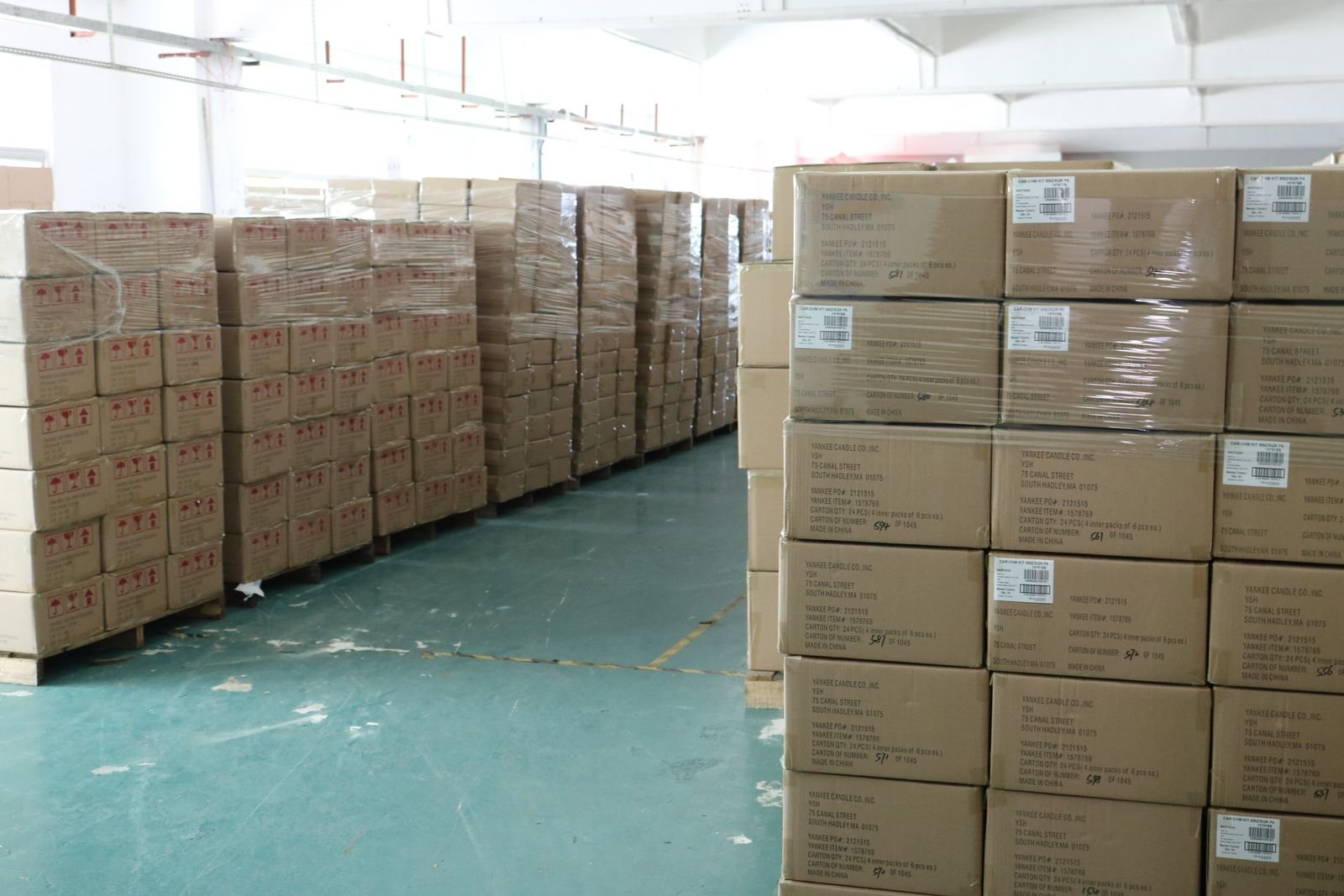
Choosing the packaging form for a sea shipment
The packaging decision for metal souvenirs is really a set of layered choices, and each layer answers a different failure mode. Buyers who specify only an outer carton have specified the weakest layer. The table below maps the common packaging forms against the specific risks they address and the reference that supports the specification.
| Packaging layer or form | Primary risk addressed | What to specify in writing | Reference for the requirement |
|---|---|---|---|
| Bare product, no barrier | None. Direct contact with container surfaces, moisture and salt | Not acceptable for plated surfaces on any sea or long-duration route | BS EN ISO 1456 covers the coating, not the transit |
| Individual bag, general poly | Light abrasion and handling contact | Bag material, thickness and seal method; note that general poly is a weak moisture barrier | Supplier packing instruction; keep the reference on the purchase order |
| Vapour barrier bag with desiccant | Condensation and humidity contact with the coating | Barrier bag specified as vapour barrier, desiccant type and quantity per sealed unit | Conditioning regime in ISO 2233 for the test that evidences the choice |
| Anti-corrosion bag with vapour barrier inhibitor | Humidity plus the chemical film that promotes white rust | Bag specified as anti-corrosion type; state whether the inhibitor film is permitted on the surface finish | Corrosion protection standard for the coating system, ISO 1456 service conditions |
| Foam or moulded pulp insert, part separated | Impact, abrasion and surface marking on polished faces | Part separation, contact material and the faces deliberately kept apart | Impact elements from ISO 4180 via ISO 2244 and ISO 2248 |
| Rigid inner box or clamshell | Crushing and stack load in the container | Box board grade, stacking limit and the marked maximum stack | Stacking test in ISO 4180 via ISO 2234 and ISO 12048 |
| Outer export carton on a pallet | Handling, container lashing and movement | Carton strength, pallet specification, strapping and container load plan | Distribution cycle reference such as DC-18 in MIL-STD-2073-1 named in ASTM D4169 |
| Container-level moisture control | Condensation across the whole load | Container type, whether the load is dry stowed, liner and desiccant at container level | Written supplier instruction; the buyer owns this decision |
Two entries in that table deserve emphasis. The first is the anti-corrosion bag, which is the single most effective change most buyers can make, and the reason is chemical rather than mechanical. A vapour barrier keeps liquid water away from the coating. A vapour barrier with an inhibitor also neutralises the ionic species that convert a passive surface into an active corrosion cell. The one thing to confirm with the factory is whether the inhibitor film is acceptable on the finish you have specified, because certain protection chemistries can mark or haze a high-gloss surface. That is a question with a definite answer, and it belongs in the enquiry rather than in the claim.
The second is the container-level entry, which is the one most buyers leave entirely unaddressed. The factory’s responsibility generally ends at the container door of the port of origin. Container type, liner, dry stow and container-level desiccant are decisions made by the freight forwarder or the buyer, and if nobody writes them down, the default is whatever the forwarder does routinely. The goods arrive in the condition the route delivered, and the packing specification at the factory level cannot compensate for a wet hold.
Writing the packaging requirement into the purchase order
A packaging clause is only useful if it can be checked later by a party who was not present when it was agreed. That means three things in the text: the requirement, the reference standard with its edition year, and the acceptance consequence. The table below shows a structure that has held up in disputes.
| Clause element | What to state | Why it matters at arrival |
|---|---|---|
| Barrier specification | Vapour barrier bag, anti-corrosion type where the finish permits, individually sealed | Establishes that the product was isolated from container atmosphere |
| Desiccant | Type and quantity per sealed unit, placed to avoid contact with the polished surface | Allows the buyer to verify that desiccant was present and not exhausted |
| Part separation | No metal to metal contact between parts; faces not in contact kept apart | Makes surface marking attributable rather than disputable |
| Reference standards | Named standard with edition year, for example ISO 4180:2019 with the applicable test standards, and ASTM D4169 for the performance practice | Removes the argument about which severity and which conditioning regime applied |
| Environmental preconditioning | State the conditioning standard rather than a humidity number | Condensation risk is addressed by a defined preconditioning regime, not by an unsourced percentage |
| Shipping marks and labelling | Carton marks, item and carton counts, moisture or handling symbols applied to the carton | Gives the arrival inspector the carton level evidence to work from |
| Container condition | Container type, dry stow requirement, liner and container level desiccant | Separates factory responsibility from forwarder responsibility |
| Arrival inspection window | Timeframe from container opening for opening the cartons, and the evidence to be retained | Condensation evidence disappears quickly; photographs and readings taken at opening are the claim |
| Acceptance and remedy | Quantified acceptance criteria, the standard used to judge them and the remedy if the criteria are not met | Converts a dispute into a documented outcome |
Two drafting points are worth calling out. First, name the standard and its edition year, because a packaging requirement that cites a standard without a year is vulnerable to the argument that a later edition was intended. Second, separate the factory obligation from the forwarder obligation. If the buyer writes a single clause covering barrier bags, container stow and arrival acceptance, a claim will be argued as one indivisible failure even where the evidence points at only one layer.
The plating standard belongs in the same contract
A frequent and costly error is citing the wrong plating standard. ISO 4520 is often named in souvenir purchase orders as the decorative plating standard. It is not. BS EN ISO 1456:2009 is the standard that covers decorative nickel, nickel plus chromium, copper plus nickel and copper plus nickel plus chromium coatings, and its scope extends to iron, steel, zinc alloys, copper and copper alloys, and to aluminium and aluminium alloys, for the purpose of providing an attractive appearance and enhanced corrosion resistance. The same document also covers the requirements that matter when a claim is argued: corrosion resistance in CASS, Corrodkote and salt spray tests, step test requirements, ductility, stress relief heat treatments before coating, and hydrogen embrittlement relief treatment. It deliberately does not specify the surface condition required of the base metal prior to plating.
ISO 4520 itself, published in 1981 and confirmed in November 2021, is a different document entirely. It specifies requirements for chromate conversion coatings intended to give protection against corrosion, and excludes finishes given for particular colours only or for improving paint adhesion. Referring a decorative gold or rose gold souvenir order to ISO 4520 tells the plating supplier nothing usable, and it weakens any later argument about which corrosion performance was actually required.
One caution applies to every salt spray reference in this field, including ASTM B117-11. The standard covers the apparatus, the procedure and the conditions required to create and maintain a salt spray fog environment, and clause 1.2 states that it does not prescribe the type of test specimen or the exposure periods to be used for a specific product, nor the interpretation to be given to the results. Its significance section warns that prediction of performance in natural environments has seldom been correlated with salt spray results when used as stand alone data, and that correlation and extrapolation of corrosion performance based on exposure to the test environment provided by the practice are not always predictable. A salt spray pass is evidence about the coating. It is not evidence that the part will survive a container hold. Buyers who treat a salt spray certificate as transit proof are the ones most likely to be surprised.
Accepting or rejecting on arrival
The arrival inspection is the only point at which evidence can be collected, and it is time limited. Condensation forms as the cargo comes out of the hold, and any packaging opened later will show a drier interior than the packaging opened first. A sensible inspection therefore opens cartons in a fixed order across the container rather than in a convenient one, records the position of every carton inspected, photographs the packed state before opening it, and retains the packaging rather than discarding it. Where readings are taken, the same instrument and the same procedure are used throughout.
What the buyer is establishing is three separate things, and they carry different weight. The first is whether the goods conform to the ordered specification, which is a straightforward comparison against the purchase order. The second is whether the damage is consistent with the packaging and the route, which is a judgement that benefits enormously from written standards and photographs taken at opening. The third is what remedy applies, which follows from the acceptance criteria stated in the order rather than from the state of the goods at the moment they are found. Buyers who have written the criteria in advance can close a claim in days. Buyers who have not typically begin the conversation with their supplier on the day the container is opened, which is the worst possible moment to negotiate.
For a metal souvenir supplier producing zinc alloy die castings with electroplated finishes in the range gold, silver, rose gold, antique brass, antique silver, antique copper, black nickel and dual tone, the practical reality is that packaging is a production step with a defined cost and a defined lead time, not a free adjustment made after the goods are finished. At Kingtop, where the factory occupies 9,600 square metres with more than 200 staff and a daily capacity of 30,000 pieces, packing sits on the same line as inspection, with finished pieces foam wrapped and boxed before loading. Buyers who need a specific barrier bag, a specific desiccant regime or a specific container-level instruction should raise it at the sample stage. The sample lead time is 7 days and bulk production runs 15 to 20 days, with delivery by express, air or sea. Packaging changes are far cheaper at sample stage than after a container has been sealed. Shipping instructions for a specific route, and the resulting packaging cost, are quoted on request, and the factory can be contacted directly at sales@kingtopgift.com.
Buyers comparing packaging approaches alongside the metal itself should also review our guides to export wood packaging compliance for the regulatory side of the outer packaging layer, and to salt spray testing of metal finishes for what a coating test does and does not establish. Where packaging is only one variable in the purchase, our custom metal gift packaging overview sets out the options at product level, and our AQL quality inspection guide covers the sampling rules that determine how much of a consignment is inspected on arrival. If a consignment has already arrived and the question is now regulatory exposure rather than packaging design, our product recall and liability guide sets out the reporting obligations that can follow a defect finding.
Arrival acceptance decision table
The following table turns the article into a working document. Work down the left column for the observation made at container opening, find the matching condition in the middle column, and apply the acceptance decision in the right column. It is designed for the case where the purchase order carried the packaging clauses described above. Where those clauses are absent, the third column cannot be applied, and the outcome depends on what the parties can prove rather than on what the goods look like.
| Observation at container opening | Condition to check before deciding | Acceptance decision and evidence to retain |
|---|---|---|
| Carton dry to the touch, seals intact, no odour | Seal number matches the bill of lading; shipping marks match the purchase order; carton count matches the packing list | Open and inspect per the agreed sampling plan. Retain carton photographs and the inspection record |
| Visible moisture on outer carton surfaces or condensation on the container walls | Whether the container was dry stowed and whether container level desiccant and liner were specified and used | Record the condition of every carton on the layer affected before opening any of them. Photograph the container interior |
| Anti-corrosion bag shows a white or grey powdery deposit inside | Whether an anti-corrosion bag was specified, whether desiccant was present and whether the coating was intact | Treat as a coating integrity question against the specified plating standard. Retain the bag, the desiccant and a photograph of the affected surface |
| Orange or brown spotting confined to plated surfaces | Whether the surface shows pitting through the coating or discoloration above an intact coating | Compare against the plating specification and the salt spray requirement stated in the order. Refer for the coating failure analysis rather than shipping damage |
| Scuffing, flattening or dents on polished faces | Whether part separation and the contact material were specified; whether the carton shows crushing or impact damage | Assess against the mechanical elements of the referenced packaging standard. Retain photographs before and after unpacking |
| No visible issue at opening, but complaints follow within weeks of stocking | Whether the packaging provided a vapour barrier with desiccant, and what the conditioning regime was | Late complaints point to a packaging specification gap. Review the order terms before assigning causation |
| Product count, finish or decoration differs from the approved sample | Whether the approved sample and the production order were the same reference, and whether the sample was sealed and retained | Handle under the sample approval and conformity terms of the order, independently of transit |
| Labelling or shipping marks missing or wrong on arrival | Whether shipping marks and labelling were specified as a supplier obligation or a buyer obligation | Correct the marking at the earliest point and record the cost and delay separately from any transit claim |
The value of this table is not the decisions themselves. Each decision is unremarkable once the condition in the middle column has been established. The value is that it forces the middle column to be filled in, which means the arrival inspection has to be arranged before the container arrives rather than improvised once the damage is visible. Buyers who want to see how the coating and the specification work together on a real order can request a sample through our custom metal souvenir product range, where the same plating options and logo processes described above are available across badges, keychains, bottle openers and magnets.