
A metal souvenir of a famous landmark is not automatically a trade mark problem, and it is not automatically a copyright problem either. What decides the risk is whether your piece reproduces a protected name, a protected logo, a protected three-dimensional shape, or an identifiable artistic work, and whether you can show that you were cleared for the one you used. Buyers who order a die-cast Eiffel Tower for a gift shop, a metal Statue of Liberty for a museum store, or a bronze Burj Khalifa model for a corporate gift programme all run into the same three-part analysis. The registers are also filling up fast, so the question is no longer whether a conflict exists somewhere in the world, but whether you checked the right places before the tooling was cut. This guide lays out the three rights, the real filing numbers behind them, and a clearance routine you can complete before you place an order.
Landmark metal souvenirs sit in an unusual commercial position. The buyer is usually not reselling a branded product. They are buying an object that depicts a building, a monument or a city symbol for a tourist shop, an attraction gift counter, or a corporate gift programme. That distinction matters legally, because a licensed merchandise programme and an unlicensed souvenir line are treated very differently by brand owners, and because the most common enforcement route against an unlicensed item is not a trademark claim but a design claim.
There is also a practical point that should be settled before anything else. A factory executes artwork. It does not perform clearance searches, and it cannot give legal advice. When a client sends a vector file of a landmark and asks for a quote, the useful thing a manufacturer can do is state plainly which elements it can produce to specification, ask what documentation exists behind the artwork, and make sure the approval step is written into the purchase order. Everything below is built around that division of responsibility.
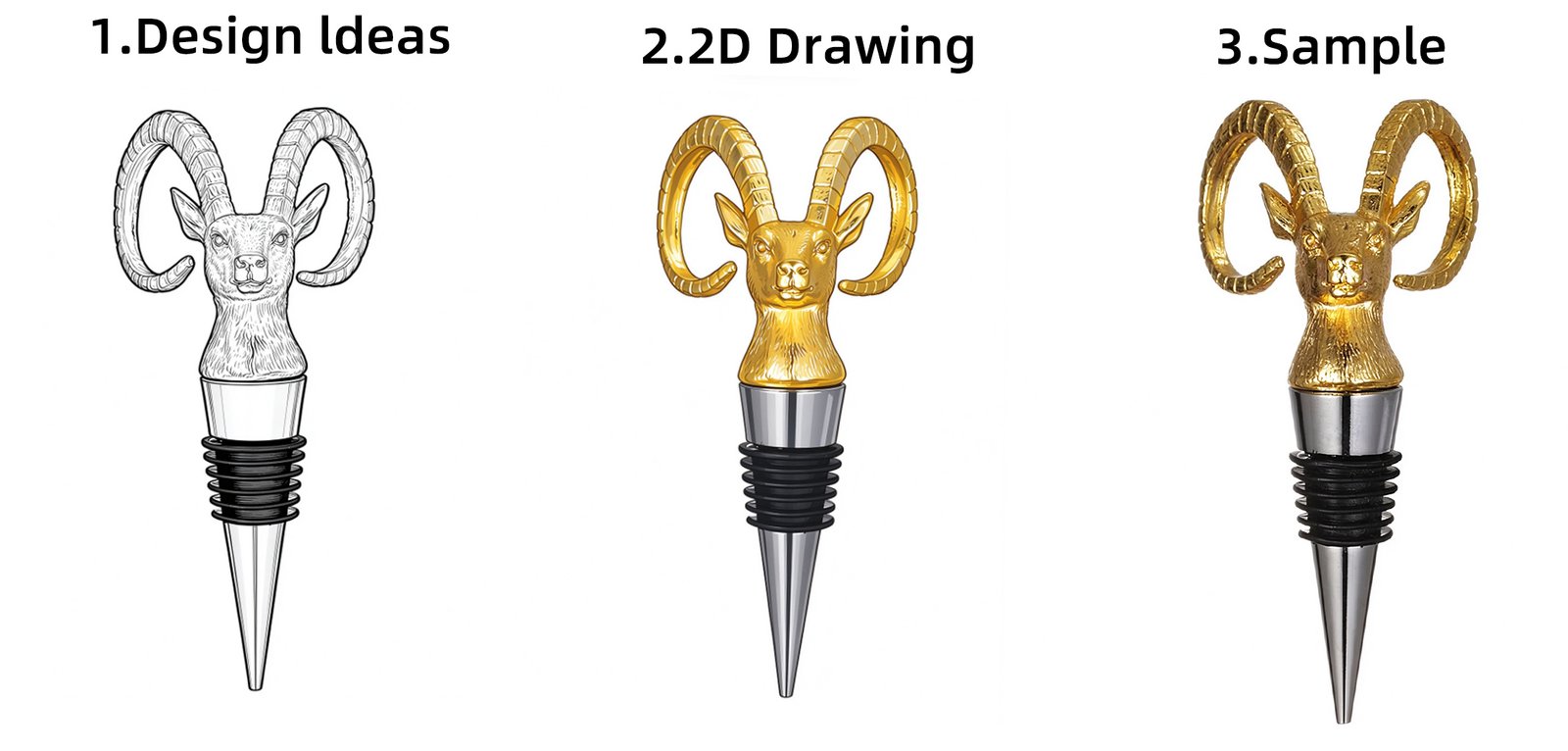
Three Separate Rights, Not One Permission
Buyers often ask whether a souvenir of a landmark is “licensed”. The term covers too much to be useful, because a single product can touch three rights that are registered in different offices, enforced by different bodies, and cleared through different searches.
Trademarks: the name, the logo, the wordmark
A trademark protects signs that identify the origin of goods. On a souvenir, this is typically the name of the city, the name of the attraction, the wordmark, or a logo stamped into the metal. A piece showing the outline of a building with no lettering may raise no trademark issue at all, while the same silhouette with the attraction’s name embossed across the base can sit directly on top of a registered mark. The distinction between the two is often just a graphic choice made by the designer, which is exactly why it has to be checked deliberately.
Designs: the shape of the object itself
Design rights protect the appearance of a product: its lines, contours, colours, shape, texture and materials, and after the 2025 reform also animation and transitions. This is the right that most often catches landmark souvenirs, because the landmark silhouette is precisely what a souvenir copies. A registered European Union design gives its holder the right to prevent third parties from making and selling products that produce the same overall impression on the informed user. An unregistered EU design protects against deliberate copying only, and for a shorter period.
Copyright: the underlying artistic work
Sculptures, monuments, paintings, photographs and drawings each carry their own copyright position, and they differ from one country to the next and from one work to another. Some landmark sculptures have been in the public domain for decades; others remain under copyright through a foundation, a municipality or an heir. Copyright is the hardest layer to research reliably because the chain of title is often not published anywhere searchable.
European Commission guidance on intellectual property protection makes the practical point directly: an unaffiliated company using someone else’s logo or distinctive shape for its own merchandising items should ask permission first, and promoting or selling counterfeit goods with commercial intent can in some cases constitute a criminal offence. That is the standard a buyer should be working to, before any question of contract damages arises.
The Registers Are Filling Up, and the Numbers Are Not Ambiguous
Two things have changed for souvenir buyers in the last few years. Filing volumes have grown sharply in the two largest markets that most tourist gift programmes sell into, and the legal framework protecting shapes was rewritten.
EUIPO received 327,735 new applications for EU trade marks and EU designs in 2025, its highest annual total since it began accepting filings in 1996, and 7.8% above 2024. That total broke the previous record of 313,928 applications set in 2021. Within it, EU trade mark applications reached 196,886, up 9.1% on the year, while EU design applications reached 130,849, up 6% and a record for the second consecutive year. The detail that matters for a manufacturer is who is filing. Chinese applicants accounted for close to 16% of all EUTM applications, growing 13.3% year on year, and they became the largest single source of EU design filings at 29.9% of the total, up 18.4%. The United States contributed 9% of EUTM filings and the United Kingdom 4.2%.
For design rights the shift is sharper still. In 2025, applications from outside the EU passed 50% of all EU design filings for the first time, reaching 52%.

The US picture is similar in direction. USPTO trademark application filings measured in classes stood at 672,691 for fiscal year 2026 through the third quarter, against 824,192 for the full fiscal year 2025 and 767,138 for fiscal year 2024. New registrations by class in fiscal year 2026 reached 596,230, ahead of 575,553 in fiscal year 2025 and 453,454 in fiscal year 2024.
| Register | Period | Volume | Change |
|---|---|---|---|
| EUIPO — EUTM and EU design, combined | 2025 full year | 327,735 applications | +7.8% on 2024 |
| EUIPO — EU trade marks (EUTM) | 2025 full year | 196,886 applications | +9.1% on 2024 |
| EUIPO — EU designs (EUD) | 2025 full year | 130,849 applications | +6% on 2024 |
| EUIPO — EUTM share from China | 2025 full year | Close to 16% of all EUTMs | +13.3% on 2024 |
| EUIPO — EUD share from China | 2025 full year | 29.9% of all EUDs | +18.4% on 2024 |
| EUIPO — non-EU share of EU design filings | 2025 full year | 52% of all EUDs | First year above half |
| USPTO — trademark application filings, by class | FY2026 to Q3 | 672,691 classes | FY2025 full year: 824,192 |
| USPTO — new registrations, by class | FY2026 to Q3 | 596,230 classes | FY2025 full year: 575,553 |
Read together, these figures describe a crowded field. The practical consequence for a souvenir programme is straightforward: an unregistered name or shape has a meaningful probability of colliding with something already on file in Europe or the United States, and the cost of finding out after tooling is far higher than the cost of searching before it.
Trademarks: When the Name on the Piece Is the Problem
Europe: one filing covers 27 member states
An EU trade mark is valid in all 27 EU Member States. It is valid for 10 years and can be renewed indefinitely for equal periods, so a mark filed now can in principle run for as long as the business behind it. Applications are handled centrally by EUIPO in Alicante, and an EU trade mark may be opposed by any third party during the opposition period, which means a conflict in one member state can put the whole filing at risk.
Search is done through EUIPO’s own tools and through TMview and DesignView, which are free and cover national registers across the Union. The Commission recommends running a prior-rights search before using a mark or a design commercially, and specifically flags the case of an unaffiliated company using a distinctive shape created by someone else for its own merchandise.
The United States: two filing bases, and a maintenance cycle
In the US, the base application fee is $350 for each class of goods or services covered. Filing on the use-in-commerce basis requires evidence that the mark is already in use in US interstate commerce; filing on the intent-to-use basis requires a bona fide intention to use and an allegation of use, with the associated fee, before the application can be approved. USPTO guidance describes the registration process as usually taking 12 to 18 months, and states that maintenance is not optional: every 10 years the owner must file a declaration of use or excusable nonuse together with a renewal application, at $325 plus $325, or $650 per class.
That maintenance cycle is worth noting for souvenir programmes. Many tourist gift lines are seasonal or run for a few years. A registration started in an expansion year can require renewal spending on a product line that has already been discontinued, which is one reason licensed merchandise agreements are often written on shorter terms than the underlying registration.
Free federal searching runs through the USPTO Trademark Search system, which replaced the older TESS interface and covers federal records alongside state and foreign data, with dedicated guidance on likelihood of confusion and on coordinated classes.
International coverage through the Madrid System
For a buyer selling across many countries, the Madrid System offers a single international application with one set of fees, currently covering 133 countries through 117 members of the Madrid Union. The basic fee is 653 Swiss francs, or 903 Swiss francs for a mark filed in colour, and further fees follow for each designated territory and class. Two conditions apply: the applicant must be a national of, or have a domicile or business in, one of the 117 members, and the applicant must already hold, or have applied for, a national or regional registration in a member’s office. Coverage in China does not extend to Hong Kong or Macao, and coverage in the United Kingdom extends to the Isle of Man, Gibraltar and the Falkland Islands, so the designation list is worth reading rather than assuming.
Designs: The Landmark Shape Is Usually the Actual Risk
Most landmark souvenir disputes are about appearance rather than marks. A bronze tower that copies the silhouette and detailing of a registered sculpture can infringe a registered design even if no name or logo appears anywhere on the piece.
What the 2025 EU reform changed
Regulation (EU) 2024/2822 was published in the Official Journal on 18 November 2024 and entered into force on 8 December 2024, with most provisions applying from 1 May 2025 and the remainder from 1 July 2026. The changes matter for a manufacturer in several concrete ways:
- Direct EUIPO filing only. EU design applications can no longer be filed through national intellectual property offices. All applications go to EUIPO, which simplifies the route but removes the local filing option some businesses had relied on.
- Multiple applications up to 50 designs. The unity-of-class requirement is abolished, so a souvenir manufacturer or brand can file up to 50 designs in one application, potentially covering a whole landmark range.
- Protection is limited to what is shown. Only the features visible in the application are protected, which reduces ambiguity for manufacturers reading a competitor’s registration.
- The Ⓓ symbol. The holder of a registered EU design may now mark the product with a D inside a circle, and the notice may include the registration number or a link to the Register. A brand that requires the symbol on licensed merchandise should say so explicitly in the agreement.
- 3D printing became infringement. Creating, downloading, copying, sharing or distributing any medium or software that records a protected design, where the purpose is to enable the manufacture of a product, is now an infringing act. This matters for a buyer who receives a 3D file of a landmark model from a third party rather than a tooled part from a factory.
- Counterfeits in transit. The holder of a registered EU design may act to stop infringing goods moving through the EU even when they are not intended for the EU market, so a shipment transiting or transhipped through a European port is no longer a grey area.
- Deferment and disclosure. The deferment period runs to 30 months, and the deferment fee must be paid at filing or the application is rejected. The 12-month grace period for disclosure by the design holder now extends to any design that does not produce a different overall impression, not only to identical reproductions.
The cultural heritage ground, and why landmarks are named explicitly
Article 13 of the recast Design Directive (EU) 2024/2823 adds two grounds that Member States may implement. Article 13(2) allows a member state to refuse a design that improperly uses badges, emblems and escutcheons of particular public interest in that state. Article 13(3) allows a member state to refuse a design that contains a total or partial reproduction of elements belonging to cultural heritage that are of national interest, with the corresponding invalidity ground in Article 14(2).
The recital that supports Article 13 spells out what those elements look like. Referring to the 1972 UNESCO Convention concerning the Protection of the World Cultural and Natural Heritage and, where they constitute a tangible manifestation of intangible cultural heritage, the 2003 UNESCO Convention for the Safeguarding of the Intangible Cultural Heritage, it lists as examples monuments or a group of buildings, artefacts, handicrafts or costumes. Member states have until 9 December 2027 to transpose the directive, and Directive 98/71/EC is repealed from that date.

This is the point at which the legal framework meets the tourist souvenir business directly. A member state that implements Article 13(3) can refuse or invalidate a design registration that reproduces elements of its national cultural heritage. A buyer ordering a run of municipal monuments for a gift shop, or a range built around a national emblem, is exposed to a set of national rules that differ from country to country and change on national transposition timetables. The practical answer is not to avoid the category, which would write off most of the market, but to treat the cultural heritage question as a country-by-country item in the clearance file.
Copyright: The Oldest Layer and the Hardest One to Research
Copyright sits underneath both of the others. Many landmark sculptures are older than the copyright term, so their underlying artistic work is in the public domain. Others are not. The problem for a buyer is that the two facts that decide the answer, the creation date and the current rights holder, are frequently not published in a form that a search engine can find, and the rights holder may be a foundation, a city authority or an heir rather than the entity that commissioned the work.
Three practical points follow from the European Commission’s own guidance. First, merchandising an unlicensed work is a different activity from creating it, and the guidance is explicit that permission should be sought. Second, the possibility that an infringement is a criminal offence changes the risk conversation for everyone upstream of the factory, including the buyer who ordered the goods. Third, because the guidance and the design rules both work on an “overall impression” and “distinctive shape” basis rather than a pixel-by-pixel comparison, a souvenir that is a close visual match to an existing artwork or a registered design is the risk case, while a stylised or generic treatment is a materially safer position.
A practical consequence for artwork preparation: a factory’s 3D modelling team works from a reference, and can model a stylised, non-identifying version of a subject if that is what the clearance file supports. What they cannot do is make a copy that is generic in the brief and specific in the output. That decision has to be made in writing before modelling starts.
What a Manufacturer Can and Cannot Do for You
It is worth being precise about the boundary, because the requests that cross it are common.
A metal gift manufacturer can check whether a design is manufacturable in the chosen material, flag the details that will not survive the process, produce a physical sample for approval, hold a tooling pattern against an approved sample, and supply the finished goods against a written specification. It can also ask for evidence behind the artwork before starting a tool, and build an approval gate into the purchase order so that the sample sign-off is a documented event rather than an email exchange.
A manufacturer cannot run a clearance search, cannot tell you whether a shape is protected in a particular country, and cannot tell you whether a logo is registered. Where a factory has a published process for this, it is normally expressed as a request for documentation rather than as a legal assurance: which entity authorised the artwork, where the artwork came from, and what the buyer is relying on. Some buyers can supply a licence agreement or a written authorisation from the rights holder; many cannot, which is precisely the point at which the decision to proceed becomes a commercial risk decision that the buyer takes and records.
Designing Around the Risk
When clearance is incomplete, the artwork itself is often the easiest place to fix the problem, and it is much cheaper to fix before tooling than after.
- Drop the wordmark, keep the silhouette. Many landmark attractions already license the shape freely while restricting the name. A silhouette without lettering is a materially different legal object from a souvenir carrying the attraction’s name in a stylised typeface.
- Choose a generic subject where you can. Ferries wheels, harbour cranes, market awnings, tram fronts and harbour buildings are recognisable without being replicas of a specific registered design. This is the safest and most scalable approach for a multi-city range.
- Stay away from national and municipal emblems. Article 13(2) of the new Design Directive is specifically about badges, emblems and escutcheons of particular public interest, and national flags, coats of arms and official crests are handled strictly in most jurisdictions. They are also the elements most likely to trigger a national refusal.
- Avoid the silhouette of a single protected sculpture. A recognisable figurative monument is the highest-risk shape category. A stylised abstract form inspired by the same theme is not the same legal object.
- Run the trademark check on the packaging as well. The same wordmark printed on a backing card or a gift box is the same use of the sign. Packaging is often where the wordmark ends up.
Running a Clearance Before You Order
The routine below assumes one working day of research per landmark and no legal advice. It is not a substitute for a clearance opinion, and on a large licensed merchandise programme it is not meant to be. It is a way of making sure that the questions have been asked and answered before money is committed.
Step 1: Identify the elements. List every protected element in the artwork separately: name, wordmark, logo, slogan, silhouette, sculpture, emblem, photograph, illustration, map, flag. Write each one down. Most real exposure in landmark programmes comes from an element nobody listed, usually the small text on a base plate.
Step 2: Search the trade mark registers. Search EUIPO and TMview for the EU, and the USPTO Trademark Search system for the United States, in the classes your products fall into. A souvenir gift item often sits in a class adjacent to the obvious one, so search neighbouring classes too and check the coordinated class guidance.
Step 3: Search the design registers. Search DesignView for the EU and the national registers you sell into. Look at the protected subject, not only the owner, because a landmark design is often filed by a merchandising company rather than by the attraction itself.
Step 4: Establish the copyright position for each sculptural or illustrated element. For any recognisable artwork, find out who commissioned it, when it was created, and who holds the rights now. Where this cannot be established, treat the element as protected.
Step 5: Check cultural heritage and emblem rules country by country. For each destination market, check whether the subject is a monument, group of buildings, artefact, handicraft, costume, badge, emblem or escutcheon of national interest, and whether the national implementation of Article 13 has entered into force.
Step 6: Choose the route. Either obtain a licence or written authorisation from the rights holder, redesign to a generic subject, or accept and record the risk in writing with a named owner. Deciding not to check is not one of the three options.
Step 7: Put the result in the purchase order. Record which elements were cleared, on what basis, by whom, and on what date. Attach the search evidence. Ask the manufacturer to make the sample sign-off conditional on the artwork matching the cleared version.
Acceptance Checklist
Print this, work down it, and keep it with the purchase order file. A row that cannot be ticked is a row that needs a decision, not a row that gets quietly dropped.
| Check | What good looks like | Status |
|---|---|---|
| All protected elements listed | Names, wordmarks, logos, silhouettes, sculptures, emblems and packaging text each named separately | ☐ |
| Trademark search completed | EUIPO/TMview and USPTO results saved with the search date | ☐ |
| Design search completed | DesignView and national register results saved, searched by subject as well as owner | ☐ |
| Copyright position established | Commissioning body, creation date and current rights holder identified for each sculptural or illustrated element | ☐ |
| Cultural heritage and emblems checked | Written check per destination market against national implementation of Article 13 and national emblem rules | ☐ |
| Licence or authorisation obtained | Signed agreement on file, or generic redesign confirmed | ☐ |
| Written artwork attached to the order | Final vector file and 3D file version-controlled, with the cleared reference identified | ☐ |
| Sample approval conditioned | Purchase order states the approved sample is the acceptance standard for colour, finish and dimensions | ☐ |
| Tooling held against approval | Pattern or reference retained and matched before production release | ☐ |
| Risk decision recorded | Where clearance was not obtained, the decision and its owner are named in writing | ☐ |
| IP warranty clause agreed | Supplier and buyer obligations on artwork ownership and infringement claims stated in the contract | ☐ |
On the manufacturing side, the sensible sequence at Kingtop is short: artwork review, a sample in the chosen material, your written approval, then production. Sampling from approved artwork takes 7 days and full production runs 15 to 20 days from approval, with tooling developed for fully custom die-cast work and existing moulds available from 100 pieces. Send the artwork and the clearance file together, and the team can quote from the same version of the same file that will go into production.
One caution. This article describes public registers and published legal texts to help you frame your own questions. It is not legal advice, it is not a clearance search for your specific product, and it does not create a lawyer-client relationship. For a licensed merchandise programme, a product that carries a third party’s name or a protected shape, or any launch into a new country where you have not cleared before, take advice from an intellectual property professional in that market before you order.
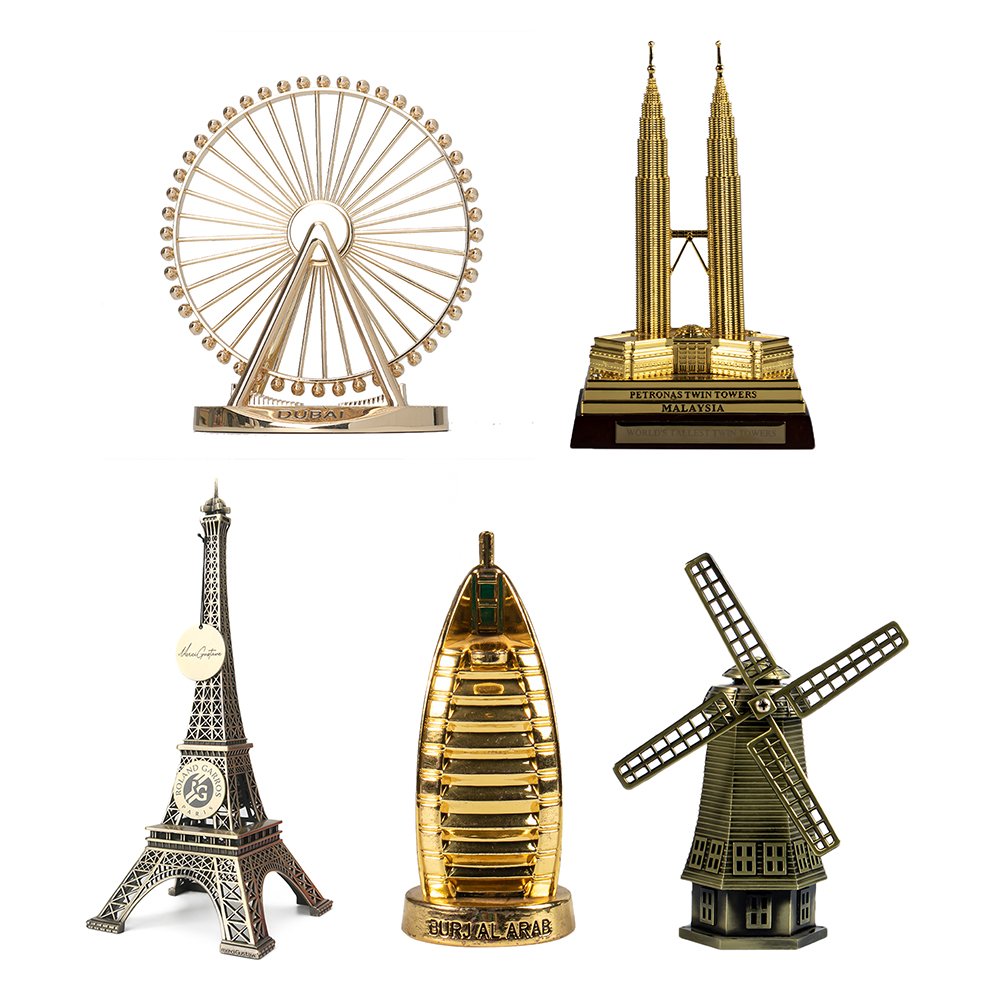
For a catalogue of metal souvenir forms already in production, including the landmark models and enamel pins that these programmes typically run on, the metal souvenir ideas for tourist attractions guide covers the product side, and the custom 3D Eiffel Tower metal model and the bronze Burj Khalifa souvenir model show the level of detail that die casting holds. When you have artwork that has been cleared and a quantity in mind, send it to sales@kingtopgift.com and the team will confirm what the process can hold and what the production route looks like.