
A wine stopper is a small object with two very different jobs. One is decorative: it has to look like it belongs to the gift set, the brand programme or the winery’s cellar door. The other is functional: it has to sit in a bottle neck, stay there through handling, and not put anything into the wine. The material choice is what resolves those two jobs.
Buyers routinely compare price per piece first and material second. That order produces the wrong answer more often than not, because the material determines whether the stopper can be cast with the detail the design needs, whether the surface will take a plating, and whether the documentation the buyer eventually has to produce is available at all.
A wine stopper has to satisfy two specifications that do not negotiate with each other. The body specification says how it looks, how it feels in the hand and how it presents on a shelf. The food contact specification says what it may be made of and what it must not transfer into the bottle. The material is the only element that answers both questions at once, so it is the first decision, not the last.
This guide compares the three material families behind almost all commercial metal wine stoppers: zinc alloy, stainless steel, and brass and its bronze relatives.
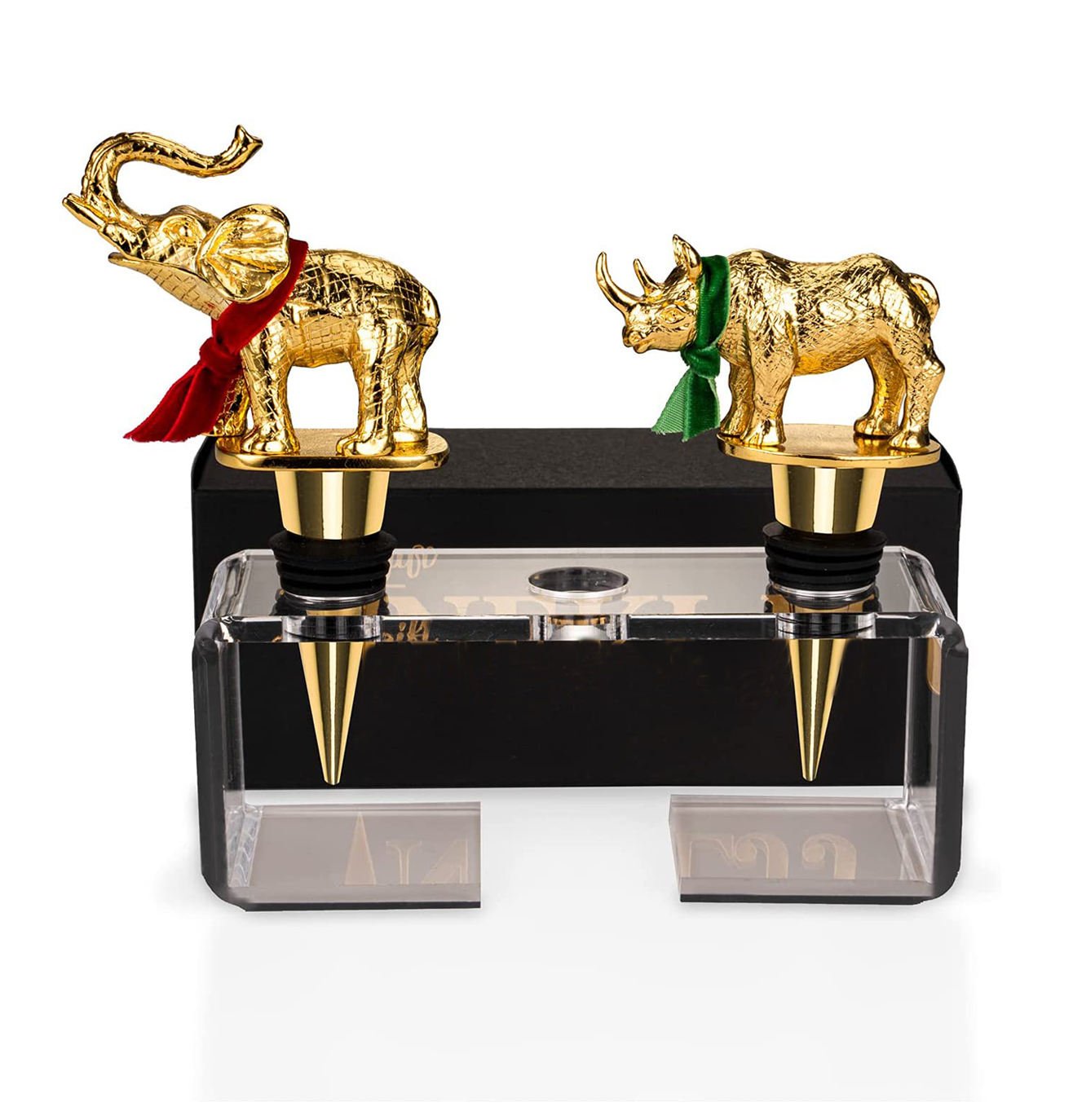
Why the material decision precedes the design decision
Most design changes a buyer requests after the first sample are material changes in disguise. A stopper whose detail disappeared during polishing is a hardness and fillet problem, and a piece that cracked at the neck is a wall thickness and stress concentration problem.
Each family behaves differently, and the difference shows up in the same places every time. Zinc alloy takes fine detail well and casts with a dense surface that polishes cleanly, which is why it produces the crispest raised forms. Stainless steel resists corrosion and takes a hard edge, but it will not accept the same cast relief.
Zinc alloy: the default for cast decorative stoppers
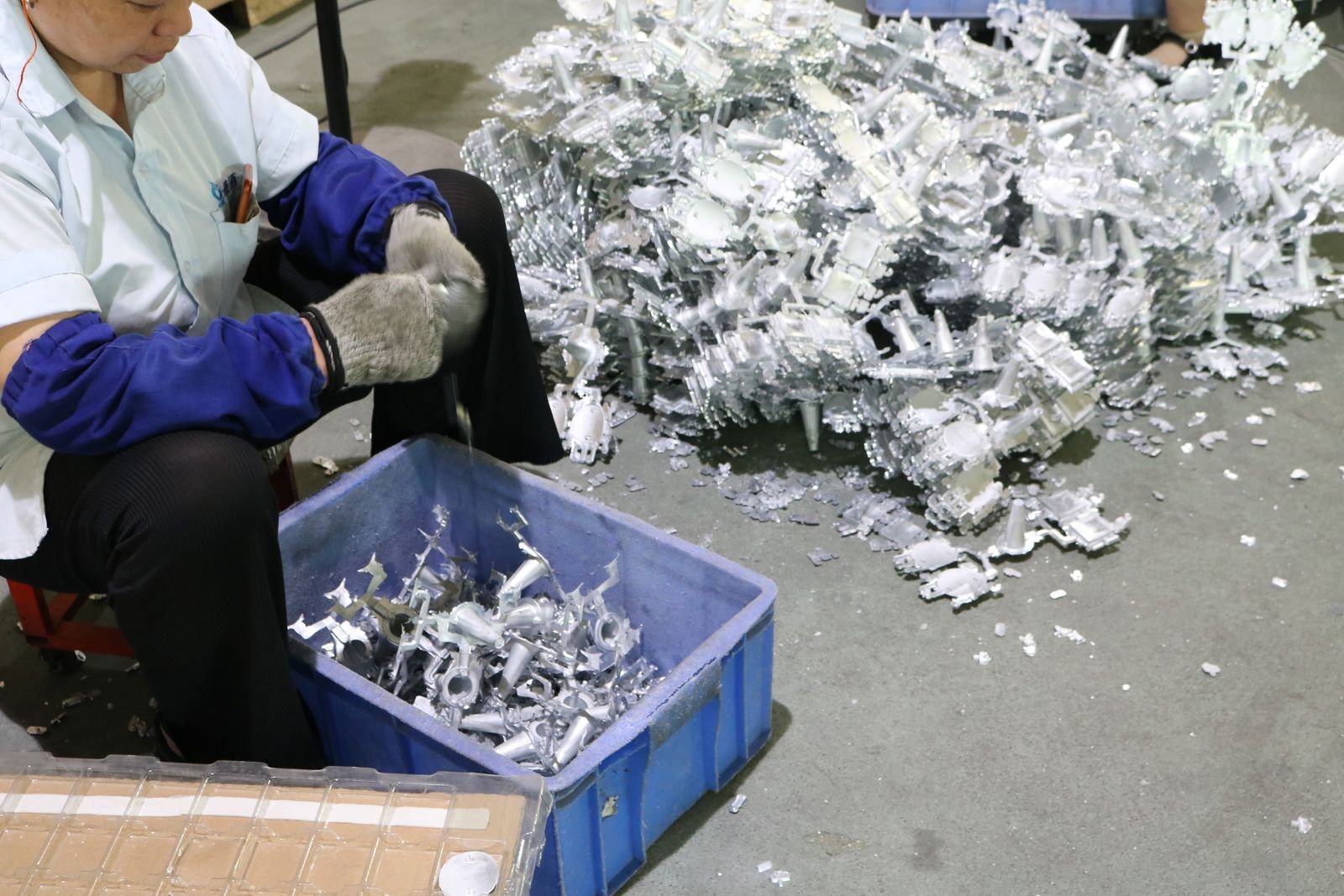
Zinc alloy is the mainstream material for metal wine stoppers, for the same reason it dominates the wider metal gift industry. It casts cleanly, holds fine surface detail, takes a plating well, and produces a piece with enough weight in the hand to read as a gift rather than a trinket.
The specification framework is ASTM B86-23, the standard specification for zinc and zinc-aluminium foundry and die castings. The Scope lists eight alloy compositions across its Common, Traditional, ASTM and UNS designation columns, and it distinguishes the zinc alloys used primarily for pressure die castings from the zinc-aluminium alloys used in both foundry and pressure die casting.
The limitation is that zinc alloy is not the strongest choice in a wet, salty or acidic environment, and a zinc alloy piece used as a food contact component has to be assessed on the composition of the alloy rather than on the fact that the visible top is metal. Kingtop’s confirmed production material is zinc alloy, with stainless steel, brass and bronze, and iron as the other confirmed material families.
Stainless steel: where corrosion resistance earns its place
Stainless steel is the answer when the stopper will meet conditions that a plated zinc alloy will not enjoy. It does not need a plated surface to look acceptable, it does not corrode in a damp environment, and it takes a sharp edge and a hard polish that stay sharp. For a stopper sold as a bar or restaurant accessory, for a piece used outdoors, for a product cleaned repeatedly, and for a product stored in a cellar rather than sold in a gift box, stainless steel frequently earns its extra cost.
The alloy framework buyers meet is ASTM A240/A240M, the specification for chromium and chromium-nickel stainless steel plate, sheet and strip for pressure vessels and for general applications, which covers chromium, chromium-nickel and chromium-manganese-nickel stainless steel, requires conformance to the specified chemical composition and to the specified mechanical properties, and defines the grade designations that appear on material certificates.
Stainless steel also changes the manufacturing route. Stamping from sheet is the usual route, and it means the piece is formed rather than cast, with a thickness that has to be specified and a minimum bend radius respected in the drawing. A cast design with a thin projecting detail usually has to be redrawn for a stamped stainless version.

Brass and bronze: the warm-tone route
Brass and its bronze relatives are chosen for colour and character rather than for a performance advantage. A brass piece develops a warm tone that works with leather, wood and cork, and it is the usual choice for heritage styling and for winery merchandise that sits alongside cellar and tasting-room branding. The cost of that choice is work: brass and bronze are softer than stainless steel, so they scratch, they deform under a sharp impact, and they tarnish. A brass piece that is to look consistent across a run needs either a protective coating or an agreed ageing reference, and the reference has to be agreed in advance because the colour that arrives will not be identical to the colour in the photograph.
Brass also has a food contact history that has to be checked rather than assumed. Brass is a copper-zinc alloy, and the regulatory treatment of copper alloys in food contact applications depends on the specific alloy and the specific use, so ask for the alloy grade and for the declaration that applies to the particular article rather than relying on the general statement that brass is food safe.
The seal is a separate component from the body
Most metal wine stoppers are a body plus a seal, and the two are specified separately because they are two different products with two different rules. The body is decorative and is judged on appearance and feel. The seal is a food contact component and is judged on whether it stays in the bottle and on what it may be made of. A buyer who asks a supplier for a “wine stopper” has therefore not yet specified the part that actually touches the wine.
The common constructions are a rubber or silicone insert that grips the neck, a metal skirt with a soft insert, and a silicone ring or disc. The insert has to be specified by material, by hardness and by the geometry of the bottle neck it is designed for, and it has to be matched to the outer diameter of the metal body that carries it. There is a practical test that catches most of these problems early: put the stopper on a bottle and pull it.
What food contact law requires of a metal stopper
Two European instruments govern a wine stopper sold into the European Union, and they do different work. Regulation (EC) No 1935/2004 on materials and articles intended to come into contact with food sets the safety and information rules, and Commission Regulation (EC) No 2023/2006 sets the good manufacturing practice rules underneath them.
Article 3 of Regulation 1935/2004 sets the general safety requirement: materials and articles, including active and intelligent ones, must be manufactured in compliance with good manufacturing practice so that, under normal or foreseeable conditions of use, they do not transfer their constituents to food in quantities which could endanger human health, bring about an unacceptable change in the composition of the food, or cause a deterioration in its organoleptic characteristics. The same Article adds that labelling, advertising and presentation of a material or article must not mislead consumers.
Article 15 sets what has to be written on the article or its packaging. For an article that has not yet been in contact with food when it is placed on the market, the information must include the words “for food contact” or a specific indication of its use, such as wine bottle, or the Annex II symbol; special instructions for safe and appropriate use where necessary; the name or trade name and the address or registered office of the manufacturer, processor or seller responsible for placing the article on the market within the Community; and adequate labelling or identification to ensure traceability as described in Article 17. The information must be conspicuous, clearly legible and indelible, and it may be given on the article, on its packaging, on an attached label, or in a nearby notice where technical reasons prevent it being fixed at the production or marketing stage.
Article 17 then requires traceability, and Recital 18 gives the reason: traceability is ensured at all stages in order to facilitate control, the recall of defective products, consumer information and the attribution of responsibility, and business operators should at least be able to identify the businesses from which and to which materials and articles are supplied. The consequence for a wine stopper is that the supplier needs to be named on the article or its packaging and the buyer needs a record of which supplier produced which batch.
Good manufacturing practice is a supplier obligation, not a certificate
Commission Regulation (EC) No 2023/2006 on good manufacturing practice for materials and articles intended to come into contact with food applies to all sectors and all stages of manufacture, processing and distribution, up to but excluding the production of starting substances. Article 5 requires the business operator to establish, implement and ensure adherence to an effective and documented quality assurance system that takes account of the adequacy of personnel, their knowledge and skills, and the organisation of the premises and equipment, applied taking into account the size of the business so as not to be an excessive burden.
The recitals explain the logic: the rules on GMP should be applied proportionately so as to avoid undue burdens for small businesses, and all business operators should operate an effective quality management of their manufacturing operations adapted to their position in the supply chain. For a buyer this means a certificate on a letterhead is weaker evidence than a documented system, and the evidence a supplier can actually produce is the incoming material specification, the process instructions, the batch record and the inspection results.
Printed logos and the food contact side
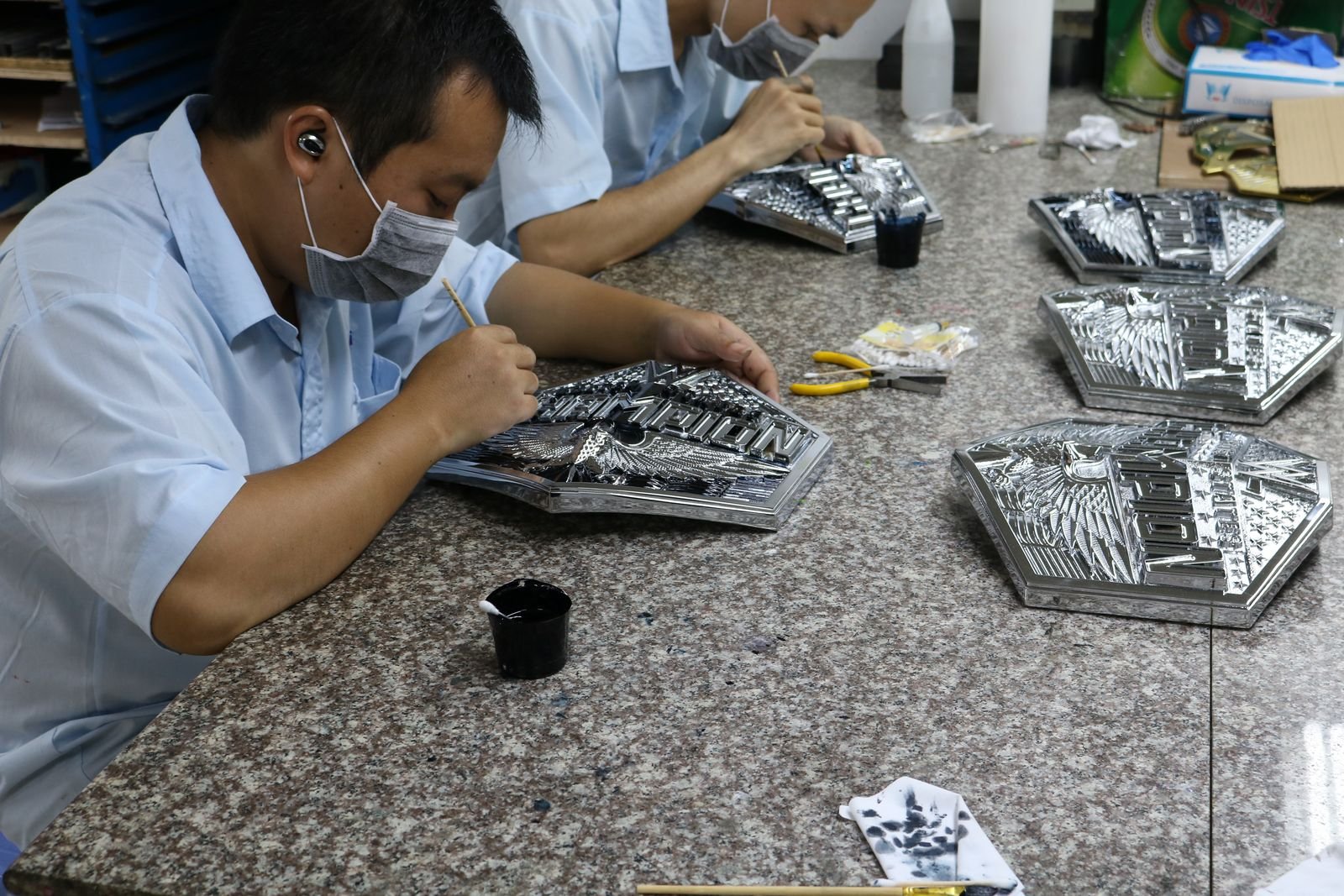
The detailed rules in the Annex of Regulation 2023/2006 deal with printing inks applied to the non-food-contact side of a material or article. Printed materials and articles must be handled and stored in their finished and semi-finished states so that substances from the printed surface are not transferred to the food-contact side, either through the substrate or by set-off in the stack or the reel, at concentrations that would breach Article 3 of Regulation 1935/2004, and printed surfaces must not come into direct contact with food.
This has a direct reading for a wine stopper with a screen printed logo. The printed surface is on the outside of the body and the food contact surface is the underside and the insert. The rule that matters operationally is the set-off one: a printed stopper stacked tightly with other printed stoppers, in a carton, in transit, can transfer ink to the food contact surface of the neighbouring piece.
The United States: a food contact notification belongs to a named supplier
United States food contact rules run on a different structure. A substance used in a food contact article can be the subject of a food contact notification submitted to the Food and Drug Administration, and the notification is registered against a specific manufacturer or supplier. 21 CFR 170.100 states the point directly: an FCN is effective for the food contact substance manufactured or prepared by the manufacturer or supplier identified in the FCN submission, and if another manufacturer or supplier wishes to market the same food contact substance for the same use, that manufacturer or supplier must also submit an FCN to the FDA.
The consequence for a buyer is that the identity of the material supplier is part of the compliance position, not just part of the purchase order. If the factory that supplies the metal or the insert changes, the documentation position has to be revisited rather than assumed to carry over. Ask which supplier provides the food contact component, ask for the notification number or the declaration that covers the specific use, and ask what happens to the documentation if that supplier changes.
Comparing the three families side by side
| Criterion | Zinc alloy | Stainless steel | Brass and bronze |
|---|---|---|---|
| Typical body route | Die casting, or a combination with stamped parts | Stamping from sheet, sometimes with a machined insert | Die casting or stamping, with a machined option for fine detail |
| Detail and relief | Excellent; carries the crispest raised form | Limited by the sheet route; depth is pressed rather than cast | Good; a warm surface that suits vintage styling |
| Finish route | Plated, which is what makes the colour options possible | Brushed or polished, with no plating needed | Plated, or left natural with an agreed ageing reference |
| Corrosion and wear | Needs a coating; harder than brass, plating can wear at edges | Resists corrosion without a coating; resists impact and abrasion | Tarnishes, dents and scratches readily |
| Document focus for a buyer | Alloy designation, plating and the insert declaration | Grade designation and the finish route | Alloy grade and the ageing or coating reference |
None of these families is the right answer in the abstract. The right answer is the one whose weaknesses your programme does not have. A stopper that spends its life in a gift box has no need for corrosion resistance and every need for a good colour; a stopper sold in a hardware store has the opposite profile.
How to specify material so two quotations can be compared
| Artículo | What to specify | Why it changes the price and the product |
|---|---|---|
| Body material | The alloy family and, where possible, the designation | “Metal” alone leaves castability, weight and food contact position open |
| Body route | Cast, stamped, or assembled from parts | Decides tooling cost, piece count and achievable detail |
| Finish | The named finish plus a colour reference | A named finish carries an obligation to match; a colour word does not |
| Seal | The insert material and the neck it closes | This is the food contact component and the part that fails in use |
| Branding | The method for each part of the mark | A moulded or embossed mark is fixed in the tool and cannot change later |
| Documentación | The market, the declarations needed and who holds them | Determines which party carries the obligation and what must be filed |
Ask each supplier whether the price includes the plating, the print and the assembly, because quotations are often split differently and the line items do not line up. And ask each supplier for a physical sample of the finished assembly against a bottle, not a sample of the body alone, because the assembly is what the customer opens. For the wider production route behind these products, the custom wine stopper manufacturing guide covers the process from tooling to packing, and the custom wine accessories range shows what the same material families produce across a wider gift programme.
Frequently asked questions
What is the most common specification error in a wine stopper enquiry?
Leaving the insert out of the specification. The body is described in detail, the finish is described in detail, and the part that actually touches the wine and actually stops the wine is described as “with rubber plug” or not described at all. A stopper quoted without a defined insert is not a quotation for a product.
What to send with your enquiry
Send the artwork, the body route you have in mind or the ones you want compared, the material family or families you are considering, the named finish with a colour reference, the insert you intend to use, the branding method for the mark, the quantities, the market you are selling into and the documents you need.
For a quotation against your own artwork, or for a comparison of material routes with the trade-offs set out in writing, send the design to the Kingtop manufacturing team at sales@kingtopgift.com and ask for the material recommendation to be justified against the seal, the finish and the market you are selling into, rather than against unit price alone.