A wine accessories programme is not a stopper order. It is a range of small metal objects that sit on a bottle, in a gift box, or in the hand of the person who opens the wine, and every one of them carries a different regulatory question, a different tooling decision and a different failure mode. The stoppers touch the bottle mouth. The pourers touch the glass. The drip collars touch neither but get handled. A buyer who treats them as one product with three sizes will get three different answers from three different factories and will not know which of them is the right one. This guide sets out how to qualify a supplier for the category rather than for a single part: which supplier type suits which programme, which compliance questions belong to the brand and which belong to the factory, how quality systems do and do not narrow the field, where the ownership of your tooling and artwork actually sits, and how to structure a quotation so that two responses can be compared line by line instead of judged on price.
What a wine accessories programme actually contains
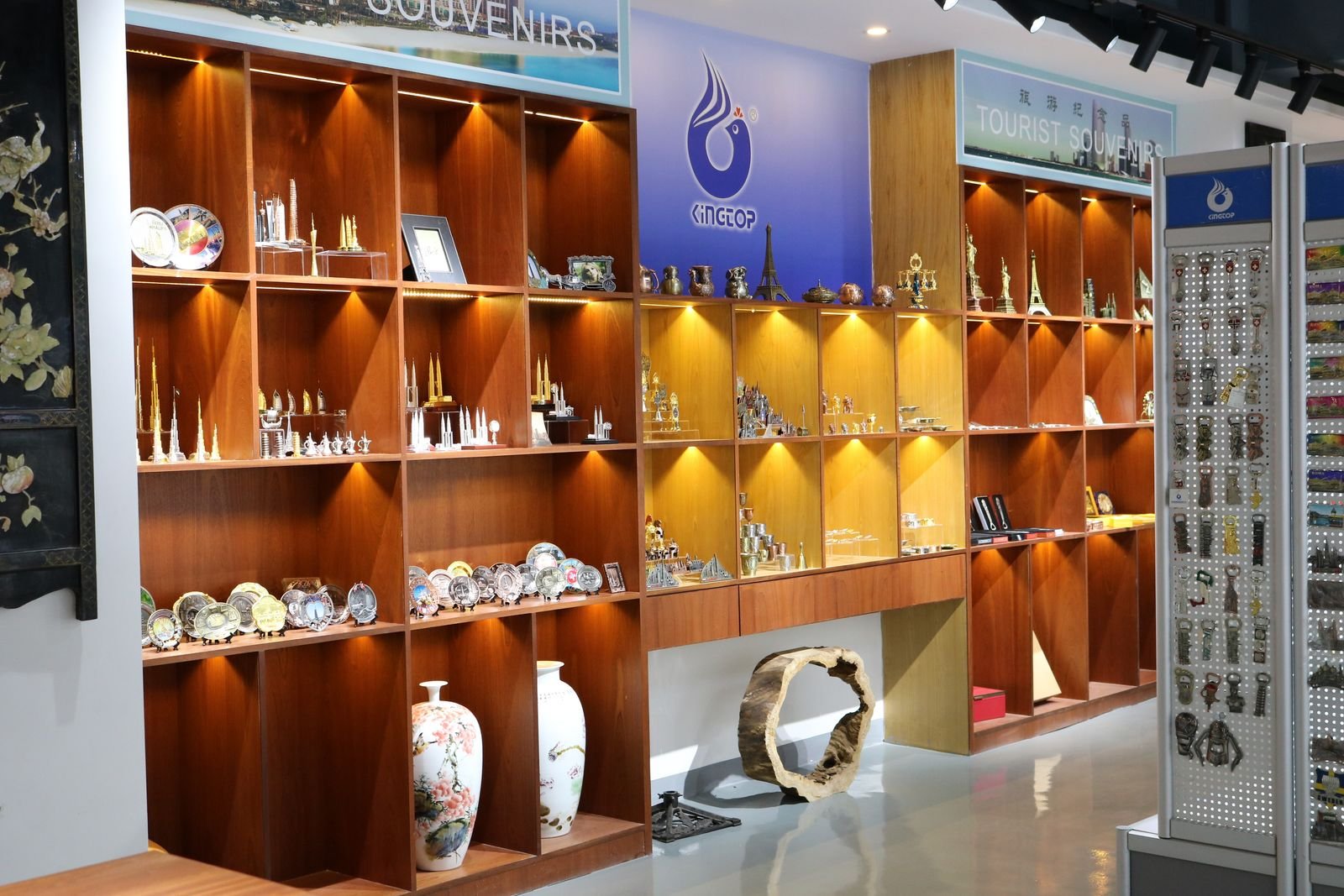
Wine accessories is a retail shelf description, not a manufacturing category, and the distinction decides how you approach sourcing. On a real shelf you will find cast zinc alloy stoppers, stainless steel vacuum stoppers, pourers and aerators in polished and plated finishes, drip collars and rings, bottle openers, and gift sets that combine them in a presentation box. Each of those sits at a different point on the cost curve, uses a different piece of tooling, and takes a different number of weeks to make correctly.
The stopper itself is the hardest object in the group, and it is hard for reasons that have nothing to do with appearance. A metal stopper is a closure. Its outer form has to mate with a bottle neck that the factory does not control, and it has to hold a fixed relationship with a soft sealing element that is a separate component with its own material, hardness and tolerance. Add a decorative body with a logo on it and the object becomes a multi-part assembly where the decoration must survive an assembly operation, a plating operation and a cleaning operation without the mark or the seal degrading. That is a different engineering problem from a flat keychain, and it is the reason a category approach is worth the extra effort: the supplier who has solved the closure problem is usually the supplier who has already solved the finishing problem, the packaging problem and the inspection problem that every other item in the range inherits.
Before a supplier is approached, the range itself has to be broken into three groups, because each group carries a different set of questions. Group one is the closure: stoppers, vacuum stoppers, and anything with a seal. Group two is the service item: pourers, aerators and drip collars, which touch the beverage or the glass and therefore carry food contact questions in their own right. Group three is the adjunct: openers, stoppers sold as gift items, and presentation hardware, which rarely touches the liquid but is handled, merchandised and branded. Our guide to manufacturing custom wine stoppers covers the closure group in detail, including the route from a 3D file to an approved sample.
| Programme group | Examples | Decides the tooling | Main risk |
|---|---|---|---|
| Closures | Decorative cast stoppers, vacuum stoppers, sparkling wine stoppers | Bottle neck geometry and the seal interface | A stopper that does not seat, or a seal that fails in the carton |
| Service items | Pourers, aerators, drip collars and rings | The pouring geometry and the material that touches the glass | Material transfer rules and a drip path that stains the table |
| Adjuncts | Bottle openers, gift-box stoppers, presentation hardware | The decorative body and the branding surface | Brand consistency across a set that is bought in different colours |
Three supplier types, and which one fits which programme
Wine accessories are sourced from three kinds of supplier, and the single most common sourcing error is asking a specialist to do a job that belongs to a different kind of supplier. Knowing which type you are dealing with before the first quotation saves weeks.
The first type is the metal gift manufacturer. This is a factory whose core capability is die casting and finishing decorative metal objects across many product categories, so it can run a wine accessory alongside keychains, medals, bottle openers and souvenir pieces in one production plan. Its advantage is commercial: one supplier, one packing list, one shipment, and a single quality system covering the whole range. Its limitation is that it works to a broad competence rather than to a closure-specialist depth, which means the food contact and sealing questions have to be asked explicitly rather than assumed.
The second type is the wine closure specialist. These factories concentrate on stoppers, corks and related items and know the neck interfaces and seal systems in depth. Their advantage is the knowledge of a narrow problem. Their limitation is usually the opposite of what buyers expect: they may not run your gift set as a single programme with other metal items, they may have a smaller finishing range, and their commercial model often assumes a larger volume of one item than a brand buying a mixed accessory range needs.
The third type is the general promotional product supplier, often buying cast parts from a sub-contractor and adding packaging, printing and assembly in house. For a low-complexity adjunct such as a plain bottle opener in a printed box this can be the cheapest route. It is also the route with the least control over the metal itself, because the casting and finishing steps sit outside the supplier’s own premises and outside its quality system. If the programme depends on a plated finish matching a brand colour, this is the arrangement most likely to produce a batch that does not match the approved sample.
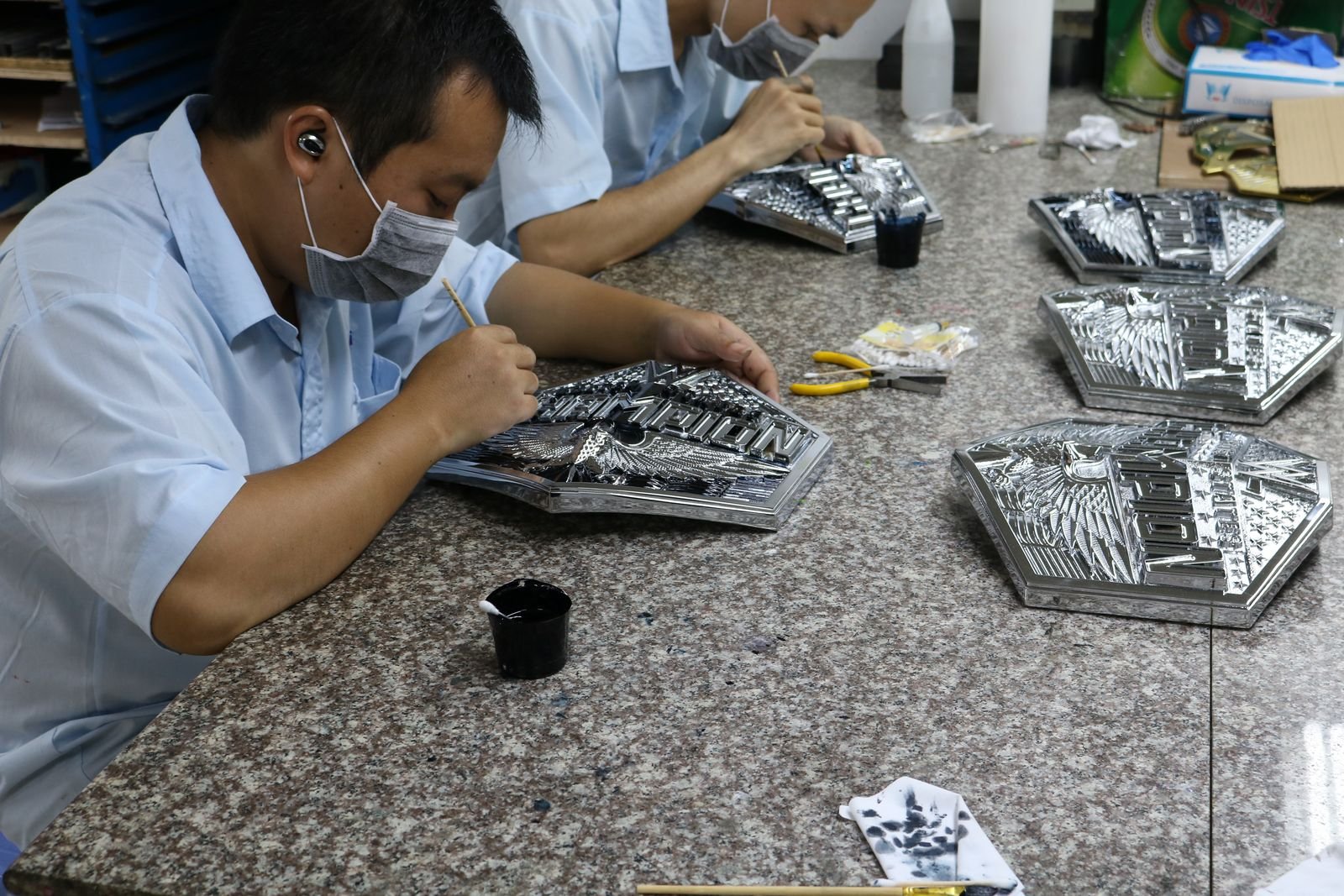
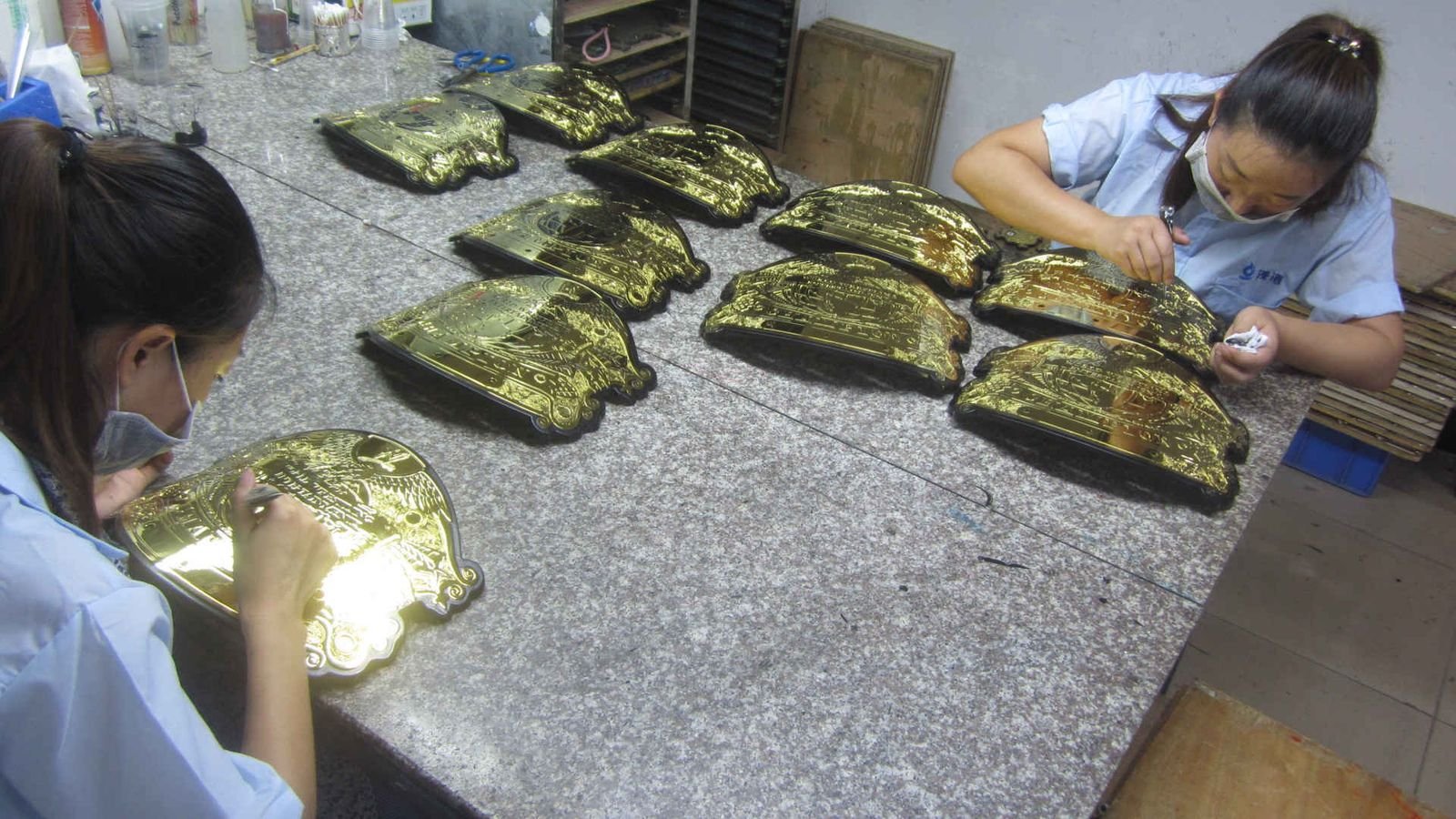
Our own position sits in the first category. Kingtop is a metal gift manufacturer operating a 9,600 square metre factory with more than 200 staff and daily capacity above 30,000 pieces, working in zinc alloy as the main material with stainless steel, brass and bronze available where the design calls for it. That structure is the reason we can quote a stopper, a pourer and an opener in one programme: the die casting, plating, polishing, enamel colour filling, assembly, inspection and export packing all sit under one roof and one set of records. If your programme is a single high-volume closure and nothing else, a specialist may serve you better, and it is reasonable to quote both.
Food contact is a design input, not a certificate to collect
The most common misunderstanding in wine accessory sourcing is that food contact compliance is a document you request at the end. Under European law it is a constraint that shapes the design from the first sketch, because the law sets the composition requirement and the factory has to design and manufacture within it. Regulation (EC) No 1935/2004 on materials and articles intended to come into contact with food is the framework, and its Article 3 is the operative part: materials and articles shall be manufactured in compliance with good manufacturing practice so that, under normal or foreseeable conditions of use, they do not transfer their constituents to food in quantities which could endanger human health, bring about an unacceptable change in the composition of the food, or bring about a deterioration in its organoleptic characteristics. The consolidated text is published by the Publications Office of the European Union and is available at the official ELI entry for Regulation (EC) No 1935/2004.
Read that requirement as an engineering statement rather than a legal one. It asks what the object is made of, what else is on it, and what can move off it. A bare zinc alloy body, a plated body, and a plated body carrying a screen printed or enamel filled mark are three different answers to that question, and only one of them may be right for a given programme. The metal alloy designation, the plating system, the colour used and the marking process all feed the same assessment. This is why a supplier who answers “yes, we are food contact compliant” without being able to name the alloy, the plating and the marking route has not answered the question at all.
Two further parts of the same regulation matter for a sourcing decision. Article 15 requires that materials and articles not yet in contact with food when placed on the market are accompanied by the words “for food contact” or a specific indication as to their use, such as coffee machine, wine bottle or soup spoon, together with the name or trade name and address of the business responsible. That is a documentation obligation on the business placing the product on the market, which in a private label programme is usually the brand, not the factory. And recital 18 of the regulation makes the traceability expectation explicit: traceability should be ensured at all stages, and business operators should at least be able to identify the businesses from which, and to which, the materials and articles are supplied.
That last point has a practical consequence for a buyer assembling a range from more than one factory. If the pourers come from one supplier and the stoppers from another, the brand is the party that has to be able to state where each came from. A single-source programme is simpler to document, and the commercial benefit of consolidation usually outweighs the saving from splitting a small order across two factories.
The United States version, and why a food contact notification belongs to a named supplier
United States buyers face a different structure, and the difference is not cosmetic. The US framework for food contact substances sits in Title 21 of the Code of Federal Regulations, and Subpart D of Part 170 covers premarket notifications. Section 170.100 is titled as the provision for submission of a premarket notification for a food contact substance to the Food and Drug Administration, and the surrounding sections cover what the notification must contain, the confidentiality of the information, and withdrawal. The full subpart is published at 21 CFR Part 170 Subpart D in the Electronic Code of Federal Regulations.
The operative point for a buyer is scope. A food contact notification is submitted by a named manufacturer or supplier for a specified use, and it is not a generic approval that any factory may rely on later for a different article. That has two consequences. The first is that a brand cannot assume its contract manufacturer holds the notification for the exact formulation and use the brand intends; it has to ask, and the answer has to name the article, the intended use and the party responsible. The second is that a supplier who changes alloy, plating chemistry or marking ink during the programme may be working outside the scope of an existing notification, which is a change the brand needs to be told about rather than discover at a customs inspection.
The practical buying consequence is that you should ask for the notification or the equivalent supplier declaration at quotation stage, together with the identity of the party who holds it and the use it covers, and you should treat any change of material or finish as a notification event. A factory that treats a material change as a routine production detail is telling you something important about how it will handle your brand’s compliance obligations.
Quality systems: what ISO 9001 settles and what it leaves open
Most buyers ask whether a supplier is ISO 9001 certified, and most buyers then stop asking questions. That is the wrong stopping point, because ISO 9001:2026 is a standard about the operation of a quality management system rather than about the quality of a particular part. It is the current sixth edition of the standard, published in 2026. What it establishes is that there is a documented system for controlling processes, managing nonconforming output and correcting it, with records that can be produced on request. What it does not establish is that your particular article will be made to your drawing, nor that the plating on your run will match the sample you approved.
So certification narrows the field. It removes factories that have no system at all, and it means that when something goes wrong there is a documented process to investigate it. The current standard is ISO 9001:2026, the sixth edition published in 2026. That is worth something and should be part of the qualification. But it is a filter, not a substitute for the four checks that actually matter for a wine accessory programme: whether the factory can state the alloy and the plating system it will use, whether it can show you the inspection method used on your own part rather than a general procedure, whether it can produce a component-level trace from the raw material to the packed carton, and whether it will sign off a written sample approval that both sides keep.
| Qualification question | What a weak answer sounds like | What a usable answer contains |
|---|---|---|
| Laadunhallintajärjestelmä | A certificate in a generic PDF | Certificate reference, scope covering your product type, and the issuing body |
| Material control | Zinc alloy | Alloy designation, and whether incoming material is verified or inherited from the alloy supplier |
| Finishing | Gold plated, high quality | The plating system, the reference sample it is judged against, and the surface preparation step |
| Inspection | Full inspection before shipment | What is inspected, against what, by how many people, and what the records look like |
| Traceability | We can trace it | A batch or carton identifier that links the packed goods to the casting run |
Who owns the tooling, the artwork and the intellectual property
Ownership questions are the ones most often left to the end of a negotiation, and they are the ones with the longest tail. Three separate assets are involved and they behave differently.
The tooling is physical: a steel die for a cast part, or a set of forming dies for a stamped part. The commercial norm is that the buyer pays for tooling and, after a defined quantity has been ordered, the tool becomes the buyer’s property or is released to them. The quantity at which that release happens is a negotiation, and it should be settled before the first order rather than at the point where the brand wants to move production. At Kingtop the tooling position is stated simply: minimum order quantities run in three tiers, 100 pieces for an existing mould or a small trial order, 500 pieces for standard designs, and 1,000 pieces for a new mould or a fully custom programme. A new mould therefore belongs to a 1,000-piece order, and a buyer who expects to own tooling after a 100-piece trial is asking for something the supplier has no obligation to deliver.
The artwork is a different asset. A vector file you supply is yours, and the supplier’s obligation is to hold it, use it only for your programme, and not to add it to a catalogue. The moulded logo and the embossed relief are a third thing again: they are physical features of the part created by the tool, which makes them much closer to the tooling than to a print run. A buyer who supplies artwork and receives a moulded relief has commissioned something that cannot be changed without a new tool, so the approval of that relief is a much heavier decision than the approval of a print.
The intellectual property question underneath all of this is trademark. The International trademark framework most buyers will encounter is the WIPO Madrid System, which allows an international trademark application to be filed in a single procedure covering multiple contracting parties rather than separate national filings in each market. The relevance to sourcing is timing. A brand that is about to have its mark cast into thousands of metal parts in a factory in another country should establish its trademark position before that happens, not after a distributor in one market objects.
Commercial terms: Incoterms and who carries risk on the repeat order
The delivery term in a purchase order is not a formality, and it is the part of the contract most often left undefined. The International Chamber of Commerce publishes the Incoterms rules, which have been in use since 1936 and whose current version is Incoterms 2020. The ICC describes their purpose plainly: the rules help to avoid costly misunderstandings by clarifying the tasks, costs and risks involved in the delivery of goods from sellers to buyers, and UNCITRAL recognises them as the global standard for the interpretation of the most common terms in foreign trade. The current set is described at the ICC Incoterms rules page.
For a first order the practical question is simple and mostly about transit risk: at what point does responsibility for the goods pass from factory to buyer, and who arranges the carriage. For the second and third orders the question becomes about something else, which is that the cost structure embedded in the quotation can quietly change. A quotation built on a shipped volume, a consolidated carton count and a single forwarder booking looks different at a third of the volume, or with the cartons split across two destinations, or with urgent air freight replacing sea freight on a launch date. A supplier who states the delivery term on the quotation and explains what it assumes is far easier to work with than one who leaves it out.
Three questions close this part of the assessment. What is the delivery term on the quotation, and is it stated in words rather than a code that only the supplier understands. What changes in the unit price when the quantity changes, and at what point the factory re-quotes rather than absorbing the difference. And who arranges and pays for the transport, so that a delay in shipping is not confused with a delay in production.
Getting trademark protection in place before the first production run
The United States trademark office gives a practical benchmark that is worth holding on to when a launch date is being planned. The USPTO states that the registration process usually takes 12 to 18 months, with the application moving through several stages, and sets out the detail in its guidance on how long a trademark registration takes. That timeline is a useful corrective to the assumption that a trademark can be cleared in the same quarter that the product ships.
There is a distinction between using a mark and registering it. You can use a mark in commerce before registration, and many brands do, but the strength of the protection, the scope of the geographic coverage and the remedies available all change once a registration exists. For a brand that will be moulding or plating its mark into metal products across multiple markets, the international route offered by the Madrid System is usually worth assessing early, because it consolidates filings rather than requiring a separate national application in every market where the product will be sold.
Two practical actions follow. First, establish the trademark position before the artwork is frozen, because artwork changes are expensive once they are in a tool. Second, ask the factory to confirm how it will handle a trademark dispute, which in practice means asking what happens to the mould and the plated parts if a claim is raised, and whether the factory will hold a buffer of unfinished goods.
How to structure a quotation so two responses can be compared
Most buyers receive two quotations, cannot reconcile them, and end up choosing on price. That outcome is a design failure in the request rather than a problem with the suppliers. A quotation for a metal accessories programme can be compared line by line if the buyer forces a common structure.
Ask for the unit price to be broken into its parts: the cast or formed body, the finishing, the logo or marking, the seal or any food contact component, the assembly, and the packaging. Ask for the tooling cost as a separate line with the quantity at which it is amortised or released. Ask for the lead time broken into sampling, approval and mass production, because the sampling time and the production time are usually separate commitments and the buyer usually only sees the combined number. Ask for the MOQ stated per item rather than per programme, because a programme MOQ of 1,000 pieces can be satisfied by 600 stoppers and 400 pourers, or by 900 stoppers and 100 pourers, and those two orders are completely different products.
At Kingtop the standard working figures are a sampling stage of seven days and a mass production stage of 15 to 20 days, with shipping by express, air or sea. Those numbers are useful precisely because they are separated: a buyer who needs the goods before a specific date can see which part of the schedule is negotiable and which part is not.
| Line to insist on | Why it matters when comparing two factories |
|---|---|
| Unit price split into body, finish, marking, seal, assembly, packaging | Two total prices can hide completely different cost structures, and the difference is where a later variation will land |
| Tooling cost and the quantity at which it is released | Determines whether a second programme repeats the cost or reuses the asset |
| Sampling lead time and production lead time stated separately | Tells you which schedule element is actually fixed |
| MOQ per item, not per programme | Decides whether the mixed range you designed can actually be ordered |
| Delivery term in words, plus what the transport arrangement assumes | Prevents a freight change being read as a production change |
| Inspection method and record format | Defines what happens if a carton does not match the approved sample |
Sampling and approval: the sequence that prevents a second order
The sample is where most sourcing projects are won or lost, and the failure is nearly always procedural rather than technical. A buyer who treats the sample as a visual check has approved nothing; a buyer who treats it as a controlled record has removed most of the risk from the first production order.
The sequence that works starts before any metal is made. The buyer issues a written brief that states the article, the intended use, the material, the finish, the marking, the packaging and the destination market. The factory returns a technical response that either accepts those parameters or identifies the ones it cannot meet, and it identifies them early enough for the design to be adjusted. A prototype is produced and inspected against the brief rather than against a general impression. A written sample approval is signed by both parties, and it explicitly states what was checked, against what reference, and what was not checked. Only after that does the production order begin.
The approval record has to be specific enough to be useful in a dispute. If it says the finish was approved, it does not say against which physical reference. If it says the logo was approved, it does not say which artwork revision. A well-drafted approval names the master sample as the reference, and the master sample is retained by both sides, because a photo of a gold plated surface tells you almost nothing about the colour when the parts are compared under the same light. Our guide to wine stopper sample approval sets out the checks in sequence.
Two disciplines pay for themselves immediately. The first is requiring the factory to state, in writing, which aspects of the brief it cannot meet, rather than discovering those limits at the inspection stage. The second is keeping the master sample. The approved sample is the only defensible reference when a production batch is questioned, and it costs nothing to keep the one that was signed.
What to send with the enquiry
Most enquiries that produce a generic quotation contain too little to quote against. A usable enquiry for a wine accessories programme carries the following, and each item removes a round of questions.
- The articles in the range, with the quantity per article, and which articles are in the first tranche.
- Whether the range is new tooling, an existing tool modified, or a catalogue item adapted, because the three have completely different MOQ positions.
- The intended use and destination market for each article, which is what determines the food contact question rather than the buyer’s assumption about it.
- The material and finish you have in mind, and whether a reference sample exists.
- Artwork status: concept, vector file, or a physical sample, plus where the brand mark will appear.
- The packaging requirement, including whether items are sold individually, in a gift set, or both.
- The delivery term you expect, and the destination.
- The date by which the goods are needed in market, and whether that date is fixed or negotiable.
This is close to the structure used in our own request for quotation template, which is worth adapting if you are running the same enquiry to several suppliers. A written enquiry also has a second effect that is easy to overlook: it gives the supplier a stable reference for the whole project, so that a change requested three months later can be judged against what was actually agreed rather than against a memory of a conversation.
A supplier qualification checklist to work through before you commit
Qualification is easier to run as a document than as an impression. The list below is arranged in the order the questions should be asked, so that an unresolved answer at one stage does not waste time at the next.
| Vaihe | Question to put | A pass requires |
|---|---|---|
| Scope | Which supplier type are you, and what do you actually make in house? | A named list of processes performed at your own factory |
| Category fit | Can you run the whole range in one programme? | Confirmation of casting, finishing, assembly, inspection and packing under one roof, or a frank statement of what is sub-contracted |
| Compliance | What applies to the parts of this range that touch the bottle or the glass? | Named alloy, named plating, named marking route, and the applicable regulation identified for your market |
| Food contact documentation | Who holds the food contact position for this programme? | A supplier declaration, or a food contact notification naming the party and the use it covers |
| Quality system | What is certified, and what does the certification cover? | Certificate reference and scope covering your product type |
| Tooling | Who owns the tool, and when does it become mine? | A written position, with the quantity at which release happens |
| IP and artwork | How is my artwork held and protected? | Written confirmation that the artwork is not reused and belongs to your catalogue |
| Trademark | Is my mark registered, and do I need it registered first? | A clear answer on timing, with the international route considered if several markets are planned |
| Commercial | What are the price structure, MOQ, lead time and delivery term? | A line-by-line quotation with the delivery term written out |
| Approval | How is the sample signed off and what does the record say? | A written approval naming the master sample as the reference |
Qualification is not a one-off event. A supplier that passes this list once still needs a short review before each new article enters the programme, because a new article is a new question about food contact, a new tool and a new marking surface. Keeping the list in your own document control system, rather than in a buyer’s memory, is what keeps a multi-year accessory programme consistent.
If you want a starting point rather than a general briefing, custom wine stoppers for wineries shows the construction options that a mixed programme is usually built from. Our B2B request for quotation template is the document most buyers adapt first. Send the brief through to our team or write to sales@kingtopgift.com and we will answer the qualification questions against your actual range rather than a generic product list.