
Branding a metal souvenir is easy. Proving which factory made a specific piece, where it came from and whether it is genuine is a different problem, and it does not solve itself by putting a logo on the front. A brand with three thousand keychains in the market and no per-piece identity cannot answer a customer who asks whether their souvenir came from you, nor a regulator, a retailer or an insurer. The standards for solving it already exist, and for a metal gift factory the work is mostly deciding what to mark and what to record.
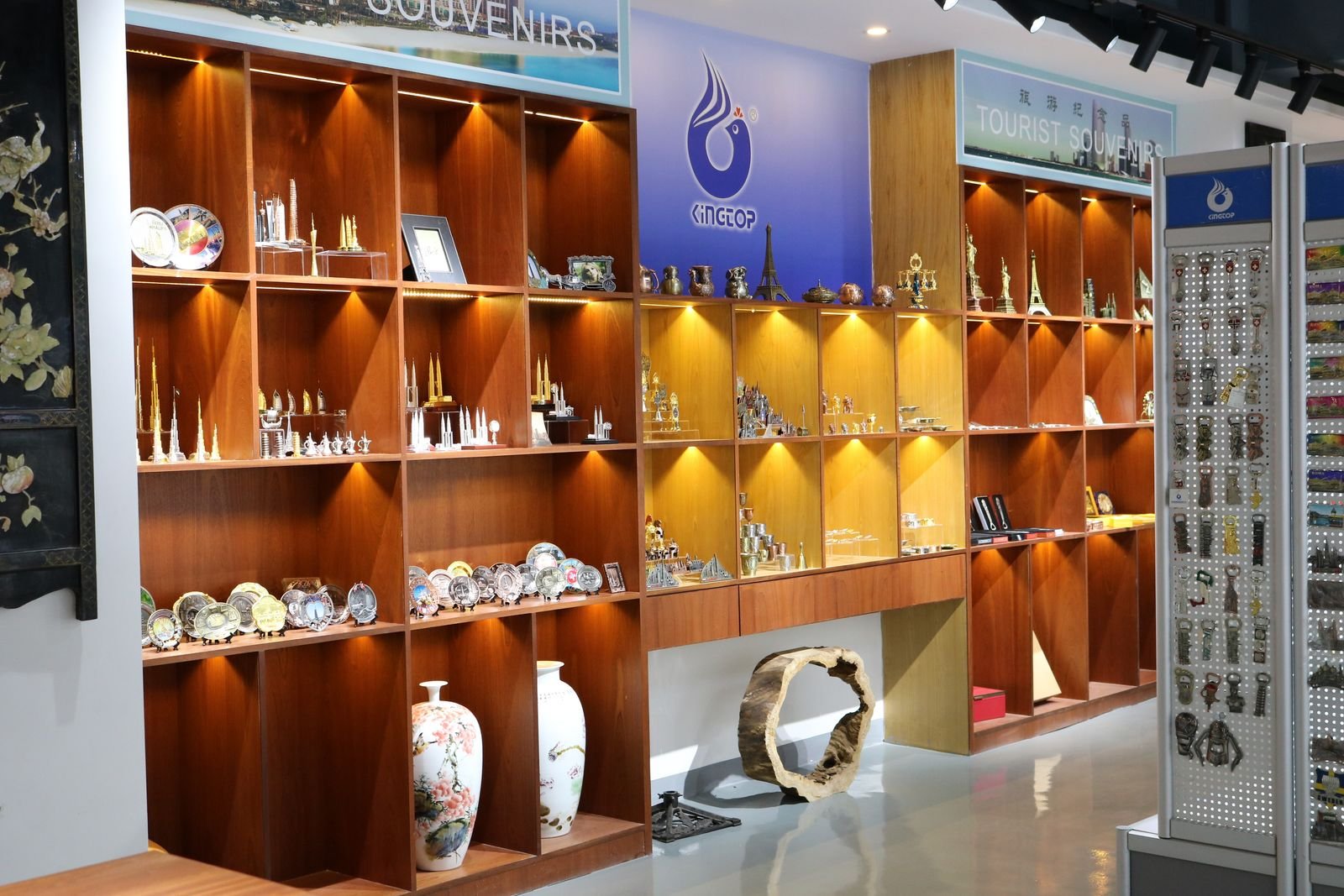
Why metal souvenirs are an unusual anti-counterfeit problem
Most counterfeit disputes are about appearance: the wrong colour, the wrong print, a slightly wrong font. A metal souvenir has a harder-to-copy feature and an easier-to-copy one at the same time. The harder one is the physical part itself, the cast shape, the weight distribution, the die-cast surface texture that a printed replica cannot reproduce. The easier one is the surface decoration: screen printing, laser engraving and enamel colour fill are all reproducible by anyone with the artwork file and a laser engraver, and the artwork file is often the thing that gets emailed around without control.
That asymmetry explains why the useful question is not how to hide your brand. It is whether you can tie a specific physical piece back to a specific production event. A hologram on a plastic blister does nothing for a zinc alloy token. What works is giving each piece a unique identity at manufacture and keeping the record that ties that identity to a batch, a date and a material.
Three levels of traceability, and they cost very different amounts
The practical way to think about this is in levels, because the levels differ in what they prove and what the factory must do.
| Level | What the customer can check | What the factory must do | What it does not give you |
|---|---|---|---|
| Batch identity | The piece belongs to a production run identified on the packaging | Record a lot or batch identifier and put it on the pack | It does not identify an individual piece, so it cannot confirm the provenance of one item in a customer’s hand |
| Serial identity | The individual piece carries a unique identifier a customer can look up | Assign a unique number to each piece, mark it, and keep a record linking number to batch | It does not by itself prove the piece was made by your factory; it proves the number is one you issued |
| Event record | The piece’s history can be reconstructed: where it was cast, finished, packed, shipped | Capture events with time, place, business and process context, and make them retrievable | It does not guarantee the data is complete or that no one made a copy of the identifier |
Most buyers should start at the second level. The third is what a sophisticated retailer or an authority will ask for, and it is also where the standards work has been done, which is why it is worth understanding what exists even if you do not implement it immediately.
The standard that most buyers have already half-adopted
The barcode on the back of your metal souvenir is already an identity system, whether or not anyone treats it that way. A GS1 GTIN identifies a trade item, and a barcode on a packaged souvenir carries that number. It identifies the product, though, not the individual piece. For a metal gift that has been laser engraved as a one-off, the same GTIN may legitimately appear on ten thousand different pieces with different artwork, which is why a product-level identifier is not enough when you need to answer a question about a specific item.
The GS1 Digital Link standard is the mechanism that extends this. GS1 describes it as the standardised method for encoding identifiers such as GTINs, GLNs and SSCCs, along with batch numbers, serial numbers, expiry dates and more, achieving two goals at once: the identifiers can be encoded in a barcode and decoded by scanning software and passed to the host system with no need for an online connection, and they can be connected to online information.
The direction of travel is stated plainly on the same page. In retail, GS1 Digital Link is described as an important part of the industry’s global migration to 2D barcodes, where the vision is that each product will have a single multipurpose 2D barcode usable at the point of sale and also able to access digital content such as certifications, instructions for use, product information and traceability information. That is the capability a metal souvenir brand wants: one mark on the back of the piece that a shop scanner reads as a barcode and a customer phone reads as a page about the product and its origin.
Two points from GS1’s own description matter for a buyer negotiating with a factory. First, using the standard means providing not only a URL for people to scan but also the GS1 identifiers, the same identifiers relied upon throughout industry today, which is the difference between a random web address on a tag and an interoperable identity. Second, the brand owner can redirect from the Digital Link URI to any number of digital information sources from one barcode symbol. The infrastructure is not a constraint on what you publish about your product; it is a single stable handle you control.
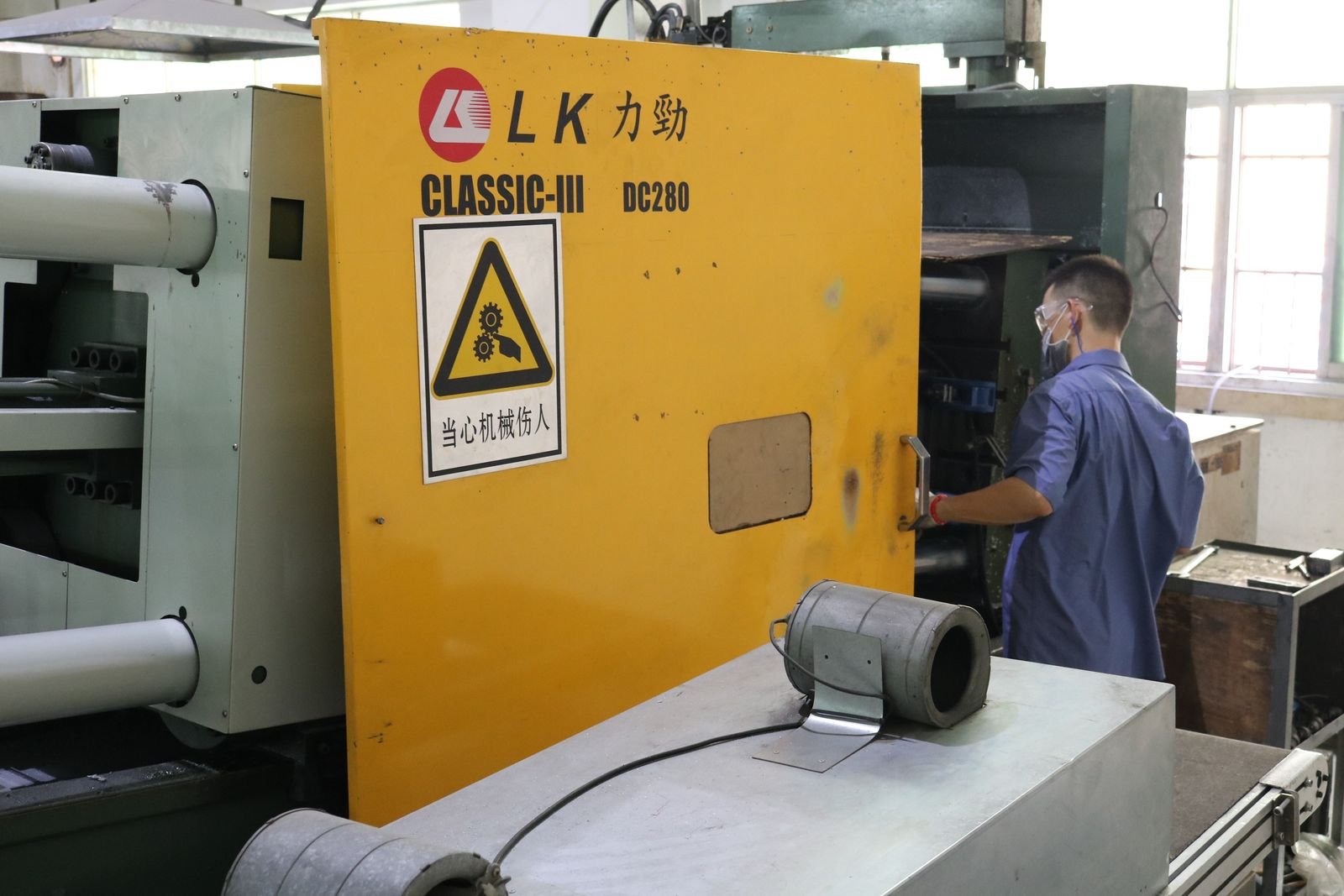
How the identifier reaches the metal
The mark has to survive a metal product’s life, which constrains the options in a way it does not for a cardboard box. Here a metal gift factory’s capability becomes the deciding factor, and it is worth being specific about what is realistic.
Laser engraving gives permanent, tamper-evident marking directly into the surface, with no consumable and no adhesive that can fail in humidity or heat. It suits short alphanumeric strings, which is what a serial number is. A copy engraves the same characters, but the tool path, surface response and heat effect on the plating belong to the original factory. The branding methods available on a metal gift order, of which laser engraving is one alongside screen printing, embossing, debossing, moulded logo and enamel colour fill, are all processes the factory already controls.
Screen printing and enamel colour fill add a printed element to the piece. Useful for a batch identifier on the back, poor for a per-piece serial, because a unique number through a screen print means a screen change for every number. For a souvenir line running in batches of the same artwork this is fine and cheap; for a run where every piece differs it is not practical.
Embossing and debossing raise or lower the surface without adding ink or removing material, so they can carry a short code and survive handling well. A moulded logo puts the mark into the die itself, the strongest option against copying because the tooling is the barrier, but it is fixed for the life of the mould and cannot carry a per-piece number.
A physical tag, a hang tag or an NFC-enabled label attached to the piece is the option that carries the most data with the least constraint on the object. It also introduces a supply chain item into the order, and it is the point at which the packaging question starts: the packaging article on this site covers how tags, bags and inserts affect both cost and retail presentation.
What the identifiers actually encode
It helps to separate what you can put in the code from what you need to keep in the database, because the common mistake is trying to encode the whole history into the mark itself. A practical structure uses three layers.
- The product identifier. A GTIN identifies the trade item, the configuration and the packaging. This is the number that a retailer’s system already expects, and it is what ties your souvenir into the same identifier framework as the rest of the buyer’s catalogue.
- The instance identifier. A serial number, or a serialised GTIN that carries the product identity and the instance identity together, identifies the individual piece. This is what makes a one-off laser-engraved order addressable at item level.
- The lot identifier. A batch number ties a group of pieces to a shared production and material history, so that when something is wrong you can scope the problem rather than recalling everything.
GS1’s framing supports this separation. The Digital Link standard carries batch numbers, serial numbers and expiry dates alongside the core identifiers, and the URI Syntax publication treats URI construction, the canonical URI form and recognition of an uncompressed or compressed URI as distinct specified topics. The compressed form exists because a full identifier set is long, and the rules define how a scanner recognises and expands it again.
One practical detail worth confirming with any supplier: whether the resolver will accept an uncompressed URI on a small engraved plate. The rules distinguish canonical URIs from compressed ones, and the recognition of each is specified separately. A laser engraver working in a small area needs a short mark, so the compressed form is often the practical one on a metal piece, and it should be verified on a physical sample rather than assumed.
The event layer, and the standard built for it
Once you have per-piece identity, the natural next question is what happened to that piece. This is what event data is for, and GS1 maintains a standard for it. The EPCIS page and the EPCIS 2.0 specification are the reference points for a system that records what happened, when, where and why.
For a metal souvenir programme, the events worth capturing are few and specific: the casting event for a lot, the plating and finishing events, the final inspection, the packing event for a carton, and the shipment event. Each of those is a point where the piece’s status changes and where information is generated that a brand will wish it had when a question arrives later. The inspection event in particular is the one that links to the evidence trail discussed in how to tell a third-party lab report you can use, and the packing event is what makes a recall scope rather than a guess, which is the operational point developed in the article on product recall and liability for metal souvenirs.
There is a deliberate separation between the two GS1 specifications that is easy to miss and useful to understand. The GS1 Digital Link index page makes it explicit. The original standard, first ratified in August 2018, included several sections now managed as separate publications: the URI Syntax standard, covering the consistent representation of GS1 identification keys within web addresses, the GS1-Conformant Resolver Standard, which resolves GS1 identification keys to one or more sources of related information and services, the compression technical standard for EPC binary strings, and the legacy Digital Link standard, described by the index as an archive and reference point for future standard developments with no further updates expected, carrying a current version published in January 2026.
So identity and event capture are related but separate standards, and the index page shows the current version and archive for each. When a supplier says their traceability system is compliant, the useful question is which of these they mean, and against which version. A system producing resolvable URIs and one producing event records are different claims with different costs.
Choosing what a metal gift factory can actually deliver
The right level depends on the product, the brand’s exposure, and what the factory can absorb in unit cost and lead time. Because metal souvenirs have a specific manufacturing shape, the following comparison is more useful than a generic one.
| Approach | Mark carried by the piece | Per-piece identity | Factory effort per order | Suited to |
|---|---|---|---|---|
| Printed batch code | Screen-printed or etched batch number | No, batch level only | Low | Long-running catalogue lines with a shared artwork |
| Laser-engraved serial | Engraved alphanumeric string | Yes | Medium, one mark per piece plus a production log | Limited runs, numbered series, corporate gift programmes |
| Attached tag or label with code | Printed code on tag or label | Yes | Medium, plus a packaging line change | Retail-packed souvenirs where the packaging is already part of the design |
| Two-dimensional code on the piece | Laser-etched or micro-marked 2D symbol | Yes, if it carries an instance identifier | Medium to high, requires mark size trials and a reading test | Products where a phone scan must land on a specific page |
| Embedded or attached chip | Not visible on the piece | Yes | High, adds a component and a pairing step | High-value pieces where brand protection justifies a per-piece cost |
For a metal gift factory working in zinc alloy, with a real capacity of up to 30,000 pieces a day and a seven-day sample lead time, the practical starting point for most brand buyers is a laser-engraved serial on the piece and a printed batch code on the pack, with the factory holding the production log. That combination satisfies the most common buyer questions, which are is this genuine and where did it come from, at a cost that is a small fraction of the unit price.
The clauses that make traceability enforceable
Technology does not create a traceability obligation on its own. What makes the record usable is that the purchase agreement requires it, defines it and prices it. If the brand assumes the factory will keep per-piece records and no clause says so, the assumption will fail at the worst moment.
Six clauses carry most of the weight. First, a definition clause stating exactly what is tracked, whether a lot, a serial, an event or a combination, and what the identifier consists of. Second, the marking method and its placement on the piece, which matters because a mark on a part that gets polished afterwards will not survive. Third, the record the factory must retain, its fields, retention period and format, and who may inspect it. Fourth, how identifiers are allocated, sequentially, randomly or by customer-supplied ranges, and who owns the number space, since a brand that has issued identifiers should not find a supplier reused them on another customer’s goods. Fifth, what happens when a piece cannot be identified, which needs a defined disposition rather than improvisation at the shipping stage. Sixth, the whole structure tied to the notification duties already in your contract, so a change to marking, encoding or record keeping is a notified change rather than a silent one.
Two of these interact with the wider commercial structure. Identifier ownership and licensing sit alongside the royalty and licensing arrangements described in the article on branded merchandise royalties and licensing fees, because a licence to use a brand and a licence to issue identifiers under it are separate grants. And per-piece identifiers interact with your existing barcode planning, which is covered in the article on barcodes and GTIN for metal souvenirs: the GTIN structure you give your retailer should be consistent with the identifiers you are marking on the piece, or the two systems will not reconcile when you try to answer a question with them.
Questions to put in the enquiry
When you approach a factory about adding identity to a metal souvenir order, these questions get you a usable answer, because each asks for a sample or document rather than a description.
- For a run of individually numbered pieces, what marking methods can you apply to the surface of this specific part, and which of them have you run on this material and finish before?
- Can you supply a physical sample showing the mark on the finished part, not on the flat artwork, so we can confirm legibility and adhesion after plating and polishing?
- For an engraved code of the length we need, what is the minimum surface area you require, and can you confirm whether a compressed identifier format is required to fit?
- What production log do you keep for a marked order, which fields does it contain, and for how long is it retained?
- Can the log be provided with the shipment, and in what format, so that it reconciles with our ERP without manual re-keying?
- Who allocates the identifier numbers, and can we supply our own ranges, and are those ranges recorded as ours rather than reusable on another account?
- If a piece is rejected at final inspection, what happens to its identifier, and is it recorded as used?
- What is the impact on unit cost and on the production lead time of adding marking to this order, stated per unit and in total?
- Who supplies and owns the tag, label or 2D code artwork, and do you handle printing, or do we?
- Can you confirm that no customer artwork file or identifier list is retained for reuse on any other order?
For a specific quotation against a specific design, the fastest route is a marked sample requested at the same stage as a normal sample, which the seven-day sample lead time on this site covers. Send the artwork, the number format and the placement requirement together, so the sample answers the question rather than demonstrating the process. Capacity figures, materials and finishes for a metal gift order are set out on the sales contact, and any identifier, marking or traceability requirement to be priced into a specific order should be confirmed against the actual part in writing.