
Nothing in a metal souvenir order looks like a customs problem until a container is held. Goods brought into the customs territory of the Union are subject to customs supervision from the moment of entry, and the Union Customs Code lets the holder of goods under that supervision examine the shipment or take samples. Products entering the EU market can also be stopped at the border on a risk analysis, and any market surveillance authority can require an economic operator established in the Union to produce every document that demonstrates conformity. The practical question is not whether the goods can be stopped, but whether the answer to an authority is ready on the day it is asked for.
Metal souvenirs sit in an unusual position here. They are usually low value, often mixed with other consumer goods, and frequently ordered in small quantities from a factory that has never been audited by a European authority. Neither the market surveillance rules nor the customs rules treat small shipments differently. What changes with scale is the cost of getting it wrong: a held container at a European port carries demurrage, storage and onward transport charges, while the goods inside are metal souvenirs with a shelf life that ends when the tourist season ends.
This guide sets out who has to answer an authority, what they can be asked for, what an importer should hold before the container leaves, and how to organise the response so that a query becomes a document request rather than a dispute.

Every shipment is subject to customs control
The starting point is Article 134 of the Union Customs Code, Regulation (EU) No 952/2013, which provides that goods brought into the customs territory of the Union shall, from the time of their entry, be subject to customs supervision and may be subject to customs controls. The article lists the reasons such controls exist, including public morality, public policy and public security, the protection of human health and animal and plant life, the protection of the environment, and the protection of industrial and commercial property, including controls on goods infringing certain intellectual property rights.
Two features of that article matter for a metal gift importer. Goods remain under customs supervision for as long as is necessary to determine their customs status, and they cannot be removed from that supervision without the permission of the customs authorities; non-Union goods stay under supervision until their status changes, they leave the customs territory or they are destroyed. The holder of goods under customs supervision may, with the permission of the customs authorities, examine the goods or take samples, in particular in order to determine their tariff classification, customs value or customs status. In other words, a request from a customs office to look inside the cartons is a routine power, not an accusation.
Article 139 of the same Code sets out how goods must be presented. Goods brought into the customs territory of the Union shall be presented to customs immediately upon arrival at the designated customs office or any other place approved by the customs authorities, by the person who brought them in, the person in whose name or on whose behalf that person acts, or the person who assumed responsibility for carriage after they entered the territory. Goods presented to customs shall not be removed from the place where they were presented without the permission of the customs authorities. For an overseas buyer, the practical consequence is that the presenting party has to be known in advance and the documents have to be ready before arrival.
The commercial background for that scrutiny sits in our guides to HS codes and Incoterms for metal souvenir imports and to customs valuation for metal souvenirs, because classification and value are the two questions a customs office asks first.
Who has to answer, and where they have to be established
The Market Surveillance Regulation, Regulation (EU) 2019/1020, decides who is reachable by a European authority. Article 4(1) provides that a product subject to the legislation listed in paragraph 5 may be placed on the market only if there is an economic operator established in the Union who is responsible for the tasks set out in paragraph 3. Article 4(2) sets out who that operator can be, in order: a manufacturer established in the Union, an importer where the manufacturer is not established in the Union, an authorised representative who has a written mandate from the manufacturer, or a fulfilment service provider established in the Union where no other economic operator is established there.
That is the point that surprises overseas suppliers. The factory cannot be the address on the paperwork if the goods are sold under the buyer’s brand, because the buyer becomes the importer and therefore the operator established in the Union that carries the Article 4(3) tasks. Those tasks are specific. The operator has to verify that the EU declaration of conformity or declaration of performance and the technical documentation have been drawn up, keep the declaration at the disposal of market surveillance authorities and ensure that the technical documentation can be produced on request. On a reasoned request, the operator has to provide all information and documentation necessary to demonstrate conformity, in a language the authority can easily understand. Where there is reason to believe a product presents a risk, the operator has to inform the authorities, and the operator has to cooperate with them, making sure that the immediate corrective action is taken to remedy a case of non-compliance or, where that is not possible, to mitigate the risks presented by the product.
Article 4(4) sets the identification rule that most often shows up on a shipment: the name, registered trade name or registered trade mark, and contact details including the postal address, of the responsible operator must be indicated on the product or on its packaging, the parcel or an accompanying document. Article 7 adds that economic operators must cooperate with market surveillance authorities on actions that could eliminate or mitigate risks from products they make available, and Article 7(2) requires information society service providers to cooperate with those authorities, at their request and in specific cases, to facilitate action on a product offered for sale online through their services. The recitals add the counterweight: no general obligation is imposed on those providers to monitor the information they transmit or store, nor to actively seek facts indicating illegal activity.
What an authority can order
Article 14(4) sets out the enforcement powers. A market surveillance authority may take appropriate measures where an economic operator fails to take appropriate corrective action or where the non-compliance or the risk persists, including the power to prohibit or restrict the making available of a product on the market or to order that the product is withdrawn or recalled. Where a product presents a serious risk and there is no other effective means of eliminating it, the authority may require the removal of content referring to the related products from an online interface or require the explicit display of a warning to end users, and where such a request is not complied with, it may require information society service providers to restrict access to the online interface.
Article 16 sets out the corrective measures themselves. Under Article 16(2), the authority requires the relevant economic operator, without delay, to take appropriate and proportionate corrective action to bring the non-compliance to an end or to eliminate the risk within a period the authority specifies. The listed measures in Article 16(3) include bringing the product into compliance, preventing the product from being made available on the market, withdrawing or recalling the product immediately and alerting the public to the risk presented, destroying the product or otherwise rendering it inoperable, affixing suitable, clearly worded and easily comprehensible warnings, setting prior conditions for making the product available on the market, and alerting end users at risk immediately and in an appropriate form. Under Article 16(5), if the operator does not act or the risk persists, the authority has to ensure that the product is withdrawn or recalled, or that its being made available is prohibited or restricted, and that the public, the Commission and the other Member States are informed accordingly. The information is communicated through the information and communication system referred to in Article 34, which also satisfies the notification requirements for the applicable safeguard procedures.
Two further articles matter for the speed of a response. Article 19 requires products presenting a serious risk to be withdrawn or recalled where there is no other effective means of eliminating the risk, and the authority notifies the Commission immediately in accordance with Article 20. The decision has to rest on an appropriate risk assessment that takes account of the nature of the hazard and the likelihood of its occurrence. Article 20(3) lists the data that travels with that notification: all available details, in particular the data needed to identify the product, its origin and supply chain, the risk, the nature and duration of the national measure, and any voluntary measures taken by economic operators. Article 22 covers a stalled investigation: a requesting authority may submit a reasoned request, and the requested authority must supply the information without delay and in any event within 30 days.
The practical reading is that an authority’s request can arrive as a question about the supply chain of a specific product. A factory that cannot name the customer, the order, the batch and the material sources cannot reconstruct that chain afterwards, which is why traceability belongs in the order file rather than in a hold.
Border control of products entering the market
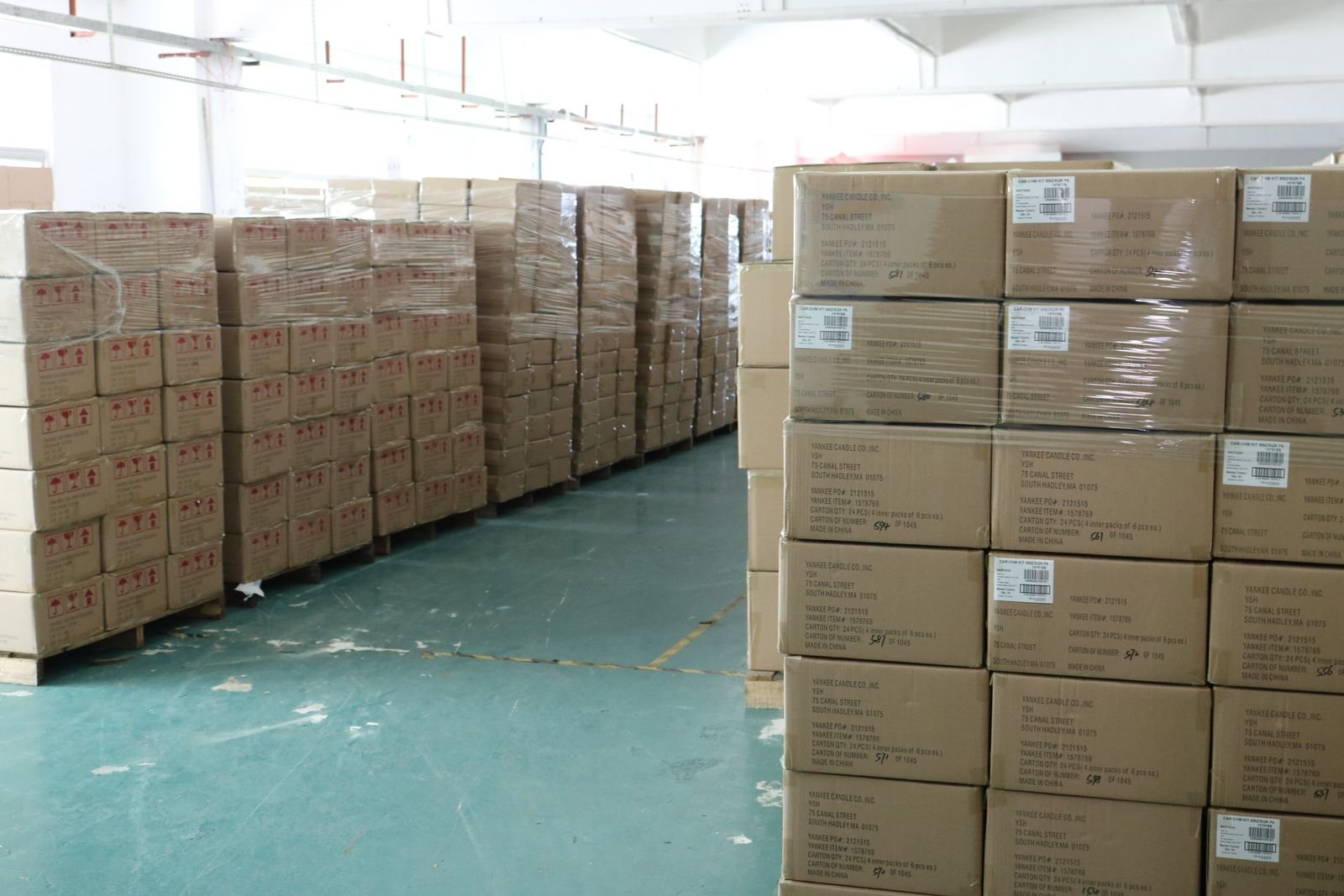
Border control sits alongside market surveillance, and Article 25 of Regulation (EU) 2019/1020 is the provision that connects the two. Article 25(1) requires Member States to designate customs authorities, one or more market surveillance authorities or any other authority in their territory as the authorities in charge of the control on products entering the Union market. Article 25(3) provides that products subject to Union law that are to be placed under the customs procedure of release for free circulation shall be subject to controls performed by the authorities designated for that purpose, and that those controls are carried out on the basis of risk analysis. Article 25(4) requires those authorities to exchange information about risks, including information about goods that are in temporary storage or under another customs procedure.
In practice this means a risk-based document check at the point of release for free circulation, with the possibility of a physical inspection of the goods. The border control article in the Official Journal is short, and its consequences for an importer are long: the data required at the border has to exist before arrival, and it has to match the goods in the container.
CE marking and the documents that support it
Not every metal souvenir needs CE marking. The Commission’s CE marking guidance is explicit that CE marking is compulsory only for most of the products covered by the New Approach Directives, and that it is forbidden to affix it to other products. It also states that a CE marking does not indicate that a product has been approved as safe by the EU or by another authority, and that it does not indicate the origin of the product. Where CE marking does apply, the Commission describes the manufacturer’s duties as carrying out the conformity assessment, setting up the technical file, issuing the EU declaration of conformity and affixing the marking to the product, while importers and distributors need to know the legal requirements and ensure that the products they import or distribute meet them.
Harmonised standards are the practical support for that file. The Commission states that a harmonised standard is a European standard developed by a recognised European Standards Organisation following a request from the Commission, and that the references must be published in the Official Journal of the European Union. Their use remains voluntary, and manufacturers, economic operators and conformity assessment bodies are free to choose another technical solution to demonstrate compliance. Where a standard is not harmonised, a product may still comply, but the route to proving it is longer. The Commission maintains both the list of references and the decisions taken on formal objections, so a buyer checking a technical file should check the reference against the Official Journal list of harmonised standards rather than against a supplier’s PDF.
What an importer should hold before the container leaves
The table below is the document set that turns a border query or a market surveillance request into a reply. If a document cannot be produced in the language the authority uses, the response starts with a translation problem rather than a compliance problem.
| Item | Held by | Who may ask for it | Lead time to produce |
|---|---|---|---|
| Commercial invoice, packing list, transport document and entry summary data | Importer and forwarder | Customs authority at presentation | Hours, from the document set |
| Tariff classification and customs value basis | Importer | Customs authority | Days, if the underlying order data is complete |
| Order, sample approval and production records | Importer and factory | Market surveillance authority | Days |
| Material, plating and finish declarations | Fábrica | Market surveillance authority | Days, if collected at sample stage |
| Technical file and EU declaration of conformity | Manufacturer or importer holding the obligation | Market surveillance authority | Days, if the file was assembled before shipment |
| Laboratory test reports and the material statements they relate to | Importer and laboratory | Market surveillance authority | Days to weeks, depending on whether testing is needed |
| Country of origin marking and the supporting origin statement | Importer and factory | Customs and market surveillance authorities | Days |
| Identification of the responsible operator, including postal address | Importer | Market surveillance authority | Immediate, if it is on the product, packaging, parcel or document |
The last row is the one to fix first, because it is the only item an officer standing at a container can check in a single glance. Our guide to country of origin marking for imported metal goods covers the labelling side, and the wider product rules sit in our compliance checklist for custom metal souvenirs.
Where the time cost sits
Metal gift samples take seven days, bulk production takes fifteen to twenty days, and the goods move by express, air or sea. That schedule works in the buyer’s favour for one reason: every one of the documents in the table can be created while the order is being produced rather than after it ships. A material declaration collected at sample stage costs nothing. The same declaration requested three weeks after the container has landed is a delay to the clearance of a consignment that is already accruing charges, and for a seasonal product it is a delay to the only selling window the goods have.
There is also a design point. Metal souvenirs are frequently packed in printed cartons, blisters or pouches, and the packaging is where the operator’s name and address usually goes. The artwork therefore has to carry the operator details of the company that will place the goods on the EU market, which is often not the factory and often not the same legal entity as the brand. Deciding that at artwork stage costs a print run. Deciding it after packing costs a repack.

Customs and surveillance response guide
Use this sequence when a query arrives, and when building the order file that makes the query answerable. Each step names the action and the record that proves it.
- Identify the authority and the request. Note whether the query comes from a customs office or from a market surveillance authority, because the two ask for different documents and follow different deadlines.
- Find the responsible operator. Establish which economic operator established in the Union is accountable for the product, and confirm that the name, trade name and postal address appear on the product, the packaging, the parcel or an accompanying document.
- Freeze the shipment record. Pull the commercial invoice, packing list, transport document, entry summary data, order number, sample approval and production batch reference into a single response folder.
- Check classification and value. Confirm the tariff classification and the customs value basis, with the supporting documents, ready for a request in either direction.
- Assemble the conformity file. Collect the technical documentation, the EU declaration of conformity and any laboratory reports, and check that each report is tied to the material statement and the batch it covers, in line with our note on how to read a third-party laboratory report.
- Reconstruct the supply chain. Prepare a plain account of the chain from the raw alloy to the packed carton: material sources, plating and finishing, packaging, packing and transport. Article 20(3) requires origin and supply chain data in a serious risk notification, so build it while the facts are fresh.
- Check the marks. Confirm what is printed or engraved on the product, the packaging, the parcel and the documents, because those marks are what an officer sees first.
- Respond in the required language. Answer in a language the authority can easily understand, which Article 4(3)(b) requires, and attach the underlying documents rather than summarising them.
- Act on a risk finding. If a finding identifies a risk, record the corrective action taken and the date, keep evidence of it, and note that the authority has to be informed where the risk is judged serious.
- Close the loop. Record the outcome, update the file template, and apply the change to the next order for the same product so the same question does not have to be answered twice.