
A branded bottle opener handed out at a trade show is a small metal object with an unusually large number of decisions attached to it. The format decides whether it works as a giveaway at all, the brand position decides which decoration process you can use, the quantity decides whether the piece is cast or machined, and the packaging decides whether it survives the journey to the recipient. Almost every programme that goes wrong goes wrong because one of those four decisions was made late, usually after the artwork was locked. This guide sets out how to make each of them in the right order, and what a factory needs from you at each stage so the quotes you compare are actually comparable.
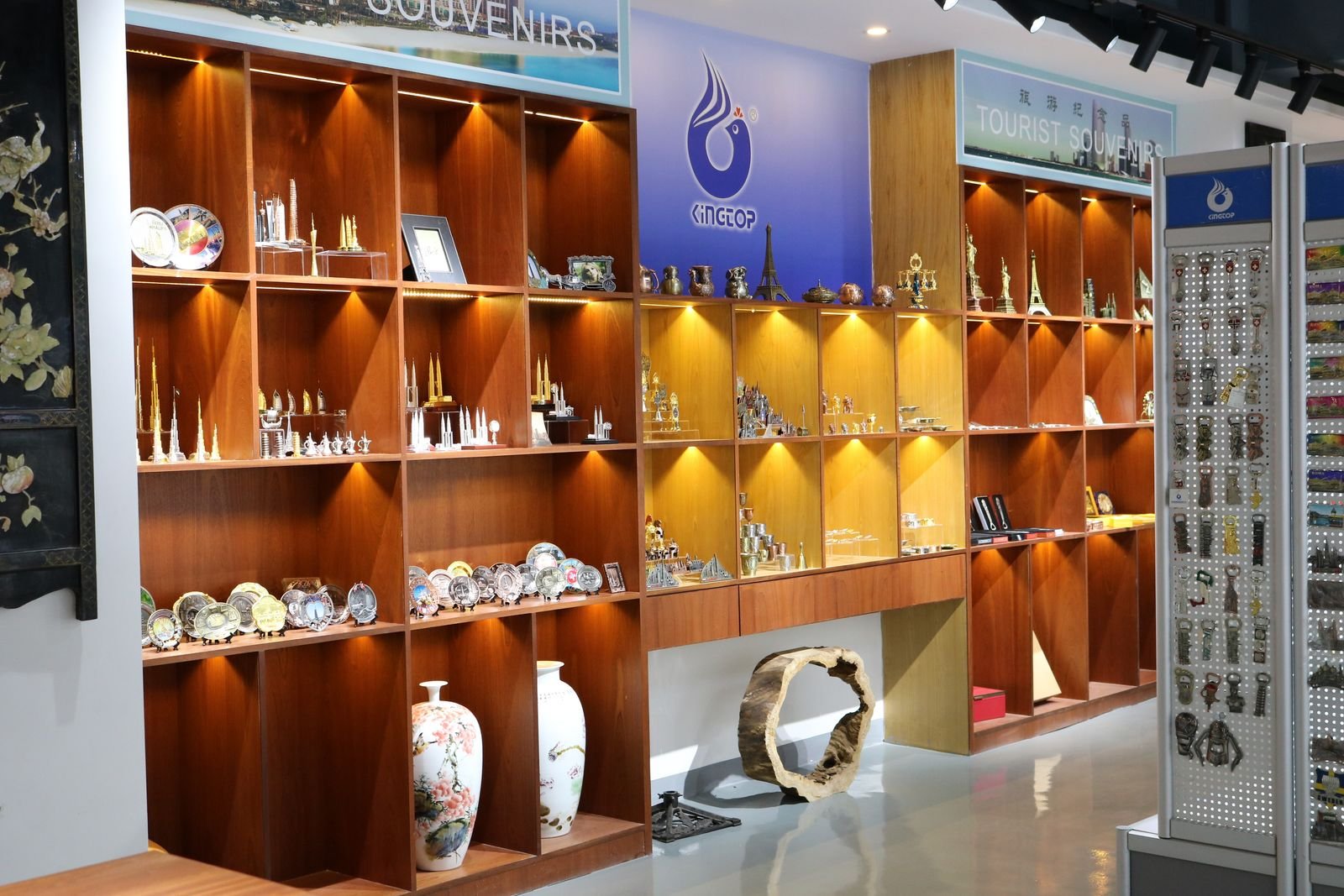
Why a giveaway bottle opener is a different order from a souvenir bottle opener
A souvenir bottle opener and a promotional bottle opener are made on the same equipment by the same people, but they are specified for two different jobs. The souvenir piece is designed to be bought by one person in a shop, priced against the shelf next to it, and kept as a memento of a place. The giveaway piece is designed to be handed to many people at once, usually alongside other items, usually at a moment when the recipient has no context for what they are holding, and then usually disappears into a drawer or a pocket within a week.
That difference changes what you specify. A souvenir opener carries a place identity and is judged on how it looks next to a magnet and a snow globe. A giveaway opener carries a brand identity and is judged on whether the person receiving it can tell in two seconds what the logo is and who gave it to them. If you take a souvenir design brief and hand it to a factory as a giveaway brief, you will get a souvenir with a logo on it, and it will underperform in exactly the way that matters, because the recipient had no other reason to keep it.
There is a second structural difference. Giveaway programmes are volume events. A souvenir order might be a few hundred pieces for one retail partner; a giveaway order can run to tens of thousands of pieces for a single event, delivered to a warehouse in batches and distributed over weeks. That scale changes the planning: you need a packaging and logistics plan that a souvenir order does not, and you need a decoration method that can be repeated identically across that volume without the finish drifting from unit to unit.
Our own guide to custom metal bottle opener manufacturing covers the mechanism side in detail, including how the opening action is engineered and why it decides the material choice. This article sits one level up, at the programme level, where the decisions are about format, brand, quantity, packaging and the handover to your own distribution process.
Four opener formats and what each one is actually for
Four formats cover the overwhelming majority of custom metal bottle opener orders. They are not interchangeable, because they solve different distribution problems.
| Format | How it is used | What it forces you to decide |
|---|---|---|
| Flat decorative bar | Handed out as a single piece, often in a paper sleeve or a pouch | Brand area, edge safety, and sleeve or pouch cost per piece |
| Keyring opener | Attached to a split ring or jump ring, clipped to a bag or a lanyard | Connector type, ring gauge, and whether the opener becomes a keychain |
| Magnetic wall opener | Sticks to a fridge or a metal panel, doubles as a magnet | Magnet material and pull, flatness, and the surface finish that holds the magnet face |
| Countertop or wall-mounted opener | A fixed piece fitted to a bar front, a wall or a table | Fixing method, mounting hardware, and a much lower order quantity |
The flat decorative bar is the workhorse of giveaway programmes because it is the cheapest way to get a shaped, three-dimensional branded object into a hand. It also has the widest range of decoration options, because the whole face is available for artwork.
The keyring opener is the strongest choice when the giveaway is attached to something else, such as a lanyard, a bag, or a welcome pack. The important point is that it becomes two products, not one. A buyer who has specified a keyring opener has also specified a keychain, and the connector, the ring and the attachment feature are subject to the same wear and pull considerations as any other metal keychain. If that sounds familiar, our guide to custom metal keychain manufacturing sets out how those attachment features are specified and approved.
The magnetic wall opener is the one that most often surprises buyers, because the magnet changes the manufacturing route. A magnet that has to be embedded in the casting adds a component, a magnet supplier, and a flatness requirement on the back face. You also need to decide how the item is packaged, because a magnet sitting against another magnet in a carton can chip or scratch the finish on the face that the recipient is supposed to look at.
The countertop or wall-mounted opener is a different commercial animal entirely. It is a fixture rather than a giveaway, it is ordered in far smaller quantities, and the installation method becomes part of the deliverable. For a programme where you are buying thousands of pieces, this format is usually wrong.

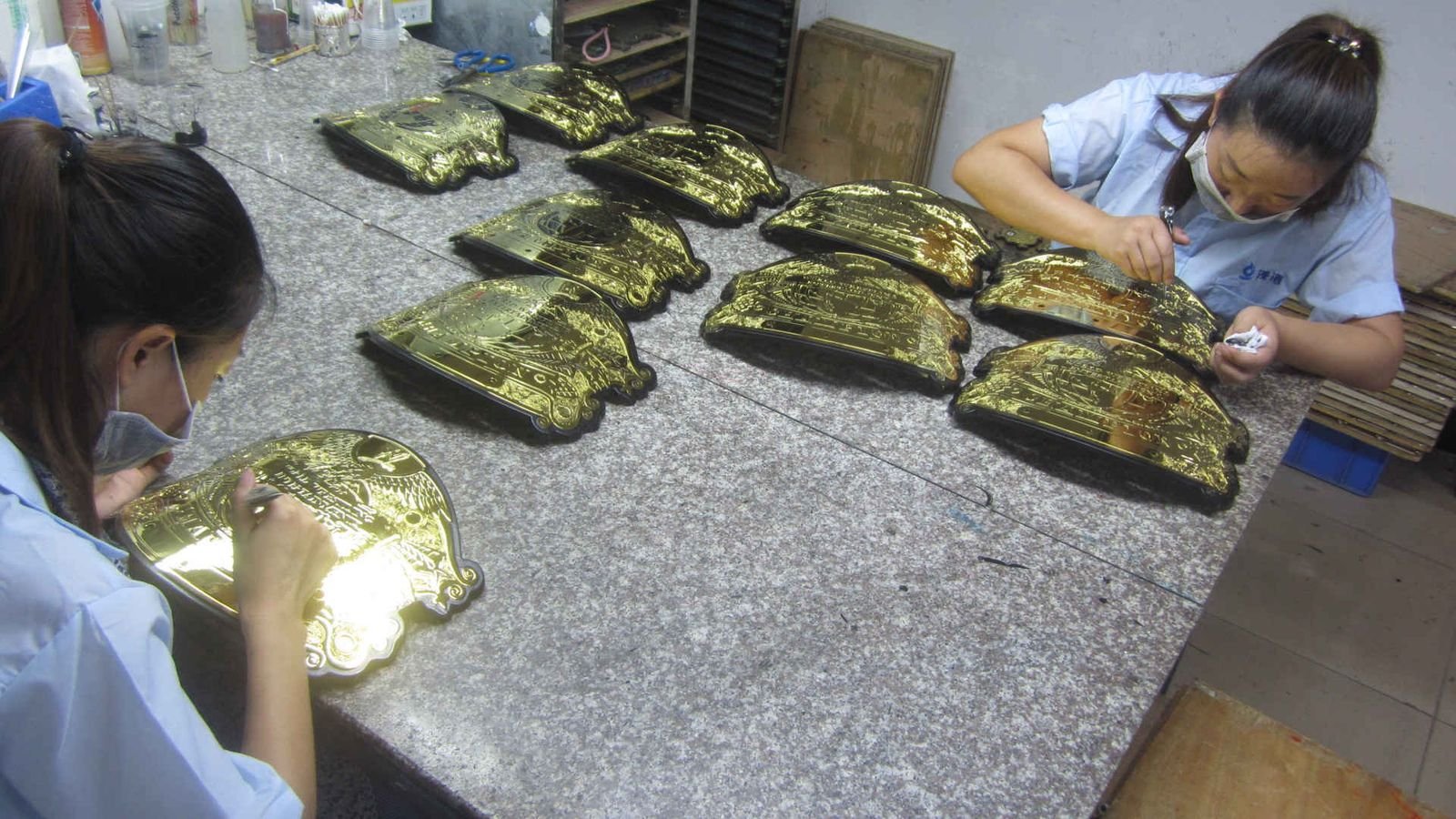
The deeper reason the format matters is visible on the factory floor. A cast opener and a machined opener are made on different equipment by different teams, and each team is optimising for a different set of shapes. The die casting workshop shown above is running a tool that was cut for one particular three-dimensional form; that form is the reason the piece is affordable, and it is also the reason the artwork has to work with the surface the tool produces.
Where the brand goes decides which decoration process you can use
The single most useful question to ask about a giveaway opener is not what shape it should be. It is where the logo can physically sit and how large it can be without compromising the function. A brand that needs to be read from across a table and a brand that needs to be felt in the hand want different things from the same object.
There is a constraint worth stating plainly: the working edge of an opener is working surface, not advertising space. If the artwork crosses the edge that goes under the cap, the decoration is in the way every time the opener is used, and it will be abraded. A factory that works from a flat artwork file will not protect you from this on its own, because the artwork arrives without knowledge of which surface is functional. The drawing is where that gets fixed, and it is worth spending a sentence on the drawing saying which surface is the working edge.
The second constraint is the same for every metal format. Small details need a minimum height and a minimum separation between them. Below a certain height a raised detail becomes a blob rather than a shape, and adjacent raised details merge into an unreadable patch. This is a manufacturing tolerance question, and it is settled by the drawing rather than by the artwork file. A brand with a small wordmark will need a larger face than a brand with a single symbol, and if the face is fixed by the format, the logo has to be redrawn rather than scaled.
The third constraint is the one that gets missed most often. On a cast zinc alloy piece, the logo sits in a curved or textured surface, and a flat artwork file will not reproduce cleanly if the surface is too broken. On a machined piece, the surface is flat and the artwork is predictable. That single difference is often the deciding argument between a cast opener and a machined one, and it should be made deliberately rather than by default.
Matching logo processes to the format
Six decoration processes cover essentially all custom metal gift work. They are not ranked, because the right one depends on how many pieces, how much depth you want, and how fine the artwork is.
| Процесс | What it does to the surface | Where it works well | Where it does not |
|---|---|---|---|
| Laser engraving | Removes material to leave a recessed mark | Fine line work on a flat machined face | Deep relief, or artwork with very fine internal detail |
| Screen printing | Prints ink or paint on the surface | Flat or gently curved faces, simple colour blocks | Recessed or heavily textured cast surfaces |
| Embossing | Raises the design from the metal | Simple shapes and wordmarks on sheet or machined faces | Undercuts and intricate shapes |
| Debossing | Presses the design into the metal | Subtle, durable marks on flat metal | Very fine detail at small sizes |
| Moulded logo | Forms the logo in the tool itself | Simple shapes, very high volumes, no secondary process | Brand changes after tooling, or complex artwork |
| Enamel colour fill | Fills recessed areas with coloured enamel | Two-colour marks, badges and multi-part logos | Where a single-colour mark is enough |
Two points in that table drive most giveaway decisions. The first is that moulded logo is the lowest-cost option per piece at high volume, but it locks the artwork into the tool. A giveaway programme that is confirmed, funded and fixed in its artwork can use it. A programme whose artwork might move should not, because changing the logo means new tooling rather than a new production run.
The second point is that engraving is the most forgiving of the surface. It works on a cast face as well as a machined one, because the laser works with the surface it finds rather than requiring a flat printing area. For a giveaway where the face shape is fixed by the opener design, engraving is often the safest route to a legible mark. Our article on custom metal gift packaging covers the presentation side, which matters just as much for a giveaway as the mark itself.
Compliance is a design input for giveaway items
A giveaway is a product placed on a market and handed to consumers. The regulatory frame that applies is the general product safety frame, and it changes how you should think about several everyday choices on the opener.
Regulation (EU) 2023/988 on general product safety sets out the manufacturer’s obligations. Article 9(1) requires that products placed on the market are designed and manufactured in accordance with the general safety requirement in Article 5. Article 9(2) requires an internal risk analysis and technical documentation before placing products on the market, containing at least a general description of the product and its essential characteristics relevant for assessing its safety, together, where appropriate, with an analysis of the possible risks and the solutions adopted to eliminate or mitigate them, including the outcome of any test reports. Article 9(3) requires that documentation to be kept up to date and made available to market surveillance authorities for ten years after the product has been placed on the market. The regulation is available in English at the EU Publications Office entry for Regulation (EU) 2023/988.
What that means for a giveaway opener is concrete. If the opener is intended to be used by a child, or is likely to be handled by one, the small detachable parts in the assembly matter. If it carries a magnet, the magnet is a separate component with its own considerations. If it is a wine accessory intended to touch a bottle, the food contact rules apply rather than the general safety rules. Each of these decisions should be recorded in the technical file, and the file is easier to build if you decide the format before you decide the artwork.
On materials, the engineering standard that governs the zinc alloy family is ASTM B86, which covers commercial zinc and zinc-aluminium castings and continuous cast bar stock. Its scope states that eight alloy compositions are specified, and that the zinc alloys Z33525, Z33527, Z35533 and Z35545 are used primarily in the manufacture of pressure die castings, while the zinc-aluminium alloys Z35638, Z35633 and Z35841 are used in the manufacture of both foundry and pressure die castings and are also fabricated into continuous cast bar stock used for prototyping and screw machine stock. The scope also notes plainly that the standard does not purport to address all of the safety concerns associated with its use. The entry page for ASTM B86-23 is the place to confirm the current edition and its scope for your own specification.
On quality systems, ISO 9001:2026, the sixth edition published in 2026, is the current standard for quality management systems requirements. A factory that holds it has a documented process for controlling the things that vary between units, which matters at giveaway volume where a visual inconsistency multiplied across thousands of pieces becomes visible.
One more programme-specific point. If your giveaway uses a trademark, the trademark position and the production timing are separate tracks. The United States Patent and Trademark Office states that the registration process usually takes 12 to 18 months, and recommends checking current processing wait times before committing to a launch date. It is entirely reasonable to produce giveaways with your brand before a registration completes, but the programme plan should not assume that clearance will arrive before the goods do. The USPTO timeline reference is at How long does it take to register?
Material and finish: why zinc alloy is the default for giveaway metal
Giveaway metal is mostly bought on unit cost against a fixed budget and a fixed quantity, which makes material choice a decision about how the budget is spent rather than about performance. Zinc alloy is the usual starting point for cast giveaway metal because it combines a low material cost with a short tool life and a fast cycle time in pressure die casting, which is what makes a shaped three-dimensional branded object affordable at giveaway quantities. Stainless steel, brass, bronze and iron are all available and each has its own case, but they change the process route and usually the price band.
Finishes change the cost and the perceived value more than the base material does. The confirmed finish options for custom metal gift work include gold, silver, rose gold, antique brass, antique silver, antique copper, black nickel and dual tone. Gold and rose gold read as premium at giveaway volume and are the first thing to reconsider when a programme budget is cut. Antique finishes and black nickel are typically the easiest way to keep a giveaway programme inside a fixed unit cost while still looking finished.
Durability should be specified as a method rather than as a number. ISO 9227, the international standard for corrosion tests in artificial atmospheres covering the neutral, acetic acid and copper-accelerated salt spray tests, is explicit that it does not specify the dimensions or types of test specimens, the exposure period to be used for a particular product, or the interpretation of results; those details come from the appropriate product specification. The standard also notes that the acetic acid and copper-accelerated tests are especially useful for testing decorative coatings of copper, nickel and chromium, and that salt spray testing is useful for detecting discontinuities such as pores in metallic and conversion coatings. In other words, ISO 9227 tells you how to run the test, and your specification has to say how long to run it and what to accept. The entry for ISO 9227:2017 carries that scope. The correct request to a factory is therefore a stated test method and a stated acceptance, not a general request for a durable finish.
What the order quantity actually decides
Quantity is the variable that determines the whole manufacturing route, so it should be settled before anything else is finalised. Three tiers cover most custom metal gift work, and each one opens up a different process.
| Tier | Typical use | What it changes |
|---|---|---|
| 100 pieces | Trial orders, product line development, market testing | Existing tooling where available; the most flexible route for artwork changes |
| 500 pieces | Standard designs entering regular production | The working baseline for a designed piece with a normal finish |
| 1000 pieces | New tooling and full custom programmes | New tooling justified, and the point where unit economics settle |
Those tiers are the standard for our custom metal gift work, and they are worth reading as a map rather than as a rule. The 100-piece tier exists so that a buyer can validate a design before committing to a programme. The 500-piece tier is where most standard designs run. The 1000-piece tier is where a new tool is justified and where a giveaway programme with committed volume should sit. We explain the reasoning behind these numbers in more detail in our article on what MOQ really means for custom metal gifts.
For a giveaway specifically, the practical point is that the tier you quote at is the tier you will be held to. Quoting 100 pieces to get a lower unit price and then scaling to 20,000 will not work, because the second number will be built on a different process. If the programme volume is known, quote it. If it is not known, quote the smallest realistic figure and put a written note on what changes when the volume moves.
Sample first, then production: the two-stage path
Every serious giveaway programme should run a sample stage before the bulk order, and the reason is specific rather than procedural. A sample confirms three things at once: whether the shape reads correctly in the hand, whether the brand mark is legible at the size you specified, and whether the finish matches the reference you approved. All three are cheaper to fix on a sample than on a production run.
The timing is usually seven days for a sample, followed by roughly fifteen to twenty days for mass production once the sample is approved. That sequence matters for programme planning, because the production clock does not start until approval is signed. If your giveaway is tied to an event, the approval date is the date you should plan backwards from, not the purchase order date.
Sample approval should be a written decision against a checklist, covering the shape, the mark, the finish, the connector if there is one, and the packaging. Our bottle opener manufacturing guide covers the approval package in the context of the mechanism, and the same principle applies here. The detail that matters most in a giveaway programme is that the sample must be the same piece that goes into production. A sample made from a different tool or a different finish is not an approval of anything.
Packaging and presentation for a giveaway
Packaging is the last chance to make a giveaway feel intentional, and in a giveaway programme it often carries more weight than the object itself, because the packaging is the first thing the recipient sees and the last thing they remember.
Three decisions matter. The first is whether the piece is presented loose, in a paper sleeve, in a self-sealing pouch, or in a rigid box. A rigid box is a different product proposition from a sleeve and should be treated as a separate costing line, because it changes both the unit cost and the carton dimensions. The second is the print treatment on the packaging. Printing the brand on the sleeve rather than relying only on the metal mark means the message survives even if the piece is dropped in a drawer without being read. The third is the shipping format, which for a giveaway is usually a master carton packed to a specific inner box count so that your distribution team can open one carton and distribute a fixed number of units per person.
For a giveaway that is shipped to a venue, the packing format is a logistics decision as much as a packaging decision, and it should be agreed with your warehouse before the cartons are made rather than after.
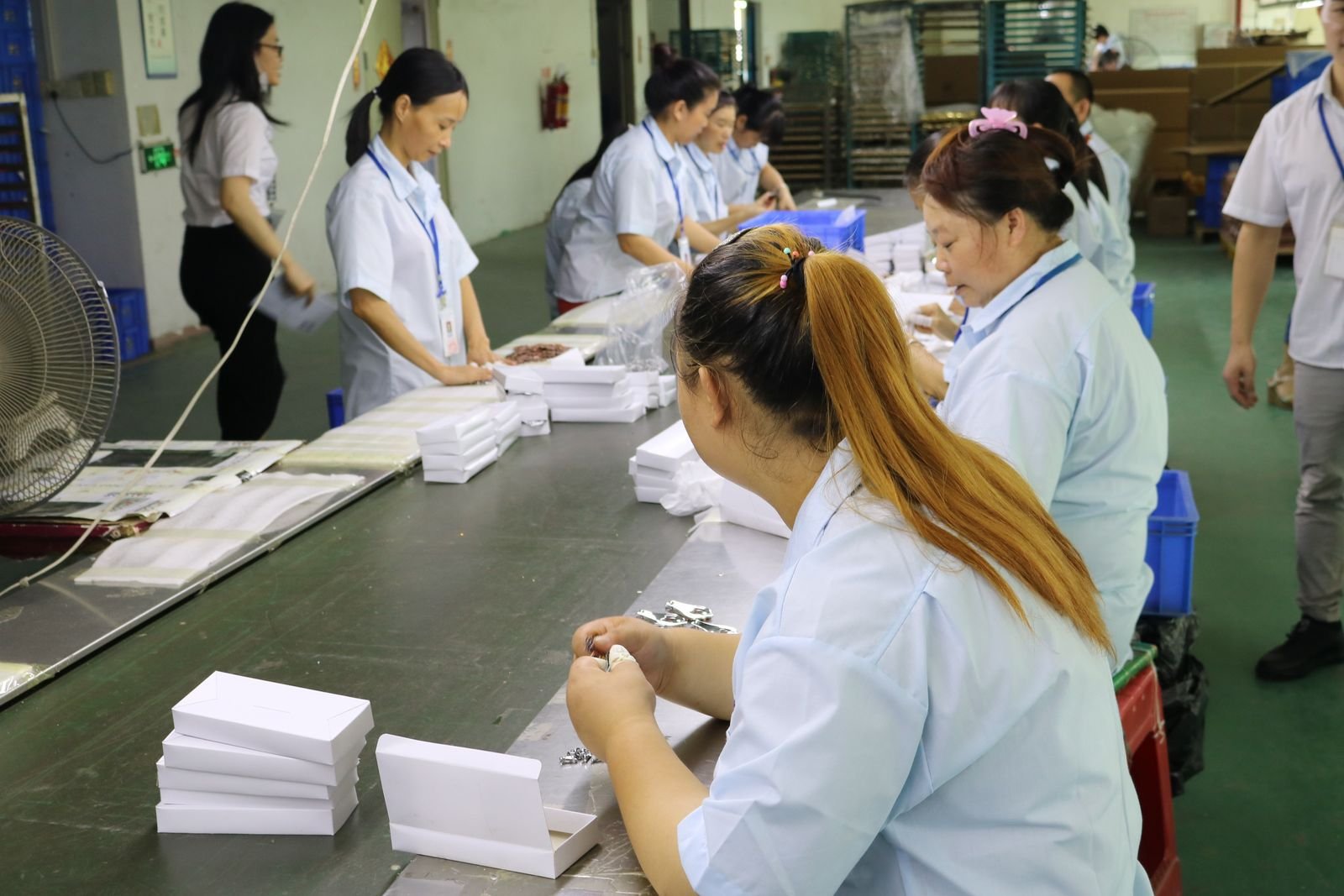
The packaging line above is where the last of the programme risk sits. Pieces that arrive scratched, or bent, or with a scuffed printed sleeve, turn a correct order into a disputed one, and the evidence trail for that dispute is the carton and the packing method rather than the artwork file.
How to brief a factory so the quotes are comparable
Most quote comparisons fail for a mundane reason: the quotes are for different products. One supplier quoted a cast flat opener with engraved logo, another quoted a machined bar with screen-printed logo in a sleeve, and the numbers are being compared as if they were the same item. The brief below is the minimum that makes three quotes comparable.
| Brief element | What to state | Why it is needed |
|---|---|---|
| Format | Flat bar, keyring, magnetic or mounted, with the working edge identified | Decides the decoration options and the material route |
| Brand position and size | Where the mark sits, its maximum height, and whether it may cross a working surface | Decides which processes are available |
| Artwork status | Vector file with fonts outlined, and whether it is final | Separates tooling cost from decoration cost |
| Quantity | Total programme quantity, and whether it is split across deliveries | Decides the tier, and therefore the unit price |
| Material and finish | Base material plus the named finish from the confirmed list | Removes the most common source of mismatched quotes |
| Packaging | Format, print treatment, and units per inner box | Often a larger cost line than the metal itself |
| Delivery | Destination, split delivery needs, and required arrival date | Decides the transport mode and the split schedule |
| Approval route | Who signs the sample and by when | Protects the production start date |
If you send the same brief to three factories with the same artwork file and the same quantity list, the quotes will differ for real reasons and you will be able to see what is causing the difference. That is the only way a quote comparison is worth doing.
Failures we see repeatedly in giveaway opener programmes
The first is artwork applied to a working edge. The piece is beautiful, the mark is unreadable, and the opener wears the mark away in a week of use. The fix is one line on the drawing.
The second is a logo scaled down to fit. A brand that was drawn for a business card is resized into a small cast face and becomes an unreadable smudge. The fix is redrawing, not scaling, and it is much easier to accept before tooling than after.
The third is packaging treated as a rounding error. The unit metal cost looks fine, the packaging is done properly, and the total is well over the budget because the packaging was quoted per piece at a volume nobody costed properly. The fix is to have packaging quoted on the same basis as the metal.
The fourth is a programme that skips the sample because the shape has been seen on a screen. A screen render is a shape. It is not a weight, a surface, a finish or a mark. The sample stage exists to convert a render into a decision.
The fifth is a delivery date set from the artwork approval date rather than the sample approval date. This one costs a programme its date, and it is entirely avoidable by building the schedule backwards from the event date through the production and transit stages.
Questions to put in the request for quotation
Before you ask for a price, it helps to have answers to these. How does the proposed format support the way the piece will be used and distributed? Which decoration process is proposed for the brand position, and what makes it the right one? What does the quantity tier mean for tooling, and what happens to the unit price if the quantity moves? What is included in the sample, and how long from sample approval to delivery? What is the packaging format, and how many units per inner box? Which test method will be used to verify the finish, and what is the acceptance? What is included in the technical file, and how long is it retained? What is the transport mode and the split delivery plan? If the programme is for the European market, how are the safety obligations and the technical documentation handled?
Those nine questions are the difference between a quote and a plan. A supplier who answers all of them clearly has a system behind the answer.
Where to send your enquiry
If you are preparing a branded metal bottle opener programme, send the format, the quantity, the artwork status, the finish and the delivery date to our sales team at sales@kingtopgift.com, and say in the subject line whether the programme needs a deep article style specification or simply a price against a drawing. You can see the format range on our custom bottle opener page, and a real production example of a combined opener and keychain piece on our enamel travel bottle opener keychain product page.
We manufacture in our own factory in Dongguan, with zinc alloy as the main material alongside stainless steel, brass, bronze and iron, a plant of 9,600 square metres, more than 200 staff and a daily capacity of 30,000 pieces. Samples take about seven days and mass production about fifteen to twenty days. Shipping is by express, air or sea. If your programme is still open on format, that is a normal conversation to have before anything is drawn.
The giveaway opener handover checklist
Use this as the last check before a giveaway programme is released to production.
| Check | Confirmed when | Owner |
|---|---|---|
| Working edge marked on the drawing | The drawing carries a note identifying the surface the cap contacts | Engineering |
| Brand position inside the printable area | The mark sits on a named surface and does not cross the working edge | Brand owner |
| Artwork is vector, final and legible at size | A printed proof has been checked at the actual mark size | Brand owner |
| Decoration process matches the surface | The chosen process was agreed against the surface texture, not the artwork file | Manufacturer |
| Quantity and split delivery confirmed | Written quantity, tier and delivery schedule issued | Procurement |
| Sample approved in writing | Signed checklist covering shape, mark, finish, connector and packaging | Procurement |
| Finish test method and acceptance stated | Test method and acceptance written into the purchase specification | Quality |
| Technical file scope agreed | Safety documentation scope and retention confirmed before production | Manufacturer |
| Packaging and inner box count fixed | Carton dimensions and units per inner box confirmed with the warehouse | Logistics |
| Delivery date derived from approval | The programme schedule starts from the sample approval date | Project owner |
A giveaway programme is finished when the recipient can tell what the item is and who it is from in the moment it is handed over. Everything on that checklist serves that outcome, and every item on it is decided before the metal is ordered.