
An environmental claim on a metal souvenir is a legal statement, not a marketing adjective. If you write “recycled” on a product page, on a packaging insert, or on a spec sheet sent to a retailer, you have made a factual assertion that a regulator or a competitor can test. The rules that govern that assertion are specific, and they are stricter than most buyers expect: in the United States, an unqualified recycled content claim can be deceptive even when the metal really does contain recycled material, because the way that material entered the waste stream determines whether the claim is truthful at all. This guide covers what each common claim actually requires, what evidence a supplier has to produce before you can repeat the claim, and how the European rules on packaging recycled content change the question for anything that arrives in a box.
Two things make environmental claims unusual in B2B buying. The first is that the burden of proof sits with the person making the claim, not the person receiving the goods. The second is that the claim does not expire when the order ships — it sits on your packaging, your website, and your sales literature, and it stays there until you pull it down.
That combination makes environmental claims a category where buyers are often too quick to repeat what a supplier told them. This article sets out what is verifiable, what is not, and what a metal gift buyer should ask for before putting any environmental wording into the market.
The distinction that decides most cases: pre-consumer and post-consumer
The United States Federal Trade Commission’s Green Guides, codified at 16 CFR Part 260, address recycled content claims directly, and the definition is where most claims fail. Section 260.13 provides that it is deceptive to misrepresent, directly or by implication, that a product or package is made of recycled content, and states that recycled content includes recycled raw material as well as used, reconditioned and re-manufactured components.
The operative test is set out in the same section. It is deceptive to represent that an item contains recycled content unless it is composed of materials that have been recovered or otherwise diverted from the waste stream, either during the manufacturing process (pre-consumer) or after consumer use (post-consumer). Where the source of recycled content includes pre-consumer material, the advertiser should have substantiation that the pre-consumer material would otherwise have entered the waste stream.
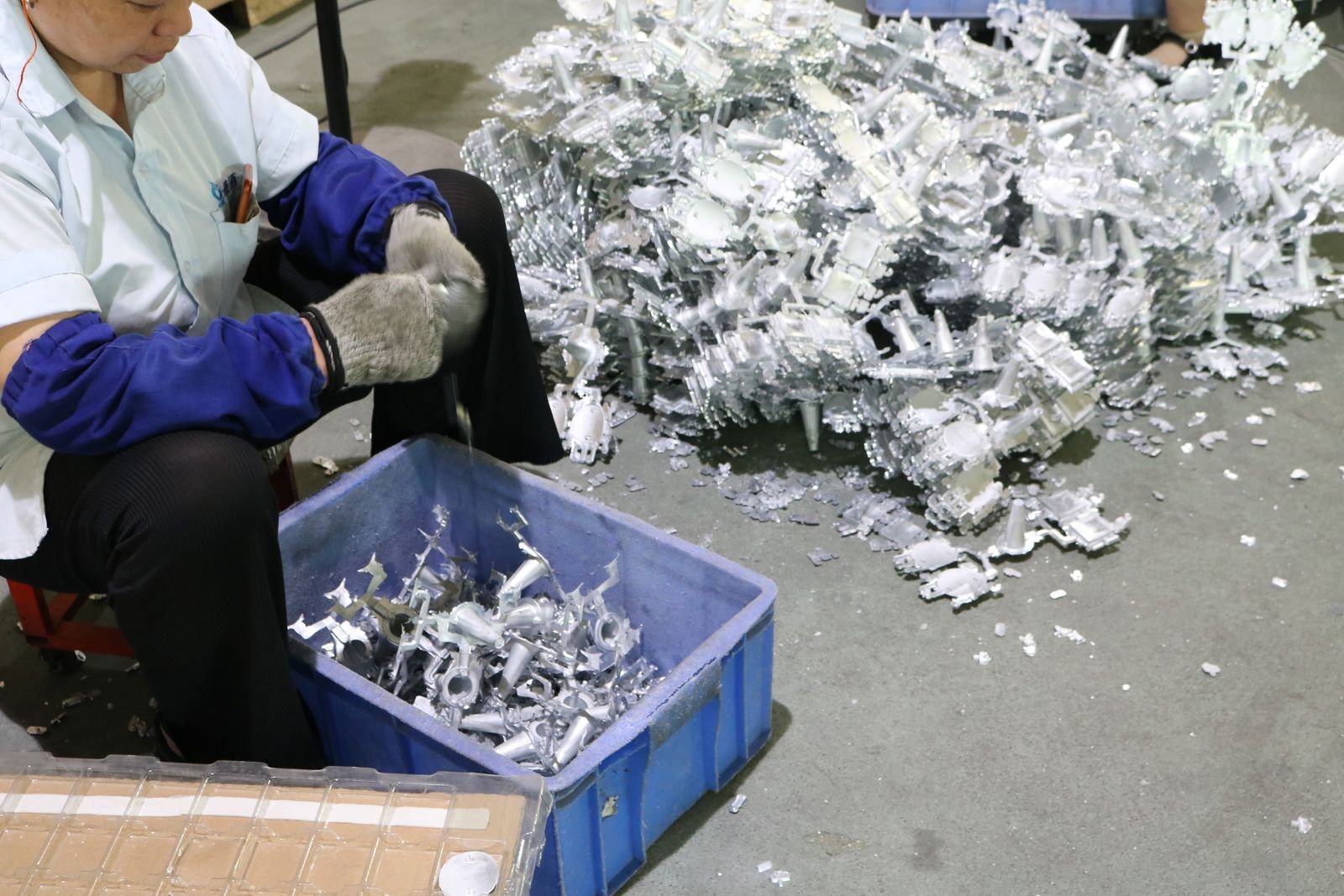
Read that last clause carefully, because it is the one that decides metal programmes. A factory that collects its own sprues, runners and machining scrap and puts them back into the melt is doing something that is good practice and good economics. It is not pre-consumer recycled content, because that material would normally have been reused within the original manufacturing process rather than entering the waste stream. The FTC’s own example makes the point: where a manufacturer collects spilled raw material and scraps from the original manufacturing process and combines them with virgin material after minimal reprocessing, a recycled content claim is deceptive, because those spills and scraps are normally reused by industry within the original manufacturing process and would not normally have entered the waste stream.
That single example decides the majority of real-world metal souvenir claims. Internal scrap remelted in the same factory is not recycled content. Metal that came out of another product’s disposal stream and was refined into new alloy is.
Where the claim does distinguish pre-consumer from post-consumer, the guide says the marketer should have substantiation for any express or implied claim about the percentage of each in an item. So a claim of “contains 40% recycled content” is not a safe version of an unqualified claim; it is a more specific claim that requires more specific evidence.
Two adjacent sections of the same part sharpen the point. Section 260.4 deals with general environmental benefit claims, and states that unqualified general environmental benefit claims are difficult to interpret and likely to convey a wide range of meanings, including that the item has specific and far-reaching environmental benefits or no negative environmental impact at all; because it is highly unlikely that marketers can substantiate all reasonable interpretations of such claims, they should not make them. A qualified general claim must use clear and prominent language limiting it to specific benefits, and must not imply that a specific benefit is significant if it is in fact negligible. This is why “eco-friendly” or “green” on a metal item with no named attribute is not a weaker claim than “recycled” — it is an unusable one, because there is no attribute to point to.
What each claim type requires
The Green Guides separate several claims that buyers routinely treat as interchangeable. They are not interchangeable, and each has its own substantiation test.
| Claim | What the FTC Green Guides require | What evidence a supplier must produce | Common failure |
|---|---|---|---|
| General environmental benefit (“eco-friendly”, “green”) | Unqualified general environmental benefit claims are difficult to interpret and likely to convey a wide range of meanings, including that the product has no negative environmental impact; marketers should not make them. A qualified claim must use clear and prominent language limiting the claim to specific benefits, and must not imply a specific benefit is significant if it is negligible | A specific attribute with evidence — not a general impression | “Environmentally friendly” on a metal item with no defined attribute |
| Recycled content | Material must be recovered or otherwise diverted from the waste stream, pre-consumer or post-consumer. Pre-consumer material requires substantiation that it would otherwise have entered the waste stream | Chain of custody for the feedstock: supplier declaration, refinery or recycler documentation, mass balance records | Counting internal factory scrap as recycled content |
| Unqualified recycled content | Permitted only if the entire product or package, excluding minor incidental components, is made from recycled material. Otherwise the claim must be clearly and prominently qualified as to the amount or percentage by weight | Weight calculation showing the recycled share of the finished piece, not the billet | Claiming “recycled” on a piece that is 98% virgin alloy |
| Recyclable | A product should not be marketed as recyclable unless it can be collected, separated or otherwise recovered from the waste stream through an established recycling program for reuse. Unqualified claims only where recycling facilities are available to at least 60 percent of consumers or communities where the item is sold; below that, all recyclable claims must be qualified | Market-specific recycling availability, assessed per market of sale | “Recyclable” on a mixed-metal item with no collection route in the target market |
| Used, reconditioned or re-manufactured components | The recycled content claim must be clearly and prominently qualified to avoid deception about the nature of those components, unless context already makes it clear | Description of the component condition and its source | Calling re-manufactured parts “recycled” without qualification |
Two features of this table deserve emphasis for a metal buyer. The first is the sixty per cent threshold in the recyclable row: recyclability is not a property of the item alone, it is a property of the item plus the collection infrastructure of the market where it is sold. The same souvenir can be legitimately recyclable in one country and misleadingly claimed in another. The second is the weight qualification. Recycled content is measured by weight in the finished product, not in the raw material received, so a supplier who sends you a recycled billet certificate has not answered the question you need answered.
The full text of the recyclable rule is worth reading in the original, because it draws a distinction that matters for multi-market programmes. Section 260.12 states that a product or package should not be marketed as recyclable unless it can be collected, separated or otherwise recovered from the waste stream through an established recycling program for reuse or use in manufacturing or assembling another item, and that marketers should qualify recyclable claims to the extent necessary to avoid deception about the availability of recycling programs and collection sites. Where facilities are available to less than a substantial majority, marketers may always qualify by stating the percentage of consumers or communities that have access to facilities that recycle the item, or may use qualifications that vary in strength depending on facility availability, with the emphasis on limited availability increasing as access falls.
The international framework for self-declared claims
The Green Guides are a United States instrument. A buyer selling across multiple markets needs the broader framework, and the relevant international standard is ISO 14021, titled Environmental labels and declarations — Self-declared environmental claims (Type II environmental labelling). The ISO committee entry for ISO 14021 describes the standard as specifying requirements for self-declared environmental claims, including statements, symbols and graphics, regarding products, and describing selected terms commonly used in environmental claims together with qualifications for their use.
Note the version. The ISO committee page records ISO 14021:2016, Edition 2, March 2016 as withdrawn, with a new version available: ISO 14021:2026. If you are buying a supplier’s environmental policy or asking a certification body to assess a claim, check which edition is being applied, for the same reason discussed in our guide to auditing a Chinese metal gift manufacturer — the year matters, and the standard has moved.
ISO 14021 is a Type II environmental label, which is a self-declared claim made without third-party verification. That is the category most metal souvenir environmental wording falls into, and the distinction from a third-party label is worth keeping in mind when you write the wording on the pack. A self-declared claim is the claimant’s own assertion. A verified claim carries a third party’s assessment, and the two are usually communicated differently even when the underlying attribute is identical.
What the European rules change about packaging
If your metal souvenirs arrive in the European Union in packaging, a second layer of rules applies to the packaging specifically. The European Commission’s overview of packaging waste describes the current regime as the Packaging and Packaging Waste Regulation, which replaced the 1994 Packaging Directive and establishes a harmonised, directly applicable regime governing all packaging placed on the EU market regardless of material or origin, along with all packaging waste generated across Member States.
Two features of that description matter for a buyer. First, it applies regardless of material or origin, so a metal product packed in a plastic bag from outside the EU is inside the scope. Second, it covers the entire lifecycle of packaging and sets mandatory rules for eco-design, recycled material content, waste prevention, reuse formats, and collection and recycling. Recycled material content in packaging is therefore a regulated design parameter in the EU, not merely a marketing option.
The same source frames the scale of the problem: packaging waste reached a record 186.5 kg per person in 2022, projected to grow without regulatory intervention, and packaging represents nearly half of all marine litter. It also notes public health concerns from harmful chemicals such as PFAS in food contact materials, and that varying national waste rules were creating trade barriers within the internal market — which the regulation was introduced to address. For a metal gift buyer, the practical consequences are that packaging composition decisions have to be made for the EU market specifically, and that a packaging specification written once for global use may not satisfy the EU regime.

Questions to ask a supplier before repeating an environmental claim
Every question below is answerable from documents. A supplier that cannot answer them is telling you that the claim cannot be repeated.
| # | Question | Evidence required | Status |
|---|---|---|---|
| 1 | Is the claim about the metal, the packaging, or both? | Written claim statement naming the exact product or packaging component | ☐ |
| 2 | Is the recycled material pre-consumer or post-consumer? | Supplier declaration stating the classification and the origin of the feedstock | ☐ |
| 3 | Does the material come from internal production scrap or from a genuine waste stream? | Statement excluding internal scrap remelted in the same facility, if that is the case | ☐ |
| 4 | What is the recycled share by weight of the finished piece? | Weight calculation for the finished item, not the billet, with incidental components identified | ☐ |
| 5 | Which document supports the chain of custody? | Recycler or refiner documentation, mass balance records, and audit rights over the supply chain | ☐ |
| 6 | Is the claim qualified? | The exact qualifier wording that will appear on pack, insert and web page | ☐ |
| 7 | If the claim is “recyclable”, is there an established program in each target market? | Market-by-market collection availability, and the qualifier for any market below sixty per cent access | ☐ |
| 8 | Does the packaging meet EU requirements for the market it ships into? | Packaging specification with material, weight and recycled content stated per component | ☐ |
| 9 | Which edition of ISO 14021 is the claim built on? | Reference to ISO 14021:2026 or a documented position on the withdrawn 2016 edition | ☐ |
| 10 | Who withdraws the claim if the evidence stops being valid? | Contract clause assigning responsibility for updating or removing the wording | ☐ |
Writing the claim into your own materials
Once a claim is verified, the wording still has to survive translation, layout and the printing process, which is where well-founded claims get lost. Our guide to custom metal gifts packaging covers the packaging options available and what each one changes, which is where a claim’s placement gets decided. Our guide to custom metal souvenir compliance in the EU and US sets out the regulatory requirements that sit alongside environmental claims on the same product, because a metal item entering the US market has to satisfy both the product safety rules and the marketing claim rules, and a failure in either one reaches the same retailer.
Two practical points close this out. The first is to write the qualifier next to the claim rather than on a separate sheet — the Green Guides require qualification to be clear and prominent, and a footnote on a spec sheet does not travel with the product once it is on a retail shelf. The second is to keep the evidence alive for as long as the claim is in the market. A claim is only as good as the documentation behind it on the day a regulator, a retailer, or a competitor asks, and that day is usually several years after the order you based the decision on.
The honest summary is this. Recycled content is genuinely available in metal manufacturing, but it comes from a specific feedstock, it must be traced, and it must be described accurately. Any supplier willing to claim it without a chain of custody document is telling you the claim is decoration. Ask for the document, and the answer will usually be that they cannot make the claim — which is a perfectly good outcome, because it leaves you free to describe the product accurately instead.