
Buyers of custom metal gifts rarely ask for carbon data before they ask for price, and that is the wrong order. A factory can quote unit cost in a day, but the emissions boundary behind a per-piece carbon number takes a specified method, a specified scope and a specified evidence trail — and a zinc alloy souvenir order has three different places where that boundary can be drawn. The GHG Protocol Corporate Standard, its Scope 3 Calculation Guidance, and the ISO family covering environmental management systems, product carbon footprint and environmental product declarations each govern a different layer, and a purchase order that names the wrong one produces a number you cannot use in an annual report. What follows is the framework for specifying carbon data correctly before the tooling is opened.

Why the Order of Questions Matters
A sourcing conversation about metal gifts usually runs the same way. The buyer sends artwork, asks for a quotation on a specific quantity, negotiates tooling, approves a sample, and then — often after the first shipment is already on a vessel — someone in the sustainability or reporting function asks whether the factory can provide carbon data for the product. At that point the quote is closed, the tooling is paid for, and the emissions question has no room left to influence anything except paperwork.
Carbon data is not a certificate you attach at the end of a project. It is the output of a measurement and accounting process, and the process has to be specified before the first alloy is melted. The reason for this sequencing is structural rather than administrative: several published accounting frameworks exist, and each one draws the boundary around emissions in a different place. A figure produced under one set of rules will not reconcile with a figure produced under another, and a buyer who accepts two suppliers’ numbers that were calculated on different bases has no comparison at all.
This is not a corner case that only affects large brands. Any foreign buyer of metal souvenirs — a gift shop chain, a museum shop operator, a tourist attraction procurement team, a brand accessory buyer — can end up in a position where their own customer, a corporate client or a reporting obligation requires emissions information about goods they did not manufacture. The factory being on the other side of an ocean, with a different regulatory starting point, does not transfer that obligation. It just means the data has to travel with the goods.
The practical consequence is that the carbon requirement belongs in the enquiry document, not in a follow-up email. We treat it the same way we treat a plating specification or a logo process: something written into the specification before the quotation is priced. This article sets out which published framework covers which layer of the question, what a factory can realistically produce, and what to ask for in a form that survives an audit.
The Three Accounting Layers Buyers Confuse
Most confusion in carbon requests comes from treating three distinct layers as one thing. They are not interchangeable, and mixing them is the most common reason a supplier returns a document that the buyer’s own reporting team rejects.
The first layer is the inventory layer: the greenhouse gas emissions an organisation itself directly generates and controls, and those associated with the energy it purchases. This is the layer covered by the GHG Protocol Corporate Standard, which provides requirements and guidance for companies and other organisations preparing a corporate-level greenhouse gas emissions inventory. The standard covers the seven gases covered by the Kyoto Protocol: carbon dioxide (CO2), methane (CH4), nitrous oxide (N2O), hydrofluorocarbons (HFCs), perfluorocarbons (PFCs), sulphur hexafluoride (SF6) and nitrogen trifluoride (NF3). It was updated in 2015 with the Scope 2 Guidance, which allows companies to credibly measure and report emissions from purchased or acquired electricity, steam, heat and cooling.
The second layer is the value chain layer: everything upstream and downstream of what the organisation sells. A metal gift buyer sits squarely inside this layer when it purchases cast zinc alloy, pays for plating, and ships finished souvenirs to a retail customer. The Scope 3 Calculation Guidance addresses this layer with technical guidance on calculation methods for all fifteen categories of scope 3 emissions — including purchased goods and services, transportation and distribution, and use of sold products. It provides revised decision trees for many of the categories, guidance that can be downloaded separately for each one, and Appendix D, which contains a table summarising the different calculation methods available for each category. Behind that guidance sits the Corporate Value Chain (Scope 3) Standard itself, which allows companies to assess their entire value chain emissions impact and identify where to focus reduction activities.
The third layer is the product layer: the emissions associated with one specific unit or one specific functional unit of product. This is where a factory is the natural owner of the data, and where the ISO standards come in.
| Layer | Published framework | What it governs | Who normally holds the data |
|---|---|---|---|
| Organisational inventory | GHG Protocol Corporate Standard, with Scope 2 Guidance | Direct emissions and purchased energy for an organisation or site | Factory, for its own site |
| Value chain | GHG Protocol Corporate Value Chain (Scope 3) Standard and Scope 3 Calculation Guidance | Fifteen categories of upstream and downstream emissions, with calculation methods | Buyer, using supplier inputs |
| Product | ISO 14067:2018 — Greenhouse gases — Carbon footprint of products — Requirements and guidelines for quantification | Quantification of the carbon footprint of a specific product | Factory or a qualified third party |
| Declared environmental claims | ISO 14025:2026 — Environmental statements and programmes for products — Environmental product declarations (EPDs) | The format and content of a published environmental declaration | Factory, published as a document |
| Management system | ISO 14001:2026 — Environmental management systems — Requirements with guidance for use | The processes a site operates to control environmental impact | Factory, via certification |
Note what is not in that table. There is no single document called a metal gift carbon certificate. What exists is a set of published methods, and a factory’s contribution under each one is different in scope, in effort and in what it can defensibly be used for.
What ISO 14067 Changes About a Product Carbon Figure
The product layer is governed by ISO 14067:2018, Greenhouse gases — Carbon footprint of products — Requirements and guidelines for quantification, first edition, published August 2018. It is a quantification standard, not a declaration standard. The distinction matters when you ask a factory for a number.
A quantification standard specifies how a product’s footprint is calculated and what must be declared about that calculation: the functional unit used, the system boundary applied, the allocation rules, the data quality requirements and the treatment of data gaps. A declaration standard specifies how the result is published and what a reader is entitled to assume when they read it. They are complementary, and confusing them produces two common failure modes. Buyers who only ask for a number, without the boundary statement, receive something they cannot audit. Buyers who only ask for a document, without checking what it declares, receive a formatted page with no traceable calculation behind it.
For a metal souvenir order, the functional unit and the system boundary are the two decisions that change the answer most, and both belong to the buyer in practice. The functional unit could be one piece, one kilogram of finished metal, or one functional unit of product placed on a shelf. The system boundary could cover cradle-to-gate — everything from raw material through the factory gate — or cradle-to-grave, which adds distribution and use. Because a die-cast souvenir is durable and typically has no energy draw in use, a cradle-to-gate boundary is often the practical choice for a metal keepsake. That is a decision with consequences for the resulting figure, and it is worth making explicitly rather than accepting whatever the supplier’s template happens to say.
One point worth flagging for anyone reading a supplier document carefully: a carbon footprint figure is only as good as its evidence trail. Where a supplier cannot obtain primary data for an input, the standard’s data quality hierarchy expects that gap to be disclosed rather than quietly filled. A document that states its own data quality rating is a more useful document than one that presents a single number with no qualifications.

Why Scope 3 Is Where a Metal Gift Factory Lands
For the buyer, the most consequential part of the value chain layer is the part that covers goods the buyer purchases. When a buyer buys 5,000 custom zinc alloy keychains, the emissions of producing those keychains sit in the buyer’s scope 3 under the category for purchased goods and services. This is where a factory’s data enters the buyer’s own inventory, and where the quality of what the factory supplies determines the quality of the buyer’s report.
Three categories in the scope 3 framework pull at a metal gift order from different directions, and it helps to know which is which before drafting a request. Purchased goods and services covers the alloy, the plating chemistry, the packaging and any bought-in component. Transportation and distribution covers moving the finished goods, whether by sea, air or express courier. Use of sold products covers what happens to the souvenir once the consumer has it — for a metal keepsake this is typically negligible, but it is not zero for anything with a battery, a light or a moving part.
Two practical consequences follow. First, a factory that only reports its own site emissions has given you the inventory layer, not the value chain layer, and the calculation is not finished until the transport and upstream material data are added. Second, because the buyer owns the value chain calculation while the factory owns most of the underlying measurements, the request document has to specify the output format precisely enough that the factory’s data can be dropped into the buyer’s calculation without re-deriving it. That is a formatting requirement, not a philosophical one, and it belongs in the request.
The framework itself draws its limits in a specific place. The Corporate Standard states that it focuses only on the accounting and reporting of emissions and does not require emissions information to be reported to WRI or WBCSD. It also states plainly that while the standard is designed to develop a verifiable inventory, it does not provide a standard for how the verification process should be conducted. In other words, an inventory built to this framework is built to be verifiable, but the framework does not tell you who verifies it or how. If your reporting obligation requires third-party assurance, that step has to be arranged and named separately.
ISO 14001 as the Process Backstop
The environmental management system standard is the one most buyers ask for first, often because a certificate is easier to compare than a calculation. ISO 14001:2026, Environmental management systems — Requirements with guidance for use, is the fourth edition, published April 2026 and currently at stage 60.60. It supersedes the 2015 edition, so a supplier certificate dated to the older edition should be treated as out of date.
What the standard gives you is a framework for how a site operates, not a number. ISO describes it as providing a structured, systematic approach to meeting the expectations of regulators, customers, investors and supply chains, with defined benefits including improving environmental performance in a consistent and measurable way, reducing waste and optimising the use of energy and resources, and strengthening credibility and trust with stakeholders. The 2026 edition was developed to integrate smoothly with existing ISO management systems, and the fourth edition builds on nearly three decades of global use. ISO also notes that certified organisations usually undergo surveillance audits annually with a recertification audit every three years.
For carbon data purposes, the practical value of ISO 14001 certification is indirect but real. A certified site has a documented process for collecting the energy, waste and material data that a footprint calculation consumes. A site without certification may still be able to produce the same number, but the ability to produce it repeatedly, and to reproduce it when a reviewer asks, depends on the same underlying process discipline.
There is a second-order point about how the two fit together. If your supplier holds a current ISO 14001 certificate, ask which site it covers. Environmental management system certificates are issued to a specific site, and a group certificate or a certificate covering a different address tells you nothing about the building where your order is cast. The verification habits that apply to a quality system certificate apply here with equal force, and the approach described in our guide to verifying a metal supplier’s ISO 9001 claim transfers directly, including checking the certificate number against the issuing body’s own database and confirming the address and scope.
For reference, the declaration format itself is set out in ISO 14025:2026, Environmental statements and programmes for products — Environmental product declarations (EPDs), second edition, published June 2026. If you are asking for a third-party product carbon footprint and want it delivered as a published, comparable declaration rather than a spreadsheet, this is the standard that defines the format, and it is also the standard that tells a reader what a declaration is and is not.
What a Factory Can Realistically Produce
Buyers often over-specify at the request stage and then receive nothing usable. The productive approach is to separate what only the factory can produce from what the buyer can assemble, and to request the first group in a format that survives transfer.
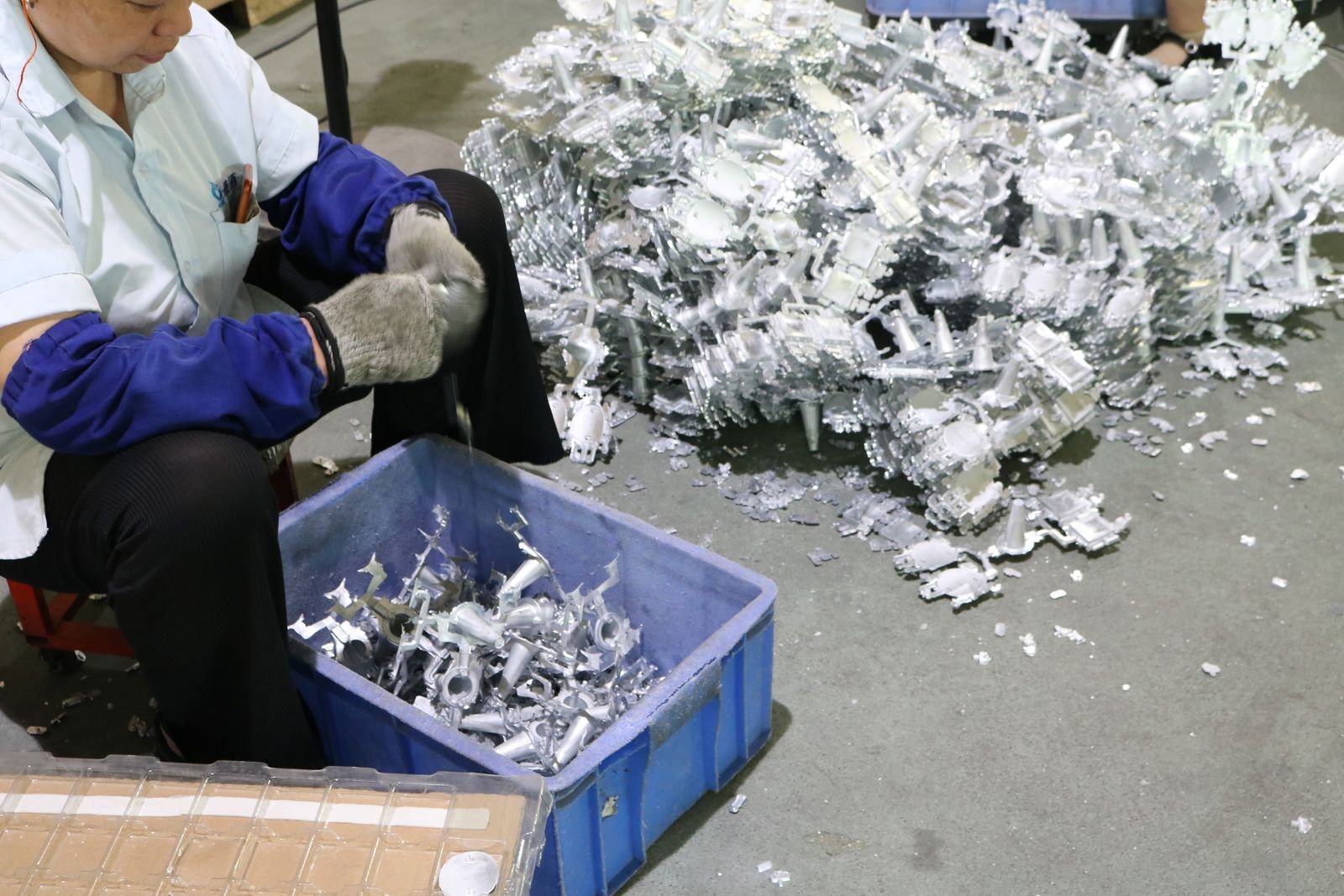
For a metal gift factory working in zinc alloy, stainless steel, brass or bronze, the material-side data a supplier can normally supply includes alloy grade and composition, finished piece weight, the mass of the material actually consumed per unit including process loss, the coating system used and its coverage area, and packaging weight per unit. In a die casting operation the weight figure is the one that matters most, and it is a measured number rather than an estimate: the factory weighs finished pieces during production control. Alloys vary, so the request should ask for the composition of the specific alloy used on the order rather than a general description of the material family. Our guide to zinc alloy grades and casting tolerances covers how alloy selection is documented and specified in a purchase order.
The energy-side data depends on the site. Electricity consumption by production area can usually be provided for a period, and a factory that meters die casting, polishing, plating and assembly separately can produce a much more useful picture than a single site total. The GHG Protocol Corporate Standard sets out the framework for this at the inventory level, and a factory reporting under that framework will have the underlying data collection in place. Process inputs such as polishing compound, plating chemistry and packaging material quantities are typically available as consumption records for the period covered by the order.
Transport data is where buyers should be careful about the boundary they draw. Express, air and sea carriage produce very different tonne-kilometre figures for the same shipment, and a factory can describe the shipment it is making without being able to predict which mode the buyer will use. If transport belongs in the figure, agree the mode and the incoterm before the data request goes out, so the transport leg is calculated on a stated basis rather than assumed after the fact.
One more point belongs in the request: the reporting period and the allocation rule. A factory producing for many customers needs a rule for allocating site emissions across orders, and a buyer needs to know that the rule is stated rather than discovered later. ISO 14067 addresses allocation within its calculation framework, and naming the rule in the request removes the most common source of irreconcilable figures between two suppliers.
Reading What Comes Back
When the documents arrive, the review is quick if you know the five things to check. The first is scope and site. The document should identify which legal entity and which physical site the data covers, and for an environmental declaration that should match the site that will actually produce your order.
The second is period and method. What time span does the energy data cover, and which calculation method was applied — the method name and its version should be stated. If the document reports a footprint but names no standard, treat it as a proprietary estimate rather than a standard-based figure, because it cannot be compared with anything.
The third is functional unit and system boundary. As above, these two statements determine what the number means. A per-kilogram figure and a per-piece figure for the same product are different products as far as a report is concerned.
The fourth is data quality and exclusions. Which inputs were measured rather than estimated, and which were estimated rather than measured? A document that discloses three excluded inputs and how they were treated is more useful than one that presents a single number with no qualifications. Look specifically for whether transport and packaging are inside or outside the boundary.
The fifth is the verification position. Is the figure a self-declaration, has it been reviewed by a third party, and if so by whom and against what standard? This is where the distinction the Corporate Standard draws is useful: the framework builds a verifiable inventory but leaves the verification standard itself to other rules. If your reporting obligation needs assurance, the assurance statement must appear in the document.
Buyers should also watch for scope creep in the other direction. A supplier that volunteers a general statement about being environmentally conscious, or attaches a brochure about recyclable packaging, has not answered the question. Neither has a certificate with no site address, or a number with no unit, or a figure quoted without stating whether transport is included. The five checks above filter all of these quickly.
It is also worth aligning this work with the compliance documents already in your file. The supplier declarations covered in our guide to REACH and RoHS chemical rules for metal souvenirs and the broader EU and US product safety requirements are separate obligations, but they are assembled by the same factory on the same production file. Asking for all three sets of documents in one request is faster than three separate rounds, and it gives the supplier a single deadline rather than three. Where the buyer also handles recycled content or material claims, our piece on verifying recycled content claims sets out the evidence standard those claims need, which is a separate question from a quantified carbon figure but draws on some of the same source data.
The Practical Sequence
Pulling the threads together, the sequence that avoids rework is short. Specify the functional unit and system boundary before requesting anything. Choose the layer you need: organisational inventory if you need site data, scope 3 inputs if you need to feed your own value chain, a product footprint if you need a figure per unit, an EPD if you need a published and comparable declaration. Name the standard and its version in the request so the answer is not method-ambiguous. Ask for site, period, data quality and verification status with the numbers. And put all of it in the enquiry document, before the quotation, because carbon data shapes the production plan rather than documenting it afterwards.
For a factory working across 9,600 square metres with more than 200 staff and daily capacity of 30,000 pieces, the equipment side of a footprint calculation is not the constraint. Data capture discipline is. Factories that already run a certified management system, already weigh finished pieces for production control, and already track alloy batches against orders will produce a usable document faster than one that has to build the process during the request. Ask which of the three the supplier already has, and price the answer accordingly.
Buyers who need the underlying chemistry and testing route are covered in our guide to third-party lab testing and certification for metal souvenirs, which explains how to tell a report you can use from one you cannot. And if the carbon question is being raised because a customer is asking you for it, the reply goes back through the same specification chain, which is exactly why it belongs at the start of the order rather than the end.
Carbon Data Request Checklist
The following is the checklist we use when a buyer asks what to put in a carbon data request to a metal gift factory. Each line is a request item, and each has a stated purpose, because a request without a stated purpose is a request that gets answered with a brochure.
| Item requested | Purpose | Acceptable form |
|---|---|---|
| Functional unit | Fixes what one unit of the number means | Stated in the document, e.g. per piece or per kilogram |
| System boundary | Fixes which life-cycle stages are included | Named stages, with transport and packaging stated in or out |
| Standard and version | Makes the figure comparable with other suppliers | Standard number with edition or publication year |
| Legal entity and site address | Confirms which site produced the data | Full address matching the production site |
| Reporting period | Shows the span the underlying data covers | Start and end dates |
| Alloy grade and composition | Primary input for the material side of the calculation | Grade designation plus composition data |
| Finished piece weight and material consumed per unit | Links the figure to the product actually shipped | Measured values, not nominal targets |
| Energy data by production area | Separates the energy-heavy stages from the light ones | Period consumption by area where metered separately |
| Packaging weight per unit | Prevents packaging being silently excluded | Weight per shipped unit |
| Allocation rule for shared site emissions | Stops the same tonne being allocated to two buyers | Stated method, applied consistently |
| Data quality statement | Shows which inputs are measured and which estimated | Statement of inputs and treatment of gaps |
| Verification position | Establishes whether the figure can carry assurance | Self-declared, reviewed by named party, or verified against a named standard |
| Environmental management system certificate | Shows the process behind the data exists | Current certificate with number, site and scope |
Send the request with the enquiry document, not after the first shipment. Ask for the certificate and the calculation in the same message, and give one deadline for both.