
Most metal souvenirs never touch food, so food contact rules are usually the last thing a buyer checks and the first thing a customs officer asks about. A keychain or a lapel pin is not a food contact article. A wine stopper, an ice bucket or a bar spoon is, and once it is, the burden of proof moves to the supplier. In the European Union that means a framework regulation, a good manufacturing practice regulation and a written declaration of compliance. In the United States it means the food contact substance framework, with premarket notification or another lawful basis for every substance involved. The question for a buyer is not whether the metal looks safe. It is which document the factory can produce for the specific article, and whether that document covers the finish and the adhesive as well as the metal.
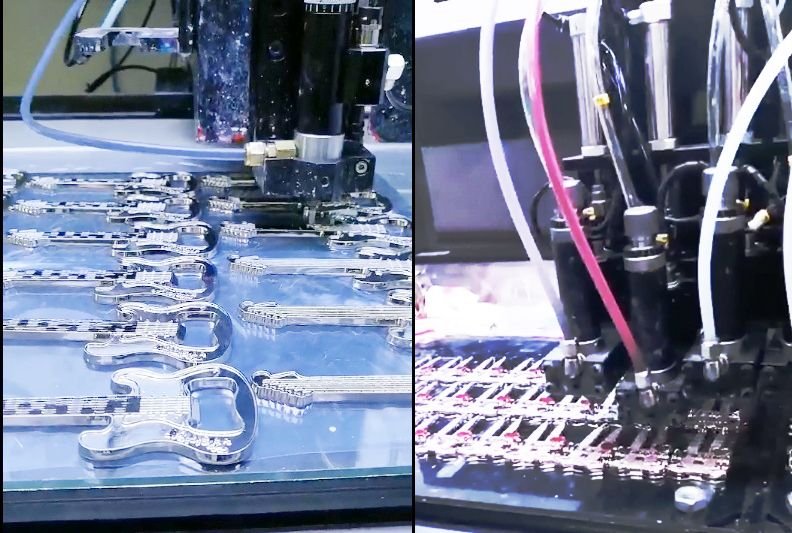
Which metal souvenirs are actually food contact articles
The starting point is a definition, not a product category. Under Regulation (EC) No 1935/2004, a business operator is responsible for ensuring the requirements of the Regulation are met within the business under their control. Article 3 sets the general requirement: materials and articles shall be manufactured in compliance with good manufacturing practice so that, under normal or foreseeable conditions of use, they do not transfer their constituents to food in quantities which could endanger human health, bring about an unacceptable change in the food, or bring about a deterioration in the organoleptic characteristics of the food.
Three phrases in that paragraph do most of the work. “Constituents” covers more than the metal itself, because a plated article transfers whatever sits on the surface. “Normal or foreseeable conditions of use” is the scope test. “Organoleptic” is the clause buyers most often forget: an article that releases nothing hazardous can still spoil the taste of the wine in a customer’s glass.
The categories divide cleanly. Items with no intended food contact, such as keychains, lapel pins and fridge magnets, sit outside the regime, although a buyer placing them in a gift set with a food item should still check the packaging rules in our product safety overview. Items that touch food only incidentally, such as a bottle opener meeting a bottle cap, still need a recorded classification. And items with intended food contact, including wine stoppers, ice buckets, bar accessories and cutlery, are squarely inside it.
| Intended use | Example | Regulatory position | Document to require |
|---|---|---|---|
| No intended food contact | Keychain, lapel pin, bag charm, fridge magnet | Outside the regime; general product safety rules still apply | Material declaration and any chemical test reports required |
| Incidental contact only | Bottle opener on a bottle cap, magnet on a jar lid | Classification still to be recorded: the surface is reachable and the use foreseeable | Statement of intended use, plus surface and finish data |
| Intended contact, including hot food or drink | Wine stopper, ice bucket, bar spoon, tea infuser, serving tray, coaster under a hot cup | Full regime: GMP, migration assessment, declaration of compliance, plus temperature-specific rules for hot use | Article 16 declaration stating the temperature range, test data and quality records |
The EU framework: Article 3, Article 15 and Article 16
Three articles in Regulation (EC) No 1935/2004 do the work for a buyer. Article 3 is the safety test quoted above, and it applies to the article as a whole rather than to individual components. Article 15 sets the labelling obligation for materials and articles not yet in contact with food when placed on the market. Such articles shall be accompanied by the words “for food contact”, or a specific indication as to their use such as coffee machine, wine bottle or soup spoon, or the Annex II symbol. Where necessary, special instructions for safe and appropriate use shall be given. The name or trade name and the address of the business operator responsible for placing on the market within the Community shall be given, with adequate labelling to ensure traceability under Article 17.
Article 16 then requires the declaration of compliance, and this is the document a buyer should insist on. The specific measures referred to in Article 5 require materials and articles covered by those measures to be accompanied by a written declaration stating that they comply with the rules applicable to them. Appropriate documentation has to be available to demonstrate such compliance, and it has to be made available to the competent authorities on demand. A supplier that sends a marketing sentence rather than a statement against specific rules has not met Article 16 at all.
Two further provisions shape the commercial picture. Article 3(2) provides that the labelling, advertising and presentation of a material or article shall not mislead consumers, so an item that says “food safe” on the box while the item carries no Article 15 information is exposed on both counts. Article 17 requires traceability at all stages, to facilitate control, the recall of defective products and the attribution of responsibility, with systems in place to identify the businesses from which materials and articles are supplied. For an importer this is why a supplier needs to say which batch an order came from and which raw material lots went into it.
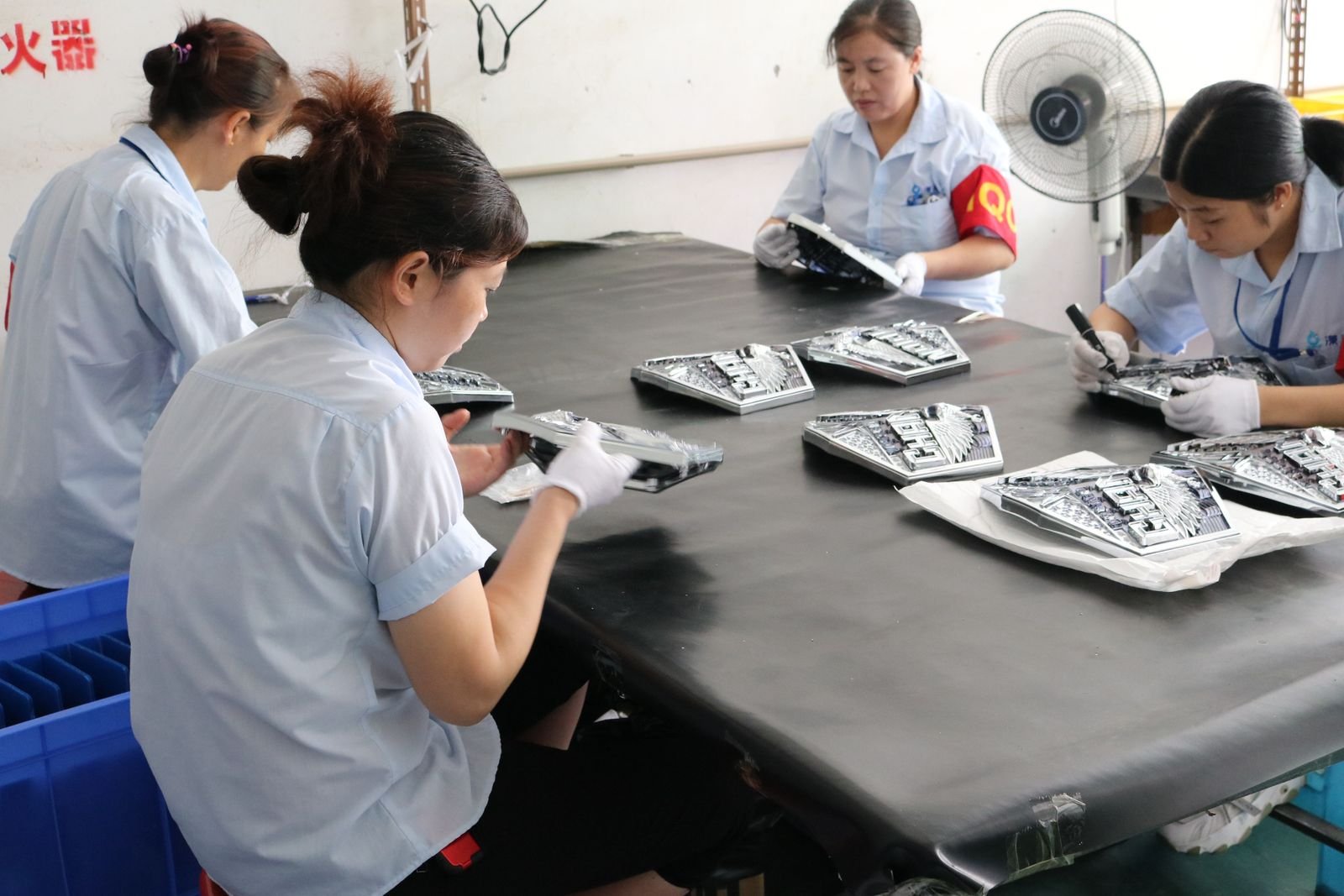
Good manufacturing practice is where the evidence lives
Regulation (EC) No 2023/2006 on good manufacturing practice determines what a factory has to show. Article 1 sets the subject matter: rules on GMP for the groups of materials and articles listed in Annex I to Regulation (EC) No 1935/2004, and for combinations of those materials or recycled materials used in them. Article 2 sets the reach: all sectors and stages of manufacture, processing and distribution, up to but excluding the production of starting substances.
Article 4 requires manufacturing operations to be carried out in accordance with the general rules on GMP in Articles 5, 6 and 7 and the detailed rules in the Annex. Article 5 requires an effective and documented quality assurance system, taking account of the adequacy of personnel, their knowledge and skills and the organisation of the premises and equipment, applied so as not to burden the business excessively. Starting materials have to comply with pre-established specifications, and operations carried out per pre-established procedures. Article 6 requires a quality control system that monitors implementation of GMP, identifies measures to correct any failure and implements them without delay. Article 7 requires documentation, in paper or electronic format, covering specifications, manufacturing formulae, processing, records of the operations performed and the results of quality control.
One part of the Annex deserves attention, because it is where most order-specific failures occur. The detailed rules for printing inks applied to the non-food-contact side state that such inks shall be formulated or applied in such a manner that substances from the printed surface are not transferred to the food-contact side, either through the substrate or by set-off in the stack or the reel, and that the concentration shall not be such that the level of the substance in food would fail to comply with Article 3 of Regulation (EC) No 1935/2004. That clause covers the screen printing and laser engraving most orders rely on, and it is why a branded item cannot be treated as compliant by default just because the metal underneath is fine.
The GMP regulation defines two surfaces every metal souvenir order has to be classified against: the “food-contact side”, which directly contacts food, and the “non-food-contact side”, which does not. Screen printing, laser engraving, enamel colour fill, plating and epoxy coating all change which side a given material sits on, and that classification decides which documents apply.
The United States framework: food contact substances and the FCN route
The United States regulates the substances used in articles that contact food rather than the article as a whole, under Title 21 of the Code of Federal Regulations. Part 170 covers indirect food additives, and the entry points for a metal souvenir supplier are the food contact notification process and the general recognition provisions that sit alongside it.
Under 21 CFR Part 170, a food contact notification is effective for the substance manufactured or prepared by the manufacturer or supplier identified in the notification. Another supplier wishing to market the same substance for the same use must also submit a notification. Any material submitted or referenced in a foreign language must be accompanied by an English translation verified to be complete and accurate, which matters for documentation arriving from a Chinese factory. The FDA may decline a notification where the use is already the subject of a regulation in Parts 173 through 189, or where the threshold of regulation exemption in § 170.39 applies.
There is a floor under the notification route. A petition under § 171.1 is required where the use increases the cumulative dietary concentration of the substance to a certain level, which for a substance intended to exert microbial toxicity is 200 parts per billion in the daily diet, or 0.6 milligrams per person per day, and for a substance that is not a biocide is 1 part per million, or 3 milligrams per person per day, unless the FDA agrees to accept a notification. A petition is also required where a bioassay exists on the substance, the FDA has not reviewed it, and it is not clearly negative for carcinogenic effects.
Section 170.101 sets out what the notification must contain: a comprehensive discussion of the basis for the determination that the use is safe, covering all data submitted and addressing any that may appear inconsistent with it, plus all data forming the basis of the safety determination under the intended conditions of use. An FCN is a supplier’s document, so the question is which supplier holds it and whether it names the specific formulation and use.

What the United States allows as a basis for use
Not every food contact substance needs a notification. 21 CFR Part 174 sets out general provisions for indirect food additives, and § 174.5 lists the bases on which a substance may be used in an article that contacts food. These include substances generally recognized as safe in or on food, substances generally recognized as safe for their intended use in food packaging, substances used under a prior sanction or approval, substances permitted by regulation in Parts 174 through 178 and § 179.45, and food contact substances used under an effective notification.
The same section constrains how much of a substance may be used. Good manufacturing practice for the purposes of Part 174 and Parts 175 through 177 includes the restriction that the quantity of any food additive substance added to food through use in articles that contact food must not exceed, where no limits are specified, the amount resulting from use of the substance in an amount not more than reasonably required to accomplish the intended physical or technical effect in the food-contact article. That refers to the effect in the article rather than the food.
Two further provisions reward attention. Section 174.5(b) provides that the existence of a regulation prescribing safe conditions for use of a substance in an article that contacts food does not relieve that use from compliance with any other provision of the Act, with the example that a regulated food-packaging material found on appropriate test to impart odour or taste to a specific food product would not be relieved of the obligation under section 402(a)(3). Section 174.6 provides that substances which migrate, or may be expected to migrate, into food at negligible levels may be reviewed under § 170.39, and that the FDA will exempt substances meeting those criteria from regulation as food additives.
For a buyer, a compliant article is the sum of three things. The base alloy has to be covered by an existing regulation, a prior sanction or a GRAS basis. Each applied coating, ink or adhesive has to be covered on its own terms, not inherited from the metal. And the process needs to have been run under GMP with records kept. A supplier quoting a single “food safe certificate” that does not break down by component has not answered the question the law asks.
What a metal souvenir factory can supply, and what it cannot
The boundary is worth stating, because buyers and factories routinely expect the same thing from each other. The factory does not issue the declaration of compliance for the European market in a legal sense for every case, and it does not hold a food contact notification on a buyer’s behalf in the United States. What a capable factory can supply is the documentation the declaration is built on: the base material specification, coating and ink specifications, finish declarations, test reports covering those materials in the intended use, and the GMP records.
At Kingtop the goods side of the business is set up to produce those records. The main material is zinc alloy, with stainless steel, brass, bronze and iron also available. Plating options include gold, silver, rose gold, antique brass, antique silver, antique copper, black nickel and dual tone, and branding is applied by laser engraving, screen printing, embossing, debossing, moulded logo or enamel colour fill. Sampling takes 7 days and bulk production 15 to 20 days, with daily capacity of 30,000 pieces from a 9,600 square metre factory with more than 200 staff. Minimum order quantities are 100 pieces on existing tooling, 500 pieces for a standard design using existing tooling, and 1,000 pieces for a fully custom die cast. Finish order is covered in our enamel specification guide, and nickel and lead in coated articles are covered in our nickel release article.
Two further points round out the picture. The buyer determines the intended use, and the intended use determines the classification, so the specification sheet should state whether the item contacts food, with what, for how long and at what temperature. And a compliance file is specific to a configuration: changing the coating, the ink, the adhesive or the plating changes the file, so a finish change should be confirmed in writing beforehand.
How to test a supplier’s answer without becoming a lab
Most buyers do not need to run migration testing themselves. They need to tell, in about ten minutes, whether a supplier’s documentation matches the article ordered. Four questions separate a file from a brochure. Asking for the base material specification tests whether the metal was in scope. Asking for the coating and ink declarations, with the products used on this order, tests whether the applied finishes were considered separately. Asking for the declaration of compliance tests whether Article 16 was understood as a document. Asking for the notification or the regulatory citation tests whether the supplier has a legal basis for each substance, rather than a general statement about the quality system.
Test reports need reading for scope rather than for the headline result. A report covering a coated sheet material may not cover a coated casting. A report issued for a different food simulant or a shorter contact time does not cover a longer or hotter use. A report naming a different finish or ink is evidence about a different article. Where the report and the order disagree, the order has to be brought back into line, and that conversation is much cheaper before tooling. Where documentation cannot settle the question, our lab testing guide covers when an external laboratory is justified.
Evidence directory for a food contact enquiry
The closing section is a working list rather than a summary. Send it with the enquiry and require an answer against each line. A supplier who answers all of them in writing has demonstrated a working compliance file. One who answers three and skips the rest has told you which part of the file does not exist.
| No. | Evidence requested | What it establishes | Market |
|---|---|---|---|
| 1 | Intended use, food type, contact time and temperature | The classification, which decides the other lines | Both |
| 2 | Base material specification and mill documentation | The base metal has a lawful basis in the market | Both |
| 3 | Coating, plating and ink specifications for this order | Each applied material assessed separately | Both |
| 4 | Adhesive and insert specifications where present | Composite parts not treated as one material | Both |
| 5 | Test reports as supplied, with simulant, time and temperature | Evidence matches the use, not a generic material | Both |
| 6 | Written declaration of compliance for the finished article | The Article 16 document for the European Union | الاتحاد الأوروبي |
| 7 | Supporting documentation available on demand | Declaration backed by records, not assertion | الاتحاد الأوروبي |
| 8 | Notification reference, prior sanction or citation | The legal basis for each substance | الولايات المتحدة |
| 9 | Quality assurance and control records for the run | GMP applied to this order, not only described | Both |
| 10 | Batch identification and traceability statement | A recall could be scoped to the order | Both |
Two final practical notes. Ask for the answers in writing at the enquiry stage rather than at pre-shipment inspection, because a missing document found before production costs a revision while the same document found afterwards costs a shipment. And keep the answers with the purchase order, since the buyer who needs them is usually the one dealing with a customer complaint, a customs query or a market surveillance enquiry. What happens when an article does need to be withdrawn is covered in our recall and liability article.