
Most wine stopper specifications start with the decoration and end with the seal, which is the wrong way round. A stopper is a two-part object: a decorative metal body and a sealing element that has to hold a bottle closed. The body can be a stock silhouette with your logo on it or a completely new shape with its own tool; the seal is a moulded component with its own specification. Deciding the body before the seal means you find out late whether the two fit together, at the point where the tool has already been cut.
The single most useful question to settle before asking for a price is not “what shape do we want” but “how does this thing meet the bottle”. Once the neck interface and the seal are fixed, the decorative design options become a short list rather than an open field, and the quotation becomes comparable between suppliers.
This guide is for the buyers who specify zinc alloy wine stoppers: wine estates and producers building a gift set, branded gift suppliers assembling a hamper, souvenir wholesalers who need a shape that reads as a destination, and promotional buyers who need an object that survives being handled in a bag. It works through the design options in the order they should be decided, from the bottle interface through to the decorative surface, and ends with the questions that separate a quote you can act on from one you cannot.
Every number and specification reference here comes from a published standard or official source cited in the text. Where a decision depends on your bottle, your artwork or your quotation, that is stated rather than estimated.
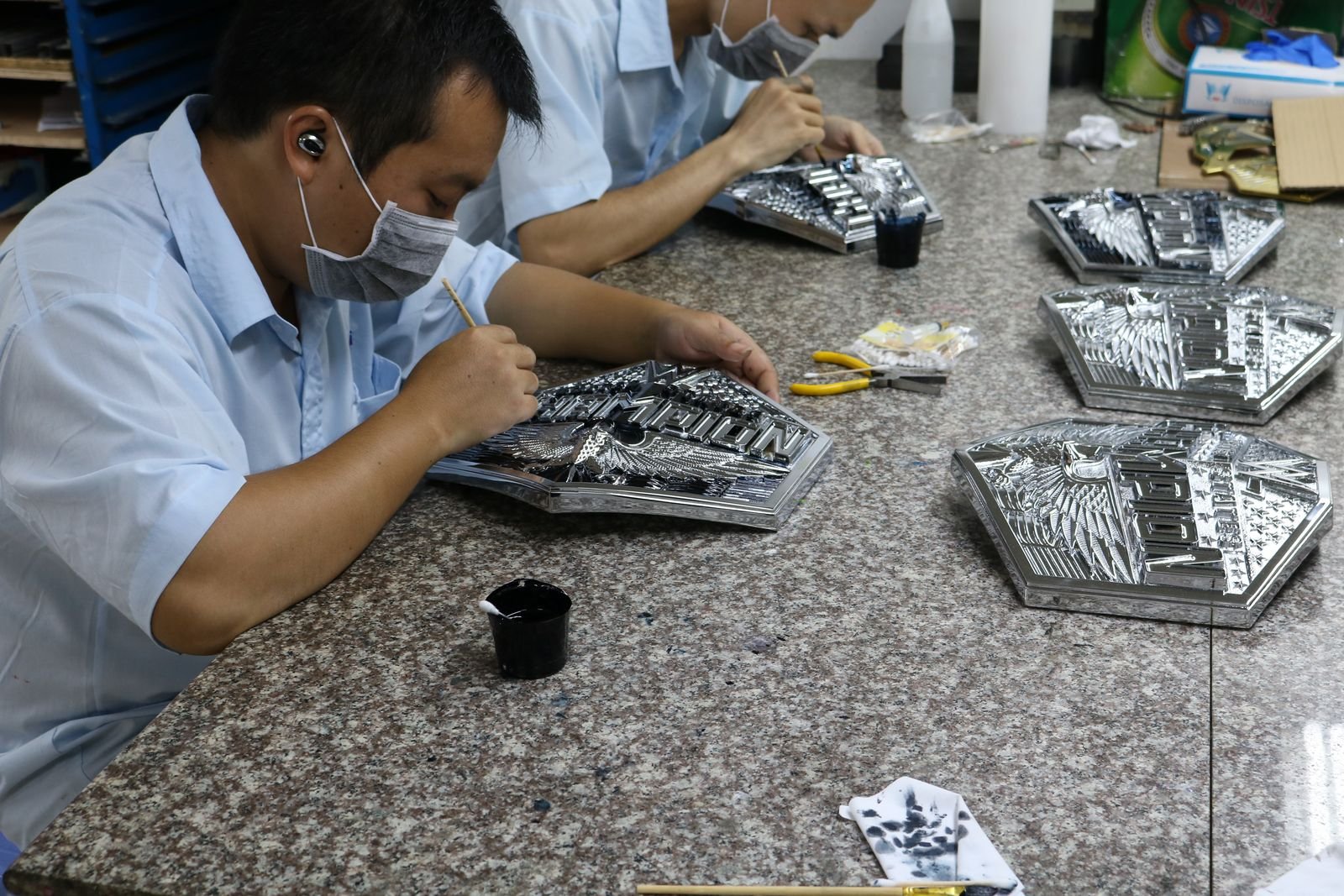
Decide the neck interface before the decoration
The top of the design brief should be a drawing of how the stopper meets the bottle, not a picture of the finished object. Three things have to be answered together, and they are usually answered by different people in different places.
First, the engagement. A wine stopper engages the neck in one of a small number of ways: a tapered plug that wedges into the neck, a threaded form that screws into the neck, or a composite body where a separate insert carries the seal. Each has a different consequence for the metal body, the tooling and the assembly stage. Our custom wine stopper manufacturing guide sets out the three construction routes an OEM factory quotes, and it is worth reading before you commit to a body shape, because the route changes what the body has to look like.
Second, the part that touches the wine. This is a compliance question, not a preference, and it is the question that determines which documentation you need from the factory. The seal is normally a separate moulded component, frequently silicone or rubber, and it is the seal rather than the decorative body that is the food contact component. Regulation (EC) No 1935/2004 on materials and articles intended to come into contact with food establishes the framework for this in the EU. Its Article 3 sets the general requirement that materials and articles shall be manufactured in compliance with good manufacturing practice so that, under normal or foreseeable conditions of use, they do not transfer their constituents to food in quantities which could endanger human health, bring about an unacceptable change in the composition of the food, or bring about a deterioration in the organoleptic characteristics thereof. Article 3(2) adds that labelling, advertising and presentation must not mislead consumers.
Third, the fit. A stopper body that is specified without a neck standard is a body that will be reworked. Before any decoration is drawn, get the neck diameter and the engagement depth of the bottles you intend to ship against, and confirm whether one body serves the whole range or whether you need a size variant.
Three body construction routes and what each one lets you do
The construction route determines what the metal body has to achieve, and it is the first decision that materially changes the design brief.
| Route | How it works | What the body has to do |
|---|---|---|
| Metal body with threaded or tapered plug | The decorative body and the sealing plug are one metal part | Carries the full seal function and the decoration at once; the hardest route to combine |
| Metal body with a separate soft insert | A moulded sealing ring is fitted to a decorative metal shell | Carries decoration only; the insert handles sealing, so the two can be specified separately |
| Combined stopper and pourer | A single metal part both seals and pours | Adds a flow path through the body, with consequences for the casting |
For most branded gift and souvenir programmes the second route is the practical one, because it separates the design problem from the sealing problem. The metal body becomes a decorative object with a consistent interface, and the insert becomes a specified component with its own material and supplier. The tolerance stack is also shorter, which matters once you are assembling thousands of units.
For a wine estate producing a stopper for its own bottle, the first route is often unavoidable: the bottle is fixed, so the plug has to match it. What you can still control is the plug surface that enters the neck, and whether the visible part carries enamel colour.
Decorative body options: what a zinc alloy body can actually carry
Zinc alloy is the dominant material for metal wine stoppers, and the reason is that it holds detail in a small section. Our guide to zinc alloy die casting defects explains the casting behaviour that makes this work, and why the defects that appear in small castings appear where they do. When you ask a factory which alloy the body is cast from, the useful answer is a designation rather than a family name: ASTM B86-23 lists the zinc and zinc-aluminum alloy compositions used for pressure die castings under their UNS numbers, which is what the incoming material should be verified against.
Within that material, the design options divide into a few families, each with a distinct effect on tooling, weight and cost.
Flat or shallow relief
A flat face with a raised logo. The cheapest tooling route because the cavity is shallow, the weight is lowest, and the piece reads as a logo carrier rather than an object. This is the right choice for a corporate programme where the brand mark is the product.
Partially raised relief
A form that stands partly proud of the surface: a shape with some volume, a rim, a raised border. This is the middle route and the most common in souvenir programmes, where a recognisable silhouette matters more than a flat graphic.
Full three-dimensional relief
A fully modelled form: a character, a landmark, a bottle shape with a distinct profile. The highest tooling cost and the deepest cavity, and the option where the shape itself carries the message. Our custom 3D zinc alloy wine stopper product page shows the formats available in this category.
Character and novelty forms
Decorative characters, animals and themed shapes where the appeal is the object rather than the branding. These are frequently specified with enamel detail colours on top of a plated body, which is a two-operation finish rather than one.
The selection principle is the same one that applies to every other custom metal gift: choose the relief level the section can support, then design within it. Buying a full relief design and then moving it down to partial relief after tooling is the expensive way to learn that the artwork and the process have to be decided together.
Logo methods and where each one works on a stopper
The logo placement problem on a wine stopper differs from a flat charm. The available surfaces are the top face, the shoulder or crown area, and the side wall. A logo large enough for a flat charm is oversized on a crown that also has to carry the shape and meet the neck.
| Logo method | How it appears on a stopper | Where it works best |
|---|---|---|
| Molded logo | The mark is cut into the die and forms with the body | Full custom shapes where the brand is integral to the form |
| Laser engraving | A shallow removal of the plated surface, in the metal itself | The top face or the shoulder of a moderate relief form |
| Screen printing | Ink pushed through a mesh stencil onto the surface | Solid colour areas on a flat or shallow face |
| Embossing and debossing | The metal is pressed from the front or the back | Tactile monograms on a form without a flat face |
| Enamel colour fill | Recessed areas filled with coloured enamel | Two-tone character designs with defined colour areas |
Two practical constraints apply here. First, the logo method constrains the artwork, not the reverse. A method that needs flat area cannot be applied to a crown that is entirely curvature. Second, on a crowned or domed top, the design has to be scaled down to what the crown can carry, and the size of the mark relative to the piece is what makes the stopper read as branded rather than as a blank shape.
The enamel route deserves a specific caution. Our hard and soft enamel comparison covers the sequences and the artwork limits in detail; the short version is that enamel fill needs a minimum metal line width around each colour field, and a design drawn without that limit will have its fine detail lost during polishing.
Finish and colour options, and what each one does to the brief
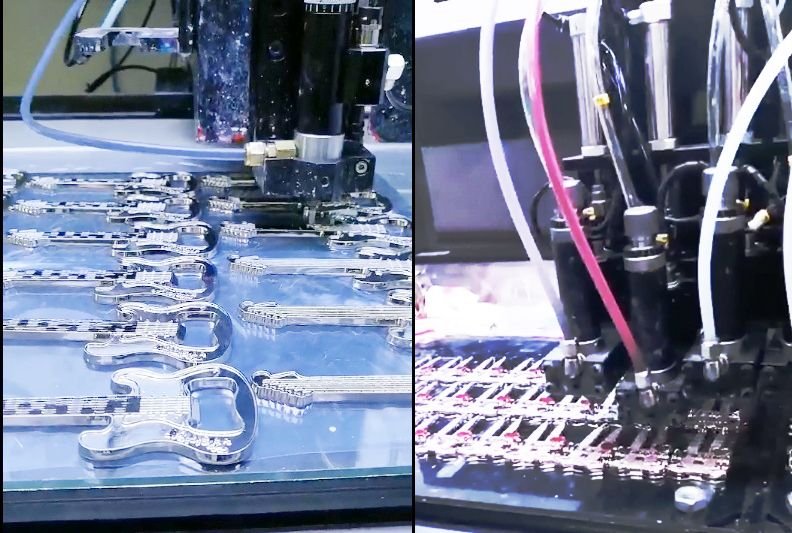
The plated finishes available on a zinc alloy wine stopper body are gold, silver, rose gold, antique brass, antique silver, antique copper, black nickel and dual tone. The choice is not purely aesthetic; it changes the brief in two ways.
It changes the artwork. Antique finishes work by darkening the recesses and leaving the high points bright, which means the finish depends on the geometry. A form with deep, well-defined relief reads antique beautifully because the recesses give it contrast. A flat face with a shallow logo reads as a flat tinted surface. If your design depends on the antique effect to give it depth, the relief has to be designed for it.
It changes the plating specification. A dual-tone piece is two plating passes on one body, and a second pass means a second handling and a second masking step. That is an operation to be priced, not a colour preference to be chosen in a swatch book.
The deeper technical point about plated zinc alloy is that the finish is a system rather than a single layer. The bright decorative chromium sequence on a zinc alloy base runs through alkaline cleaning, a thin copper strike, a bright acid copper layer, a semi-bright or bright nickel layer and finally chromium. Each layer has a function: the strike protects the zinc substrate from attack in the copper bath, the copper builds thickness, the nickel provides the barrier that stops copper showing through, and the chromium is the visible surface. When you ask a factory for a “gold” finish, this sequence is what they are quoting, and it is worth confirming that the specification names the system rather than only the colour name. The metallurgical reference on zinc alloy die casting sets out this plating sequence and the role of each layer.
Seal, packaging and the two components buyers forget to specify
The seal has already been discussed as a compliance question. It is also a design question: the seal determines the assembly stage, the assembly stage determines the labour content, and labour is often a larger share of the unit cost than buyers expect.
Two things about seals are worth putting in the brief explicitly. First, whether the seal is a separate line item, or whether its cost is folded into the assembled product, because the answer changes how you compare two quotes. Second, whether the seal is sourced by the factory or nominated by you, because a nominated insert needs its own approval cycle and its own lead time that runs in parallel with the metal work.
Packaging is the other under-specified component. A stopper arriving in a bulk polybag and the same stopper in a fitted gift box are one object with two very different costs, and the difference lands on your landed cost, your shelf presentation and your unboxing moment. Packaging choice also has a regulatory dimension in the EU, where packaging waste rules and extended producer responsibility obligations attach to the packaging itself rather than to the product inside it; the European Commission’s packaging waste overview sets out the framework. If your programme ships into the EU, that is a conversation to have early, because it can affect the box construction and the labelling on it.
The tooling and quantity question behind every wine stopper quote

Quantity drives the unit cost of a wine stopper more than any other single input, and the tooling route determines which quantity band you land in. Our general structure for custom metal gifts runs across three MOQ tiers at 100, 500 and 1000 pieces, with sampling at 7 days and production at 15 to 20 days, shipping by express, air or sea, a 9,600 m² plant with more than 200 staff and daily capacity of 30,000 pieces. Our custom metal gifts packaging guide covers what the packaging options add to that structure.
For wine stoppers, the tooling decision has a sharper edge than for most other metal gifts, because the stopper body and the seal are usually two tools. A new body mould plus a new seal tool is a larger one-time investment than a single tool, and it pushes the order toward the top of the quantity bands. Using an existing body silhouette with your own logo keeps the order at the low end, and the trade is shape for price.
That trade is worth stating plainly to whoever is approving the spend. A new shape costs a tooling fee and a higher minimum, and it earns its place when the shape is the point of the product. A destination souvenir, a wedding favour, a corporate giveaway and a wine estate gift set do not all need a new tool, and choosing the right one of those four probably matters more to the final cost than any finishing decision.
Questions to ask a wine stopper supplier before you order
- Which part of the assembly touches the wine, and what material is it made from?
- What neck diameter and engagement depth is the body designed for, and against which bottle?
- Is the seal a separate line item, and who supplies and approves it?
- Is the quote based on an existing mould or a new one, and what is the one-time tooling fee?
- How many plating passes does the quoted finish involve, and is dual tone priced as a second pass?
- Which logo method is quoted, and what is the minimum metal line width for that method on the chosen surface?
- Can the artwork be checked against the method and line width limit before tooling is released?
- What is the assembly stage, and is the seal checked piece by piece?
- What packaging is included in the price, and what packaging is quoted separately?
- What compliance documentation can be provided for the assembly as built?
The first three questions most often have no answer in a first quotation, and they determine whether the order can be produced as designed.
A design brief that removes the variables before the quote
The table below is the closing checklist for this guide. Each row is a decision that has to be made before a quotation is meaningful, and each names the drawing, document or sample that settles it. Filling it in takes an afternoon and removes the two or three rounds of clarification that would otherwise run through the quotation and the sampling stage.
| Brief item | What it must state | Where it is confirmed |
|---|---|---|
| Neck interface | Bottle neck dimension and engagement depth | Drawing with the neck reference marked |
| Construction route | Whether the body carries the seal or a separate insert does | Assembly drawing with the parts listed separately |
| Food contact part | Which component touches the wine, and its material | Material declaration naming the component |
| Body form | Relief level and the silhouette category | 3D file with the relief stated in words |
| Logo placement | Which surface carries the mark and at what size | Artwork with the mark area indicated |
| Logo method | Molded, engraved, printed, embossed, debossed or filled | Method named with the artwork line width limit |
| Finish | Plating family and number of passes | Finish specification with the approved sample as reference |
| Colour work | Enamel process and number of colour areas | Colour call-out on the artwork |
| Seal supply | Factory sourced or nominated, and who approves it | Purchase order naming the component and its owner |
| Tooling route | New mould or existing body, with the fee stated | Quotation with tooling separated from unit price |
| Pakkaus | Format, quantity per pack and whether it is in the price | Packaging line in the quotation |
| Quantity and timing | Target quantity, split delivery needs, and the date the order must land | Order confirmation with the production window |
| Sample reference | Which sample stage is being approved, and what it proves | Signed approval against the drawing and artwork version |
A wine stopper brief with these thirteen rows answered produces a quotation that can be compared, a sample that can be judged, and an order that can be repeated.
To work through a specific stopper programme — the bottle you are filling, the quantity, the market you are shipping into — send the artwork and the quantity to our team at the custom wine stoppers page, or email sales@kingtopgift.com. We will come back with the decisions your current design leaves open, and a quote that separates the body tooling, the insert and the finishing so you can see where the unit cost comes from.