
A metal souvenir shipment that is selected for examination does not stop at the border, it starts a statutory clock. United States customs law requires a release or detention decision within five days of the goods being presented, and a detention notice that states the reason, the expected length of the hold and the information that would speed it up. If no admissibility decision is made within 30 days, the exclusion is presumed, and the protest filed against it is presumed denied 30 days later. Knowing those dates before the container moves turns an expensive surprise into a scheduled piece of work.
The reason a metal gift shipment gets held is rarely mysterious. It is usually a mismatch between the invoice and the physical goods: a carton count that does not agree with the entry, an item description that does not match what is inside, a brand or artwork that someone has flagged, or a quantity that the packing list and the warehouse record disagree about. The commercial response to each of these is different, and a buyer who has never handled a detention usually treats the whole thing as a delay to be complained about, which is time the law has already set running against them.
The material behind this guide is the customs statute at 19 U.S.C. 1499 on examination and detention, 19 U.S.C. 1514 on protest, 19 U.S.C. 1515 on further review, and the implementing rules at 19 CFR 151.16 and 19 CFR 141.86. They describe what the statute requires and what it lets you do with it, not how often shipments are held, because that is not a matter these provisions settle.

What happens when the shipment is selected
Under 19 U.S.C. 1499(a)(1), imported goods that by law must be examined, inspected or appraised cannot be delivered from customs custody until they have been examined, appraised or inspected and reported as true and correctly invoiced and in compliance with all applicable laws. Delivery before that is possible against a bond or other security, which is a routine mechanism for a commercial importer who does not want the cargo to sit. The statutory test has two halves worth keeping apart: the goods have to be what the paperwork says they are, and they have to be lawful. Either half failing is enough to keep the shipment.
Under 1499(a)(2), customs must designate the number or quantity of packages subject to physical examination, direct where they are to be taken, may require additional packages or quantities to be examined, and must examine enough of the shipment and enough of the entry documents to ensure compliance. This is why a partial examination is not a partial clearance: the officer has to be satisfied that what was seen represents the entry.
Two provisions carry most of the commercial risk. Under 1499(a)(3), if a package contains an article that is not described in the invoice or the entry documentation, and customs believes the omission was made with intent to defraud on the part of the seller, shipper, owner, agent, importer of record or declarant, then the whole package is seized. Where there is no fraudulent intent, the article’s value is instead added to the entry, and duty, fees and taxes are paid on it. The difference between an invoice discrepancy and a fraud finding is enormous, and it turns on records. A carton packed from the wrong tray is an administrative problem; the same discrepancy uncovered after a pattern of inaccurate documentation looks very different.
Under 1499(a)(4), a shortage in quantity, weight or measure discovered during examination must be reported, and customs makes an allowance for the shortage at liquidation. That is the provision that protects an importer who ships a genuinely short carton, provided the packing record shows what should have been in it. Under 1499(a)(5), the information required for release must be provided at the port of examination in electronic or paper form, and a failure to provide it does not limit customs’ examination authority. Entry preparation is covered in the guide to importing metal souvenirs with HS codes and Incoterms.
The five day decision and what counts as presenting the goods
Under 19 U.S.C. 1499(c)(1), within five days, excluding weekends and holidays, after the goods are presented for examination, customs must decide whether to release or to detain them. Goods not released within that period are treated as detained. The implementing rule at 19 CFR 151.16(b) states the same test in working days and adds the definition that causes most confusion: presentation for examination means the goods are in a state in which customs officers can view and examine them. Merely presenting a truck, a container or a conveyance for examination does not constitute presentation of the goods.
That definition has an operational consequence. A container delivered to a yard where the goods cannot be opened and counted is not a presented shipment, which means the five day clock has not started in the way the importer expects. Goods that are accessible, countable and reachable by an officer have been presented, and the clock runs from that point. For a metal souvenir consignment split across cartons of castings, badges and key rings, having the cartons available as one consolidated lot rather than scattered through a general warehouse makes the difference between a shipment that moves promptly and one that sits.
The same regulation settles who pays. Under 19 CFR 151.16(b), except for examination at public stores, the importer bears the full cost of preparing the goods for examination and of transportation connected with it. A detention is therefore a cost event before it is a delay event, and it is a cost the importer cannot pass on to the factory afterwards unless the contract already said so. The commercial terms that decide this are set out in customs checks on metal souvenir imports.
What the detention notice has to tell you
Under 19 U.S.C. 1499(c)(2), the detention notice must be issued no later than five days after the detention decision, excluding weekends and holidays, and it must state five things: that the detention has commenced, the specific reasons for it, the anticipated length of the detention, the nature of the examination or inquiry to be conducted, and what information, if provided, could accelerate the processing of the detention. The regulation at 19 CFR 151.16(c) adds that the notice is issued within five working days after the detention decision or after the five working days pass without release, and that issuing the notice is not a final determination of admissibility.
Those five items are the working document for the detention, and the fifth is the one most importers ignore. A notice that identifies what information would accelerate processing is effectively a specification of the missing evidence, and the response should be built directly from it rather than from a general letter asking customs to reconsider. If the reason is an undeclared article, the answer is the packing record, the item master data and a corrected entry. If the reason is a trademark flag, the answer is a consent letter from the trademark owner or a corrected marking plan.
There is a further right that is rarely used. Under 1499(c)(3), on request, customs must provide a copy of the examination results and a description of the examination procedures and methods, in sufficient detail to permit reproduction and analysis. The exception is narrow: material proprietary to a copyright or patent holder, or developed by customs for its own enforcement purposes. Within that boundary, the right is genuine, and it is how an importer learns which test was run and whether the answer is being read correctly.
The 30 day presumption of exclusion
The single most useful provision for an importer who wants a predictable timeline is 19 U.S.C. 1499(c)(5)(A). If customs has not made a final determination of admissibility within 30 days after the goods were presented for examination, or within a longer period expressly authorised by law, it is deemed to have excluded the goods, and the exclusion is then treated as a decision subject to protest under 19 U.S.C. 1514(a)(4).
Two further paragraphs change the character of the 30 day point. Under 1499(c)(5)(B), a protest filed against an exclusion is deemed to have been denied if it has not been allowed in whole or in part before the 30th day after it was filed. Under 1499(c)(5)(C), in a detention suit the court must grant appropriate relief, including an order vacating the detention and releasing the goods, unless customs proves by a preponderance of the evidence that it has not made an admissibility decision for just cause.
The sequencing is what a buyer needs to hold on to. The 30 days run from the date the goods were presented, not from the date the detention notice arrived, so the calendar starts earlier than the paperwork suggests. Once an exclusion is presumed, a protest filed against it starts its own 30 day clock, and that clock can run out before anyone has read the detention notice carefully. Treating the detention as a matter to be resolved by letter is a bet against two automatic determinations running in sequence.
The 180 day protest and what it has to contain
Under 19 U.S.C. 1514(a), the listed customs decisions are final and conclusive against all persons, unless a protest is filed under that section or a civil action is brought in the United States Court of International Trade under 28 U.S.C. chapter 169. The listed decisions include the appraisement of value, the classification and rate of duty, all charges, refusal of admission or delivery, a demand for return to customs custody, the liquidation or reliquidation of an entry, refusal of payment of drawback, and refusal to reliquidate under 19 U.S.C. 1520(d). A detention is not on that list, which is why a detention produces a right to a decision rather than an immediate right to protest. Once the decision arrives, protest is the route.
The content requirements are strict. Under 1514(c)(1), the protest must be filed in writing or by electronic data interchange, and it must identify each decision being challenged, the class of goods affected, and the nature and grounds of the objection. Generally one protest is filed per entry, although separate protests may be filed for different classes of goods covered by the same entry. Before an accelerated request under 1515(b) has been made, the protest may be amended to add decisions that were not part of the original protest, as long as the original period has not run, and new grounds supporting the original objection may be raised at any time before the review under 1515 concludes.
The deadline is in 1514(c)(3). A protest must be filed within 180 days after the date of liquidation or reliquidation, and not before that date. Where the provision does not apply, the protest must be filed within 180 days of the date of the decision. A surety has its own period, also 180 days, running from the date the notice of demand is mailed to the surety. Valuation and classification disputes are the most common reason a metal souvenir entry becomes a protest, and the underlying methods are covered in customs valuation and duty for metal souvenirs.
The review that follows, and the two clocks that disagree
Under 19 U.S.C. 1515(a), except where an accelerated request has been made under paragraph (b), the customs official concerned must review the protest and allow or deny it in whole or in part within two years of the date the protest was filed. A protest may be further reviewed by another official at the request of the party who filed it, and the official concerned must allow or deny that request within 30 days of the request being made. Two years is the outer limit the statute sets, and it is long enough that a buyer relying on it alone should expect to wait. The quicker path is the further review request, and the quickest is the accelerated request under 1515(b) where the facts support it.
Two provisions correct errors at the end of the chain. Under 1515(c), a party who believes a further review request was wrongly denied, or denied for want of authority, may make a written request to the Commissioner of Customs and Border Protection to revoke the denial, and must do so within 60 days of the notice of denial. If the Commissioner does not act within 60 days of the request, the denial is deemed to have been sustained. Under 1515(d), where a protest was timely and properly filed but denied for reasons other than a failure to follow proper instructions, customs may revoke the denial on its own initiative, or on a written request made to the port director within 90 days of the denial of the protest.
Set against the 30 day deemed exclusion and the 30 day deemed denial of a protest, the two-year review period is the weakest link in the chain. The practical response is not to wait for the final answer but to use the early determinations, and to treat a deemed exclusion as a real event that has to be worked rather than an administrative placeholder.
The invoice is where the defence is built
Most metal souvenir detentions begin with a document, and the requirements for that document are set out at 19 CFR 141.86(a). Every commercial invoice must set out the port of entry; the time, place and names of the seller and the buyer of the sale or agreement to sell, and for imports that are not a sale, the place of shipment, the time, the shipper and the recipient; a detailed description of the goods, including the name of each item, its grade or quality, the marks or symbols under which the seller or manufacturer sells it in the country of export, and the numbers and symbols of the cartons or packages; the quantity in the units of measure used in the country of export or in the United States; the purchase price of each item and the currency; the value of each item where the import is not a sale; the currency of the invoice, whether gold, silver or paper; and all charges, itemised by name and amount, including freight, insurance, commissions, boxes, containers, covers and packing costs.
Read against a metal gift order, four of those lines are where shipments fail. The name of each item has to be specific enough that an officer can match it to the object in the carton, which rules out a single line reading as a gift item for a consignment of medals, key tags and bottle openers. The marks under which the seller sells the item in the country of export have to match what the carton actually says, which means the factory naming convention has to survive the trip. The carton and package numbers have to be legible and consistent with the entry. And the charges have to be itemised, because an unitemised lump sum of freight and packing is the kind of line that cannot be allocated.
This is a packaging discipline as much as a documentation discipline. The cartons that leave the packing line with the right symbols, the right numbers and the right counts are the ones that survive an examination. The general packaging rules for metal gifts are covered in custom metal gift packaging.
When the hold concerns the logo rather than the paperwork
One detention reason is not about accuracy at all. Under 19 U.S.C. 1526(a), foreign-manufactured goods, or their labels, signs, prints, packages, wrappings or containers, bearing a trademark owned by a United States citizen or by a corporation or association organised under United States law and registered in the United States Patent and Trademark Office under 15 U.S.C. 81 to 109 by a person domiciled in the United States, where the certificate of registration has been delivered to the Secretary of the Treasury as required by 15 U.S.C. 106, are prohibited from import unless the owner of the trademark consents in writing at the time of entry. Goods that enter in violation of this are subject to seizure and forfeiture under the customs law, and a person who engages in such transactions may be excluded from the United States or required to export or destroy the goods or remove or cancel the trademark, with liability for damages and profits on the same basis as a trademark infringement.
The personal-use case is treated separately. Under 1526(d), a trademarked article carried by a traveller for personal use and not for sale is unaffected by the prohibition when it falls within the class and quantity limits published by the Secretary of the Treasury in the Federal Register and has not been exempted by the Secretary before the traveller arrives within 30 days. If an exempted article is sold within one year after importation, the article or its value, recoverable from the importer, becomes subject to forfeiture. For a buyer ordering souvenir pieces carrying a third party’s mark, the documentation to hold before the entry is the trademark owner’s written consent, and it has to exist at the time of entry rather than being requested afterwards.
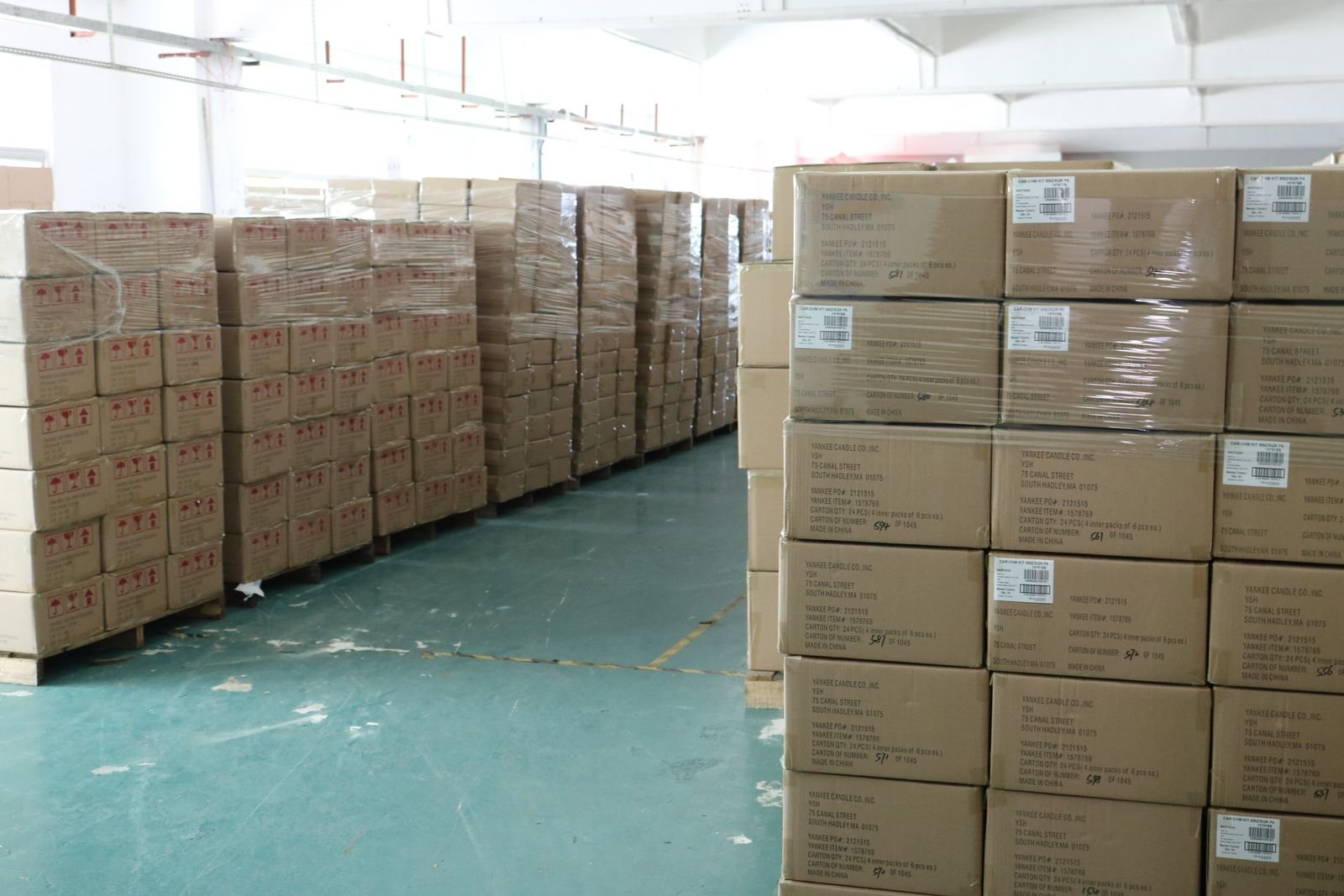
The relief calendar after a detention
Everything below runs from one of three start points, and mixing them up is the most expensive mistake in this process. The detention clock starts when the goods were presented. The protest clock starts at liquidation or reliquidation. The review clock starts when the protest was filed.
| Point on the calendar | Event | Basis | What is decided at this point | Action required from the importer | Consequence of doing nothing |
|---|---|---|---|---|---|
| Day 0 | Goods presented for examination | 19 U.S.C. 1499(c)(1); 19 CFR 151.16(b) | The five day release or detention clock starts; presentation requires the goods to be viewable and countable | Make the consolidated lot accessible; confirm the port of examination and who attends | The clock starts from a date nobody recorded, and every later date is computed wrongly |
| Day 5 | Release or detention decision | 19 U.S.C. 1499(c)(1); 19 CFR 151.16(b) | Goods not released within the period are treated as detained | Request the detention notice and the reason if it has not arrived | The importer is working without the reasons it is required to answer |
| Day 5 plus five days | Detention notice issued | 19 U.S.C. 1499(c)(2); 19 CFR 151.16(c) | The notice must state the five required items, including the information that would accelerate processing | Answer the acceleration item directly; request the examination results under 1499(c)(3) | The acceleration route offered in the notice is never used |
| Day 30 | Final admissibility decision | 19 U.S.C. 1499(c)(5)(A) | Without a decision within 30 days, the goods are deemed excluded | Chase the decision in writing; prepare the protest position before the date arrives | An exclusion stands by operation of law |
| Day 30 after filing the protest | Protest decision | 19 U.S.C. 1499(c)(5)(B) | A protest not allowed in whole or in part before this date is deemed denied | Escalate to further review under 1515(a) and consider the accelerated request | Deemed denial, which has to be challenged again rather than appealed |
| Day 180 after liquidation or reliquidation | Protest deadline | 19 U.S.C. 1514(c)(3) | The last date a protest on that decision can be filed; a surety has 180 days from the notice of demand | File with the decision, the class of goods, the nature and the grounds identified separately | The decision becomes final and conclusive against all persons |
| Within two years of the protest | Review of the protest | 19 U.S.C. 1515(a) | The official must allow or deny the protest in whole or in part; a further review request is decided within 30 days | File the further review request early rather than waiting for the two-year limit | The importer relies on the longest possible clock in the statute |
| Within 60 days of a denial | Request to the Commissioner | 19 U.S.C. 1515(c) | A denial wrongly issued or issued without authority may be revoked; no action within 60 days sustains the denial | Decide whether to make the written request | Deemed sustained, narrowing the revocation route under 1515(d) |
| Within 90 days of a denial | Request to the port director | 19 U.S.C. 1515(d) | A denial for reasons other than failure to follow proper instructions may be revoked on the agency initiative or on written request | Record the date the denial was served; treat 90 days as the last revocation window | The revocation route closes |
Two practical habits make that calendar manageable. The first is to record the date the goods were presented, in writing and at the time, because it anchors everything that follows and it is the date nobody remembers three months later. The second is to answer the detention notice in the form it invites. The statute offers an importer a specific route to a faster decision and a copy of the examination results, and using both is cheaper than waiting for the exclusion presumption to arrive and having to start again from a protest.
For a factory supplying metal souvenirs under a repeat programme, the detention risk is best handled as a production discipline rather than a customs incident. The carton numbers, the item names, the charge breakdown and the packing records have to be right before the goods leave the packing line, because every one of those items appears in the invoice that decides whether the shipment moves in five days or in five months. Test reports and material documentation for the goods themselves are covered in metal souvenir laboratory testing and certification. When a specific order needs its detention exposure worked through, send the invoice draft, the packing list and the carton marking plan to the Kingtop team at sales@kingtopgift.com, and the file will be reviewed against the requirements set out above.