
A metal souvenir is a low-value, high-volume article, and that profile makes it a target for two different import bans that have very little to do with the metal itself. Under United States law, goods mined, produced or manufactured in whole or in part with forced labour are barred from entry, and since the Uyghur Forced Labor Prevention Act came into force the burden of proof sits with the importer rather than the government. In the European Union, a Regulation that applies from 14 December 2027 will prohibit products made with forced labour from being placed on the Union market. Neither rule looks at whether a lapel pin is well made. Both look at what the importer can document about where the metal came from. For a buyer placing an order with a Chinese factory, the practical question is therefore not whether the factory is compliant, but which documents you will be able to produce after the container has already left the port.

Why a souvenir order can be stopped at the border
Customs enforcement of forced labour is not a product safety regime. Nobody inspects a die cast badge and decides it is unsafe. The question CBP and European customs authorities ask is narrower and more uncomfortable: can the importer prove the goods were not made with forced labour, and if not, why should the shipment be released?
That framing matters because the two legal systems reach the same destination by different routes. The United States has a statutory prohibition dating back to the Tariff Act of 1930, reinforced by a rebuttable presumption that treats certain origins as prohibited unless the importer disproves them. The European Union had no equivalent prohibition until Regulation (EU) 2024/3015, which creates a direct ban on making forced labour products available on the Union market and applies from 14 December 2027. In both cases the consequence for a metal souvenir buyer is the same: an order that has shipped, that has been paid for, and that sits in a container can be held while the paperwork is reconstructed.
There is also a difference of scale. A single detained container of keychains does not end a business relationship, but it can end a delivery window, and for a seasonal tourist-gift programme the delivery window is the whole point. Buyers who treat forced labour screening as a compliance formality tend to discover it at the worst possible moment, which is when the customs broker asks for supply chain documentation that nobody gathered at the time of ordering.
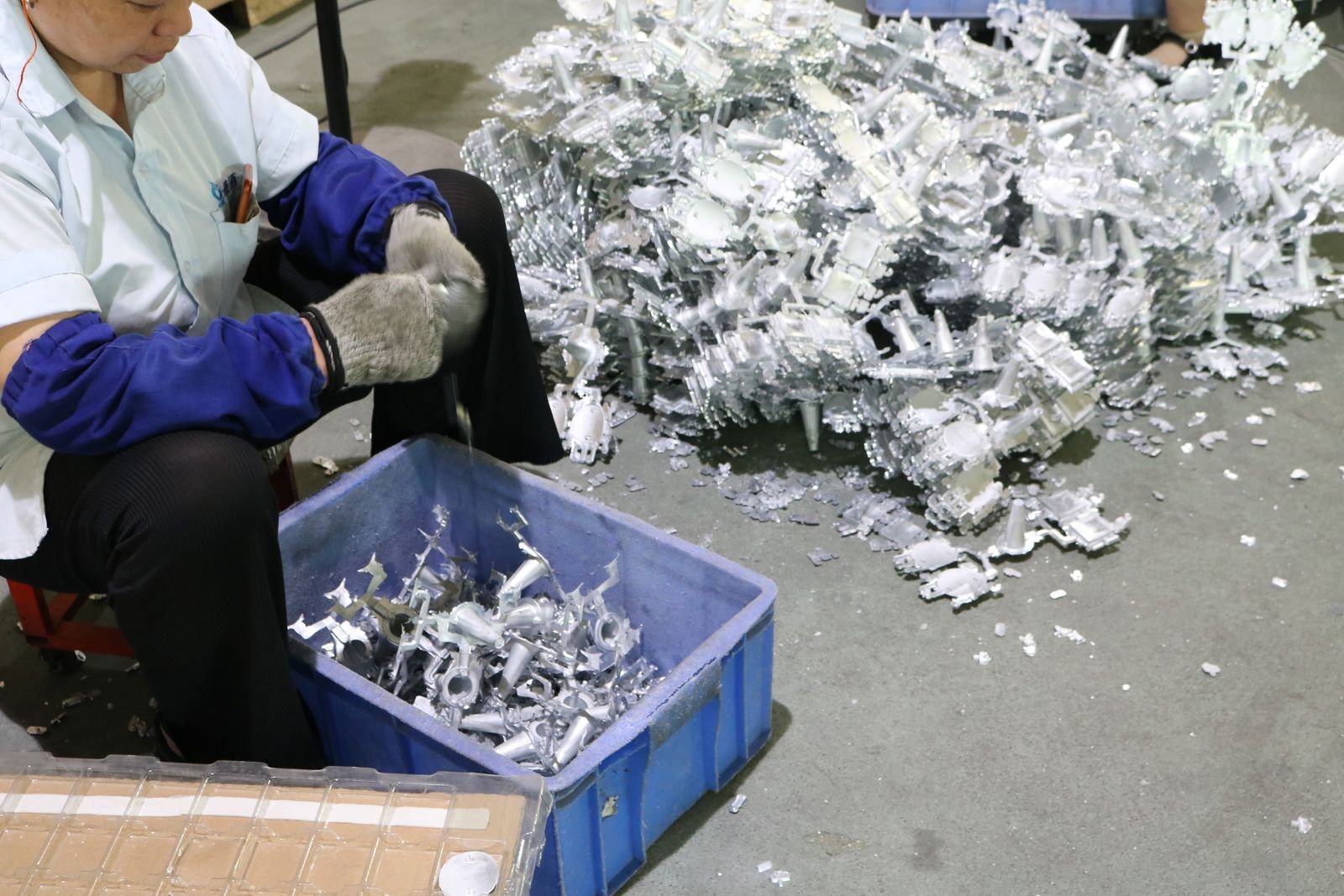
What the underlying United States prohibition actually says
The foundation is 19 U.S.C. § 1307, section 307 of the Tariff Act of 1930. Its first sentence is short enough to quote in full: “All goods, wares, articles, and merchandise mined, produced, or manufactured wholly or in part in any foreign country by convict labor or/and forced labor or/and indentured labor under penal sanctions shall not be entitled to entry at any of the ports of the United States, and the importation thereof is hereby prohibited.”
The second sentence defines the term that decides cases. “Forced labor”, the statute says, “shall mean all work or service which is exacted from any person under the menace of any penalty for its nonperformance and for which the worker does not offer himself voluntarily.” A final sentence, added by Congress in 2000, extends that definition to “forced or indentured child labor.”
Read carefully, two features of the statute explain most of the difficulty buyers encounter. The first is the phrase “wholly or in part”. It is not a requirement that the finished souvenir was made by forced labour. Any part of the supply chain touched by forced labour is enough for the ban to bite, which is why the raw metal, the mining, and the refining all fall inside the net. The second is that the statute is a prohibition on entry, not a labelling or testing requirement. There is no certificate that resolves it, and no declaration that a buyer can simply sign.
The regulation that gives the statute its teeth is at 19 CFR 12.42, which sets out how findings are made. A port director or other principal Customs officer who has reason to believe that a class of merchandise is being produced with forced labour communicates that belief to the Commissioner of CBP. Any person outside CBP may do the same, provided the submission contains a full statement of the reasons for the belief, a detailed description or sample of the merchandise, and all pertinent facts obtainable about production abroad.
Once a submission is complete, it travels to the Commissioner within ten days. If the Commissioner finds that “information available reasonably but not conclusively indicates” that merchandise within the scope of section 307 is likely to be imported, all port directors are notified and release is withheld. A finding made with the approval of the Secretary of the Treasury is published in the weekly Customs Bulletin and in the Federal Register. From that point, merchandise of that class imported directly or indirectly from the locality named in the finding is treated as a prohibited importation, unless the importer “establishes by satisfactory evidence” that the goods were not mined, produced or manufactured in any part with the labour specified.
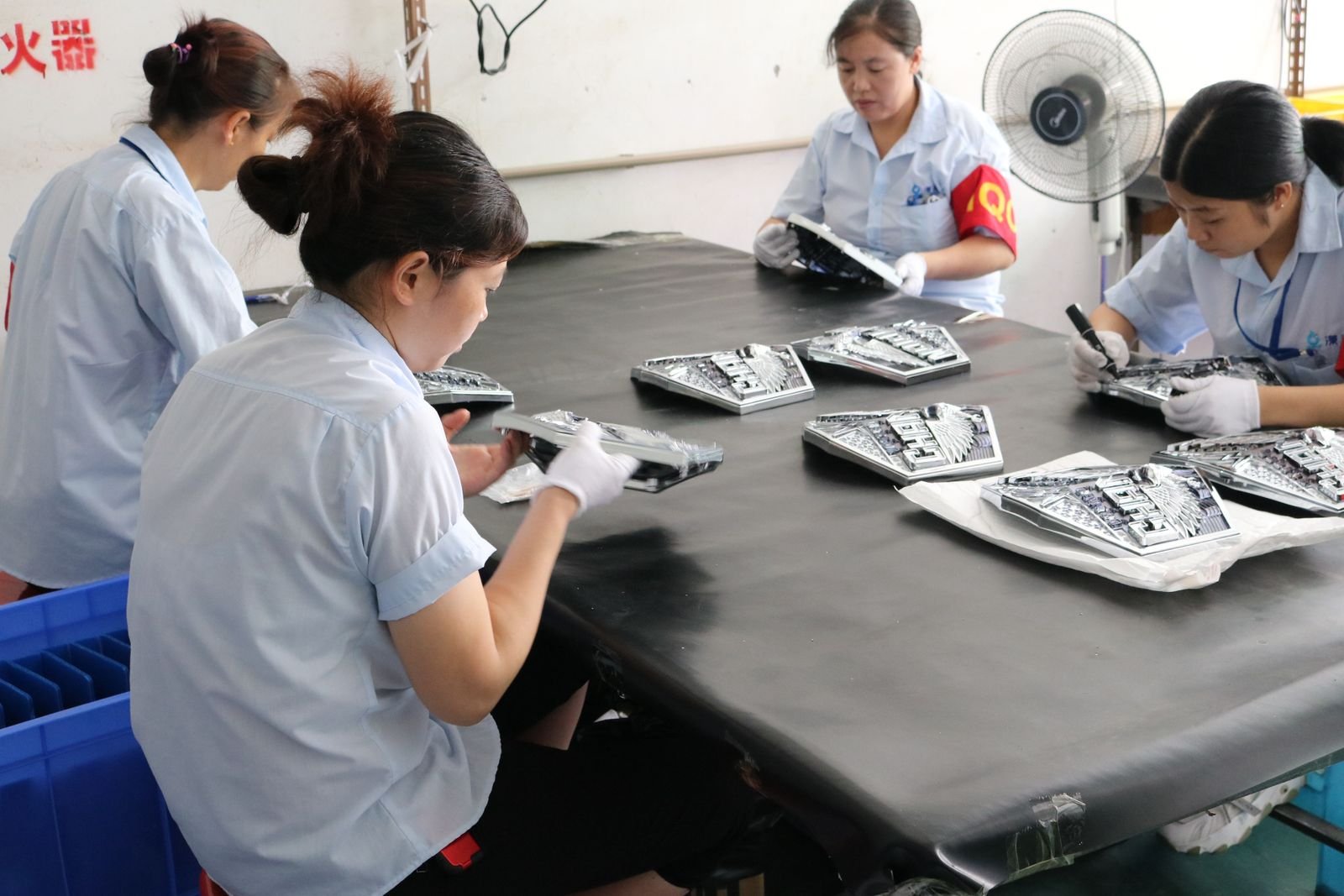
The UFLPA layer: a rebuttable presumption and an entity list
Den Uyghur Forced Labor Prevention Act, Public Law No. 117-78, was enacted on 23 December 2021, with the rebuttable presumption taking effect on 21 June 2022. The Department of Homeland Security describes its effect directly: it “directs the Forced Labor Enforcement Task Force to develop a strategy for supporting enforcement of the prohibition on the importation of goods into the United States manufactured wholly or in part with forced labor in the People’s Republic of China, especially from the Xinjiang Uyghur Autonomous Region, or Xinjiang.”
The mechanics are what a metal souvenir buyer needs to understand. Two categories of goods are subject to the rebuttable presumption: those mined, produced or manufactured wholly or in part in Xinjiang, and those produced by an entity listed on the UFLPA Entity List. The Entity List is maintained by the Forced Labor Enforcement Task Force and is a consolidated register of four separate lists, covering entities in Xinjiang that produce goods, entities involved in government labour programmes, entities that export goods produced by listed entities, and entities participating in the relevant government labour schemes.
CBP’s own UFLPA page states the operational position plainly: “CBP enforces the rebuttable presumption that goods mined, produced, or manufactured wholly or in part in the XUAR, or by an entity on the UFLPA Entity List, are prohibited from U.S. importation under 19 U.S.C. § 1307.” CBP conducts both applicability reviews, for shipments the importer believes fall outside the presumption, and exception reviews, for shipments where the importer wants the presumption rebutted.
Two consequences follow that catch out first-time importers. First, the list is not a rule about geography of the factory. A die cast in Dongguan is not Xinjiang production, but the Entity List test is about who made it and what they used. Second, CBP’s enforcement focus reaches beyond the direct exporter. The agency’s enforcement FAQ notes it is “focused on transshipped goods with inputs from the XUAR, as well as goods imported into the United States by entities that, although not located in the XUAR, are related to an entity in the XUAR (whether as a parent, subsidiary, or affiliate).”
What actually happens when a shipment is detained
Detention is not a vague hold. It is a documented process with a clock on it, and understanding the clock tells a buyer what to prepare.
Under UFLPA, the importer of record is required to provide “clear and convincing evidence” that the merchandise, although sourced from Xinjiang or from an entity on the UFLPA Entity List, was not made wholly or in part by forced labour. CBP’s enforcement FAQ explains the standard: “Clear and convincing evidence is a higher standard of proof than a preponderance of the evidence, and generally means that a claim or contention is highly probable.” That is a materially higher bar than the usual civil standard, and it is the reason a general supplier declaration is rarely sufficient on its own.
There is an initial detention period of 30 days. If an importer needs longer to assemble documents, it may request an extension from the Port Director or the applicable Center Director, by contacting the point of contact named on the detention notice before the initial period expires. A third party such as a seller or exporter may also submit supply chain documentation directly to CBP, though the importer will be notified and remains responsible for the storage costs of the detained goods.
The procedural route depends on the claim. Where the importer contends the goods were not sourced from Xinjiang or from a listed entity, it requests an applicability review. Where the importer accepts that the presumption attaches but wants it rebutted, it files an exception request. CBP’s enforcement FAQ notes that despite the “Exceptions” heading in the statute, the text “is better understood as setting forth the requirements for rebutting the UFLPA’s presumption”.
| Dimension | United States | European Union |
|---|---|---|
| Legal instrument | 19 U.S.C. § 1307, reinforced by the UFLPA (Public Law No. 117-78) | Regulation (EU) 2024/3015 |
| Core rule | Goods made wholly or in part with forced labour are prohibited from entry | Economic operators may not place or make available on the Union market products made with forced labour, nor export them |
| Date in force | Statute dated 1930; UFLPA presumption effective 21 June 2022 | Entered into force 13 December 2024 |
| Date of application | In force | Applies from 14 December 2027 |
| Who enforces | CBP, with FLETF strategy and Entity List | Competent authorities of Member States, with a lead authority |
| Burden of proof | Importer must show by clear and convincing evidence, a higher standard than a preponderance of the evidence | Regulation does not create additional due diligence obligations beyond existing Union or national law |
| Response deadline | Initial detention of 30 days, extension available from the Port or Center Director | 30 working days to answer an information request from the lead competent authority |
The documents an importer is expected to assemble
CBP publishes what it wants, which removes the guesswork. Its enforcement FAQ describes the documentation for an applicability review as records “produced in the ordinary course of business”, translated into English where necessary, and divides them into three groups.
The first group is transaction and supply chain records: “full records of transactions and supply chain documentation that demonstrate the country of origin and its components (e.g., packing list, bill of lading, manifest)”. The second covers the parties in the transaction, all of them, with the roles of the parties involved, supported by other documents and flow charts. The third addresses transportation of raw materials: “the origin of the raw materials, and documentation showing that these business transactions (e.g., invoices, contracts, purchase orders) have occurred financially (e.g., proof of payments) and physically (e.g., documents to support goods were transferred from one entity to another).”
Two practical techniques are worth borrowing. The first is the summary tracing report. CBP’s FAQ explains that when a shipment comes from a supply chain identical to one already reviewed and cleared, through an applicability review, an exception request, or an advance ruling, the importer should say so explicitly in the submission package. Doing so “significantly accelerate[s] the applicability review process”, and the tracing report should list the suppliers and producers for all production stages together with a business reference such as an invoice number, contract number or purchase order number for each stage.
The second is forensic testing. CBP accepts laboratory test results as part of the total package, and its FAQ confirms that DNA traceability or isotopic testing can support the position that a material did not originate in the affected region. Where a buyer wants samples taken from a detained shipment, the route is a manipulation request to the Port Director who detained the goods, with a secure chain of custody and a test report that identifies the samples as coming from that shipment. The general guidance in the FAQ is blunt about who pays: the importer is responsible for storage costs of detained shipments.
CBP has also published a consolidated operational guidance document for importers, covering the three authorities it uses, 19 U.S.C. 1307, the UFLPA and CAATSA, with process maps, appendices of recommended supply chain documentation for high-priority sectors, and sample detention and exclusion notices. Importers are encouraged to review the guidance and conduct due diligence of suppliers before detention rather than after.
| Evidence | What it establishes | Typical origin |
|---|---|---|
| Packing list, bill of lading, manifest | The goods exist, what they are, and how they moved | Freight forwarder or carrier, generated at shipment |
| Purchase orders, invoices, proof of payment | That a financial transaction occurred between named entities | Buyer and supplier accounts |
| Supplier and sub-supplier list with production roles | Who did what at each production stage | Factory, drawn from its own production records |
| Raw material origin and transfer documents | Where the metal came from and how it moved between entities | Upstream suppliers, via the factory |
| Alloy composition or material certificates | What the metal is, and its conformity to a named grade | Factory laboratory, such as spectrometer testing |
| Inspection and packing records | The condition and quantity of goods at the point of shipment | Factory quality control |
| Laboratory traceability or isotopic test results | That a specific material did not originate in the affected region | Accredited test laboratory, on a defined sample |
The European regulation arriving in December 2027
Regulation (EU) 2024/3015 was adopted on 27 November 2024 and published in the Official Journal on 12 December 2024. Article 38 is unambiguous about the timetable: the Regulation “shall enter into force on the day following that of its publication in the Official Journal of the European Union” and “shall apply from 14 December 2027.”
The scope is deliberately wide. Article 2(7) defines a product made with forced labour as “a product for which forced labour has been used in whole or in part at any stage of its extraction, harvest, production or manufacture, including in the working or processing related to a product at any stage of its supply chain.” Article 2(6) defines a product as any item that can be valued in money and is capable of being the subject of commercial transactions, whether extracted, harvested, produced or manufactured. A die cast keychain qualifies on both counts without difficulty.
Article 3 sets the prohibition: “Economic operators shall not place or make available on the Union market products that are made with forced labour, nor shall they export such products.” Article 1(1) confirms the same intent, and adds that the Regulation aims “to improve the functioning of the internal market, while contributing to the fight against forced labour.”
Article 4 addresses online selling. Products offered for sale online or by other distance sales are deemed made available on the market if the offer targets end users in the Union, and an offer counts as targeted if the economic operator directs its activities at a Member State by any means. For an EU buyer with a webshop, that is the hook.
One point is widely misread, so it is worth stating plainly. Article 1(3) provides that the Regulation “does not create additional due diligence obligations for economic operators other than those already provided for in Union or national law.” The Regulation is a prohibition and an enforcement framework, not a standalone supplier due diligence programme. What it does add is a direct reporting channel: under Article 17(1), before opening an investigation the lead competent authority may ask economic operators under assessment what they have done to “identify, prevent, mitigate, bring to an end or remediate” forced labour risks in their operations and supply chains, and under Article 17(2) they must answer “within 30 working days of the day they received such request.” The Regulation also amends Directive (EU) 2019/1937, adding a new point (xii) covering breaches of Regulation (EU) 2024/3015 to the list of infringements that product safety enforcement can address.
What this means specifically for a metal souvenir buyer
The metal itself is the least of it. A zinc alloy souvenir passes through the same evidentiary logic as any other manufactured good, and the compliance load lands on whoever is the importer of record. For a buyer sourcing from a factory in Dongguan, the practical structure of a defensible file looks like this.
Start at the top of the chain. The question that matters is not whether the factory can state that it does not employ forced labour, but whether it can produce the transaction records that show where its metal came from and which entities handled it. The factory’s own position on labour practices matters to the buyer for ethical and contractual reasons, and for the file it matters that the factory is able to name its upstream suppliers and produce purchase orders and invoices connecting them. A supplier that cannot do that is not necessarily wrong, but the buyer needs to know that before the container sails.
Then work down. At the factory end, the records that exist already, such as alloy composition verification, production inspection and packing records, form the last layer of the file. They are the easiest to obtain and the least contested, because they are generated in the normal course of business at a known address. The contested layer is the raw material, and a buyer who needs to answer questions about refining should raise that with the factory at the point of quoting rather than at the point of detention.
Finally, plan for the audit rather than the shipment. CBP’s enforcement FAQ describes a workflow in which importers assemble documentation after the fact, and the extension mechanism exists precisely because that workflow is slow. Buyers who hold their supplier documentation in one place, in English, with a production-stage index, can answer a detention notice in weeks rather than months.
Building a file that survives an audit
Everything above reduces to a list of things to ask for, and to ask for them before placing the order. The checklist below is organised by the stage of the chain that each item evidences, so it can be sent straight to a supplier as part of a due diligence questionnaire. Each item carries the reason it matters, drawn from the enforcement positions set out by CBP and by Regulation (EU) 2024/3015.
- Upstream supplier list for the metal. Ask which entities supplied the zinc alloy, brass, stainless steel or iron used in this order, and which suppliers supplied them in turn. This is the layer that decides whether a shipment falls into the rebuttable presumption, and it cannot be assembled after the fact.
- Purchase orders and invoices covering the raw material. These are the financial half of CBP’s third evidence group, and proof of payment is explicitly part of what CBP expects.
- Documents showing physical transfer of the material. The other half of that group, and the piece most often missing when a supplier has only ever provided a certificate.
- Alloy identification against a named grade. For zinc alloy work this typically means a certificate tied to the grade in the order, which also supports the technical specification work described in our zinc alloy grade and tolerance guide.
- A production stage flow chart naming each party. CBP asks for the roles of the parties involved and for flow charts, so this is the format the request will arrive in.
- Inspection and packing records for the specific order. Ordinary course of business records, which CBP treats as the baseline rather than the exception.
- Business references for each production stage. An invoice number, contract number or purchase order number per stage, so a summary tracing report can be assembled if the chain has been cleared before.
- Confirmation of who is the importer of record. Because the burden sits there, and because the importer is the party CBP contacts.
- Current confirmation that the supplier is not on the UFLPA Entity List. Worth checking at the start of a relationship rather than the start of a detention.
- A written statement on labour practices, held for the file. It does not discharge the legal burden on the importer, but it documents what the supplier has told you and when.
Two final points on scope. First, none of this changes what a compliant factory does. At Kingtop the underlying manufacturing facts are unchanged: zinc alloy as the main material alongside stainless steel, brass and bronze and iron, a 9,600 square metre facility with more than 200 staff and daily output of 30,000 pieces, samples in 7 days and production of 15,000 to 20,000 pieces over 15 to 20 days. The records described here sit alongside that operation rather than replacing any part of it.
Second, the specific documents a factory can supply for a given order are a commercial question, so they are confirmed per order rather than listed here as a standing catalogue. Where a buyer needs a particular certificate, the request should be raised during quotation so that production and documentation are scheduled together. Asking for documentation on the same day as a customs detention is what turns a manageable question into a delayed shipment.
For the wider picture of what a metal souvenir has to clear before it reaches a shelf, our product safety overview for metal souvenirs sets out the general EU and US position, and our guide to country of origin marking for imported metal goods covers the labelling side that travels alongside the customs file. Where a buyer is handling third-party test reports rather than first-party records, the third-party laboratory testing guide explains how to read them. And for importers who already hold the goods and now face a customs question rather than a specification question, our article on product recall and liability in metal souvenir contracts covers the contractual side of holding stock that cannot move.