
The sample is where a wine stopper order is won or lost, and it is usually lost for the same reason: the sample arrives without a stage label, so nobody can say what it is supposed to prove. The buyer approves it against a photograph, the factory treats it as a production sample, and six weeks later the run arrives with a difference neither side expected. Nothing went wrong technically; the approval simply never happened.
A wine stopper sample approval is not a decision about whether you like the object. It is a decision about whether this physical sample is the production reference for a defined order, and whether the paperwork behind it — the food contact evidence, the labelling, the specification, the packaging — is complete enough that the run can be repeated without a second conversation. Write the approval down against a named sample stage, or do not treat it as an approval at all.
This guide is for the buyers who sign off on wine stoppers before they commit a production order: wine estates and producers finishing a gift set, branded gift suppliers, promotional buyers working to a launch date, and importers who need the compliance position documented before the goods move. It follows the order the decisions are made: sample stages, food contact evidence, labelling, bench checks and the signed record.
Every regulatory reference here comes from the primary text cited at that point. Where a value depends on your bottle, artwork or quotation, that is stated rather than estimated.
What the sample is actually approving
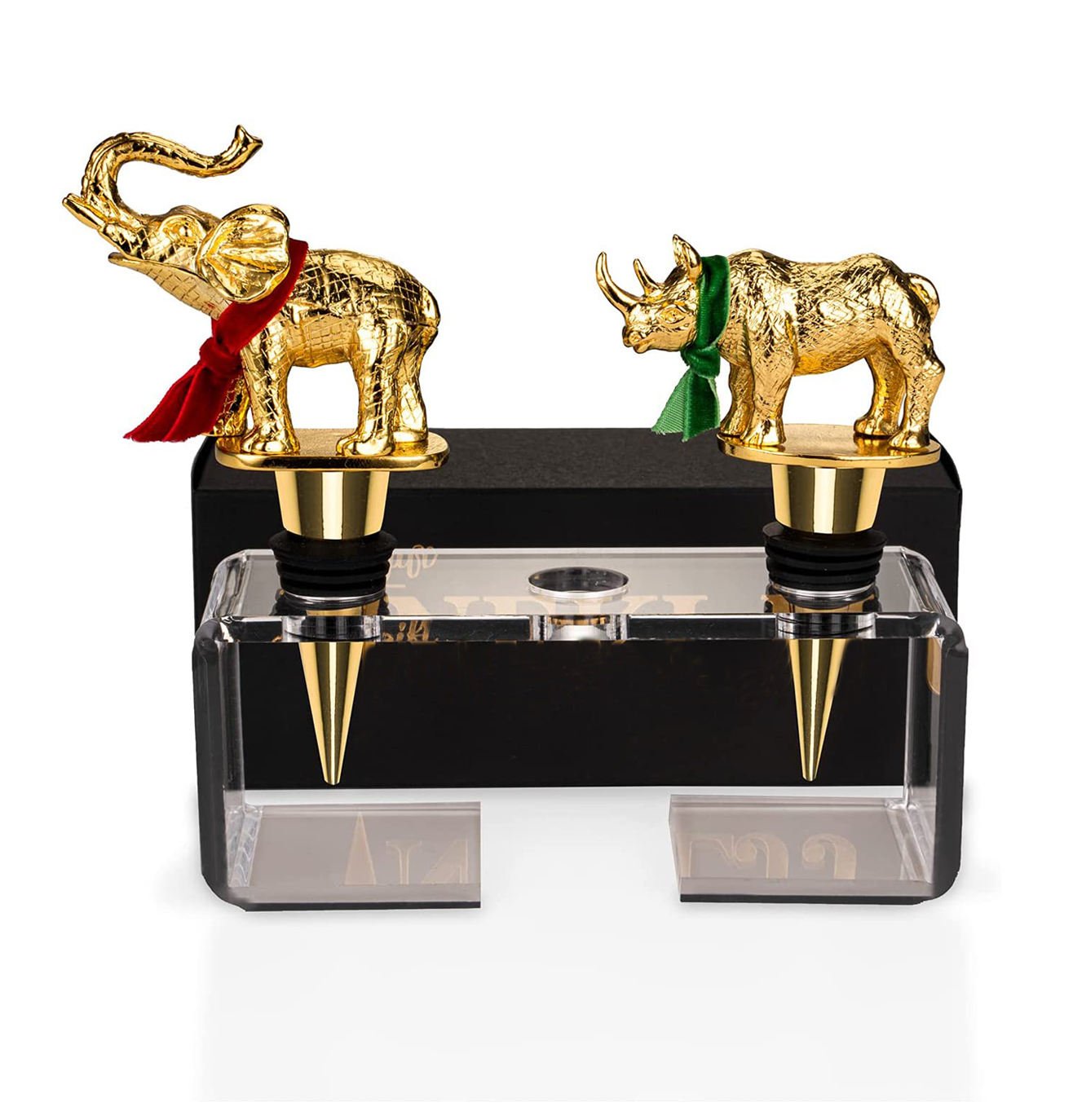
A wine stopper is a two-part object: a decorative metal body and a sealing element that has to hold a bottle closed. The approval covers both, and the two parts fail in different ways. The body is judged visually and dimensionally; the seal is judged functionally, because it either holds the bottle or it does not.
That is why a single “looks good” is not an approval. The sample has to answer four questions, and each needs a written outcome:
- Does the body match the approved artwork and finish?
- Does the body match the approved dimensions?
- Does the seal hold, and does the assembly fit the bottle it is for?
- Is the compliance and labelling file complete for this order?
Four of the sample stages are common in this product category, and they are not interchangeable.
| Stage | What it proves | What it does not prove |
|---|---|---|
| Design sample | That the shape and the decoration can be produced | Dimensional repeatability, finish durability, seal performance |
| Pre-production sample | That the specification is achievable on production tooling | Long-run consistency |
| Golden sample | The reference for the production run | Anything about how the piece is packed |
| Production first-off | That the run matches the golden sample | Nothing further unless it differs |
The practical instruction that follows from this is short: never accept a sample without a label saying which stage it is. If the supplier cannot tell you what the sample proves, the sample is a prototype and you have not approved anything.
Stage one: the design sample and what it is allowed to be wrong
A design sample exists to answer questions about appearance and proportion. It is produced from the artwork and a tool, and it is judged against the artwork, not against a finished product.
What a design sample can settle: the shape reads correctly at the size it will be sold; the relief is deep enough to hold the intended finish; the colour fields are in the right places and separated by a usable metal line; the artwork is legible at the final size; and the proportion works in the hand.
What it cannot settle: whether the seal holds, whether the parts fit the bottle, whether the finish will wear, and whether the dimensions match the specification. A design sample judged on those points is being asked to do something it was never made for.
Two practical points. Judge it at the size it will be used, not enlarged on a screen, because a relief that reads on a monitor disappears on a 30 mm disc. And judge the finish under the light the product will be seen in, which is usually not the factory’s inspection light.
Stage two: the golden sample and why it has to be retained
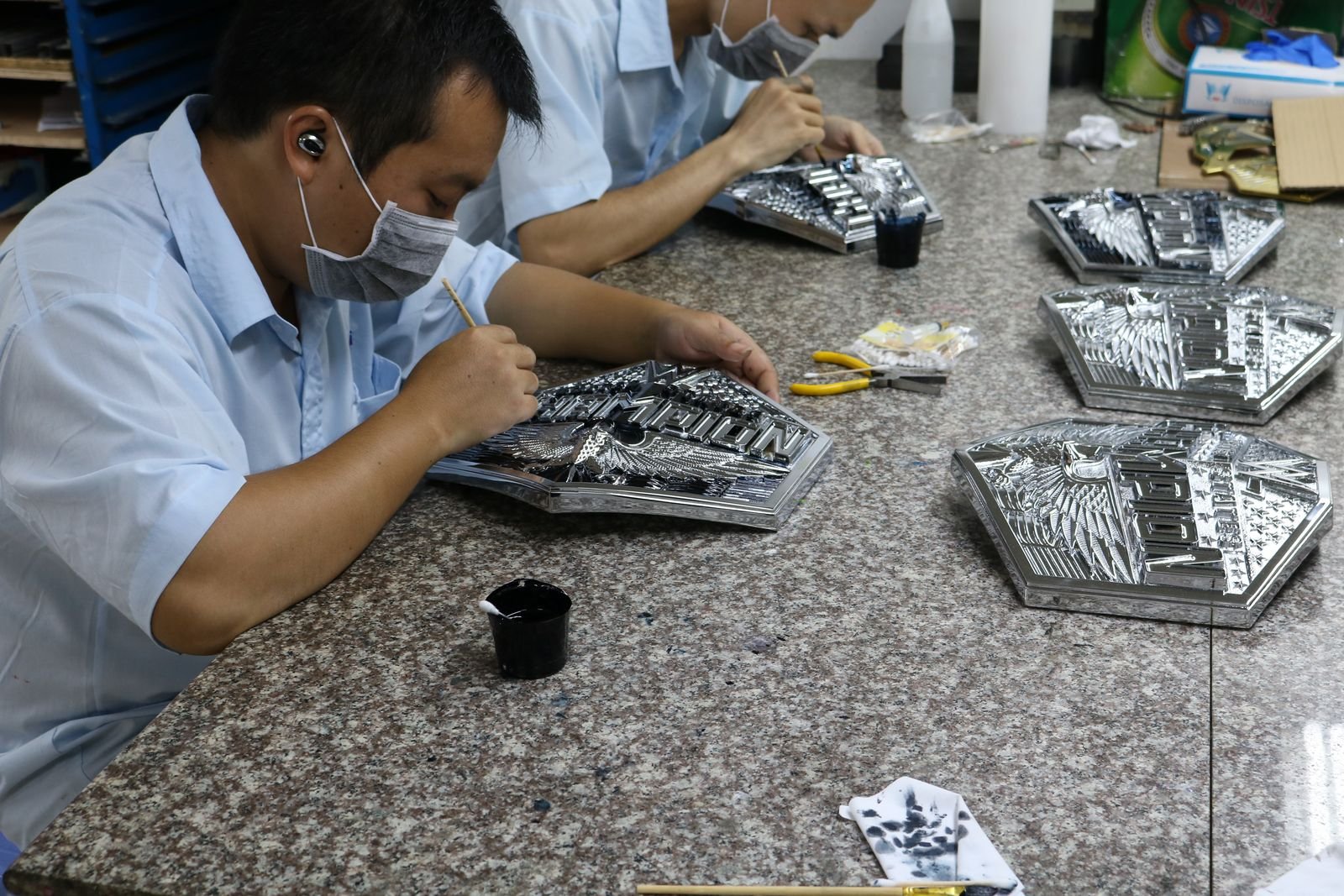
The golden sample is the approved physical reference for the production run. It is the piece that every subsequent inspection is compared against, and it is the reference when a dispute arises about whether the delivered goods match what was ordered.
For a golden sample to do that job it has to be handled in a particular way. Label it with the order reference, the sample stage, the artwork version and the date of approval. Do not use it as a sample for anything else afterwards, because a golden sample that gets swapped or re-worked stops being a reference. And either send it with the goods to the inspection point or have it produced again to the same specification, because a reference that only exists in a photograph is not a reference.
Most factories can reproduce a golden sample from the same tooling and material, and it is worth asking for that in writing. It removes the most common reason a re-order does not match the original.
The food contact question: what evidence to ask for before you approve
If a stopper is going into a bottle, the compliance position is part of the approval, not a separate administrative task that follows it. The question a buyer should be able to answer before signing is simple: on what basis is this material cleared for contact with the product it touches?
In the United States, the relevant route is the food contact substance framework in Part 170 of Title 21 of the Code of Federal Regulations. Subpart D of Part 170 is the premarket notification section, covering sections 170.100 through 170.106. The first of those provisions sets out the rule that matters most for a buyer. Section 170.100(a) provides that a food contact notification is effective for the food contact substance manufactured or prepared by the manufacturer or supplier identified in the notification, and that if another manufacturer or supplier wishes to market the same food contact substance for the same use, that manufacturer or supplier also has to submit a notification of its own.
That last point has a direct procurement consequence. The clearance belongs to a specific manufacturer or supplier for a specific substance. It does not travel automatically. So the evidence you ask for is not a general assurance that the material is food safe; it is a document that identifies the supplier and the substance your order will use, and confirms that the notification is effective for that supplier. A generic certificate from an unnamed source is not the same thing, and the difference becomes important the first time you change supplier.
Three further provisions matter. The notification has to contain the information described in section 170.101, so a complete document counts rather than an extract. Any material in the submission in a foreign language has to be accompanied by an English translation verified as complete and accurate, which matters when the supplier’s file comes from outside the United States. And there are cases where a notification is not the route: FDA may choose not to accept one for a use subject to a regulation in Parts 173 through 189, or for a use exempt under the threshold of regulation process, and a petition may be required where the use raises the cumulative dietary concentration to a stated level or where a carcinogenicity bioassay exists that FDA has not reviewed.
Indirect additives are handled separately. Section 174.5 of Part 174 provides that regulations prescribing conditions under which food additive substances may be safely used are predicate usage under conditions of good manufacturing practice, with good manufacturing practice defined by the restrictions the section sets out. A stopper that reaches the wine only through another component sits in this category rather than the direct contact one, and the evidence you need is different.
Europe works on a parallel but separate basis. Commission Regulation (EC) No 2023/2006 on good manufacturing practice for materials and articles intended to come into contact with food applies to articles intended to be brought into contact with food, to articles already in contact with food and intended for that purpose, and to those that can reasonably be expected to be brought into contact with food or to transfer their constituents to food under normal or foreseeable conditions of use. Its recitals add that all business operators should operate an effective quality management of their manufacturing operations adapted to their position in the supply chain.
For a buyer, the practical list of documents to request before approving the sample is short: the food contact notification or equivalent clearance that names your actual supplier and the actual material in your order, the manufacturing and hygiene statement covering the production site, the composition or material declaration for the sealing element, and a statement of any restrictions on use. Our article on food contact compliance for metal souvenirs sets out the wider framework, including the labelling obligations that sit alongside the material clearance.
What the label and the package have to carry
Approval is also the moment to check the labelling, because labelling is written and printed per market and it is easy to change late.
The United States framework is the Federal Food, Drug, and Cosmetic Act. Section 343 of Title 21 sets out when a food is deemed to be misbranded. Among the provisions a stopper programme touches: a food is misbranded if its labelling is false or misleading in any particular; if its container is so made, formed or filled as to be misleading; if, in package form, it bears no label containing the name and place of business of the manufacturer, packer or distributor and an accurate statement of the quantity of the contents; and if any word, statement or other information required by the chapter does not appear on the labelling with such conspicuousness as to be likely to be read and understood.
Applied to a wine accessory, that gives a concrete set of checks. The packaging has to name the party responsible. The quantity statement has to be accurate, which for a gift set means the count of items rather than a generic description. And required information has to be legible, which means enough contrast and space on the artwork rather than small type on a busy background.
The same discipline applies in export markets. The European rules require the producer’s identity and contact details on the product or its packaging, and for a multi-market programme the practical test is whether one artwork works everywhere or whether you need a version per market. That is a decision to make at artwork freeze.
The physical checks made at the bench
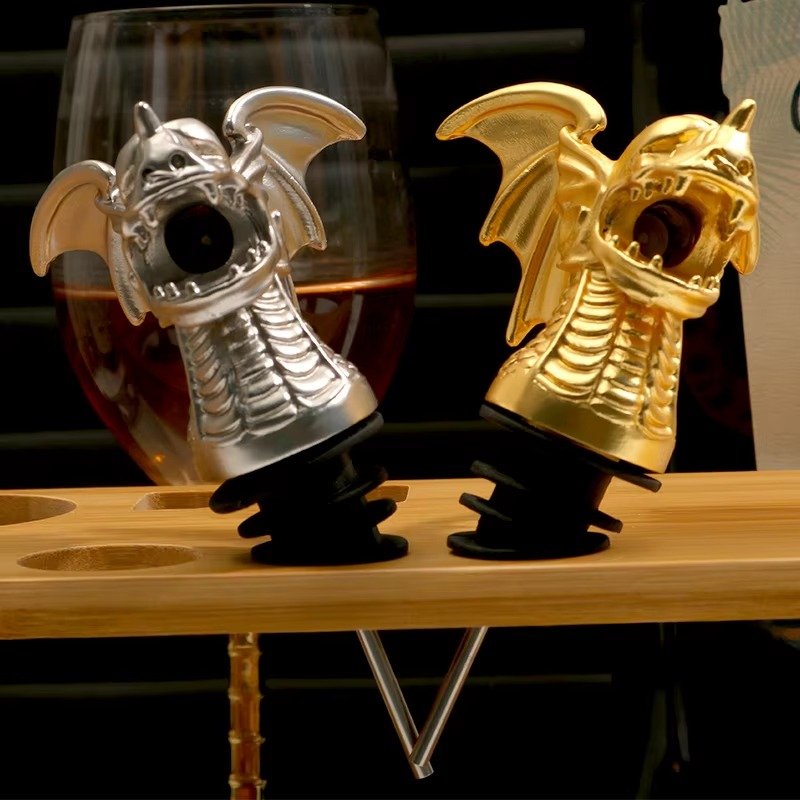
These are the checks a good inspector performs on the sample itself. They are worth doing yourself before signing, because a signed approval is a statement that these were checked and passed.
Fit and function. The assembled stopper has to seat on the bottle it was ordered for, and the seal has to hold. The seating check is visual: the body should sit square on the bottle finish without rocking, and the contact between the seal and the bottle should be continuous. The hold check is functional: the bottle is inverted or shaken the way the programme will actually be handled, and the seal is observed. If the programme ships filled, the hold check has to be done on a filled bottle, because the liquid load changes how the seal behaves.
Dimension. The dimensions that matter for a stopper are the ones that affect function: the body diameter across the points that could interfere with the bottle finish, the seal groove or seat, and any dimension that has to align with the packaging. These are checked against the drawing with an ordinary measuring instrument, and the general casting tolerance rules apply to everything the drawing does not call out. Our article on the manufacturing route for custom wine stoppers covers how that tolerance system is normally specified.
Finish and colour. The finish is compared against the approved reference, under consistent lighting, at the same angle. Colour is judged visually, and the only reliable reference is a physical sample or an agreed swatch, because colour names are not a standard and screens are not light sources. The check worth adding catches most late complaints: run a finger across the colour field and look for a burr, a sharp edge where the fill meets the metal, or a raised lip. That is a functional defect, not a cosmetic one, because it is what the customer feels.
Decoration and logo. The artwork is compared against the approved version, for legibility and position rather than pixel perfection. A logo re-scaled to fit a recess will usually have changed its proportions slightly, and that is a decision for the buyer rather than a production fault.
Assembly and surface. The parts are checked for assembly fit, sharp edges, burrs and a consistent surface. On a plated piece, look at the contact zone where the plating runs out at the part line, because that is where a plating fault becomes visible.
The approval record
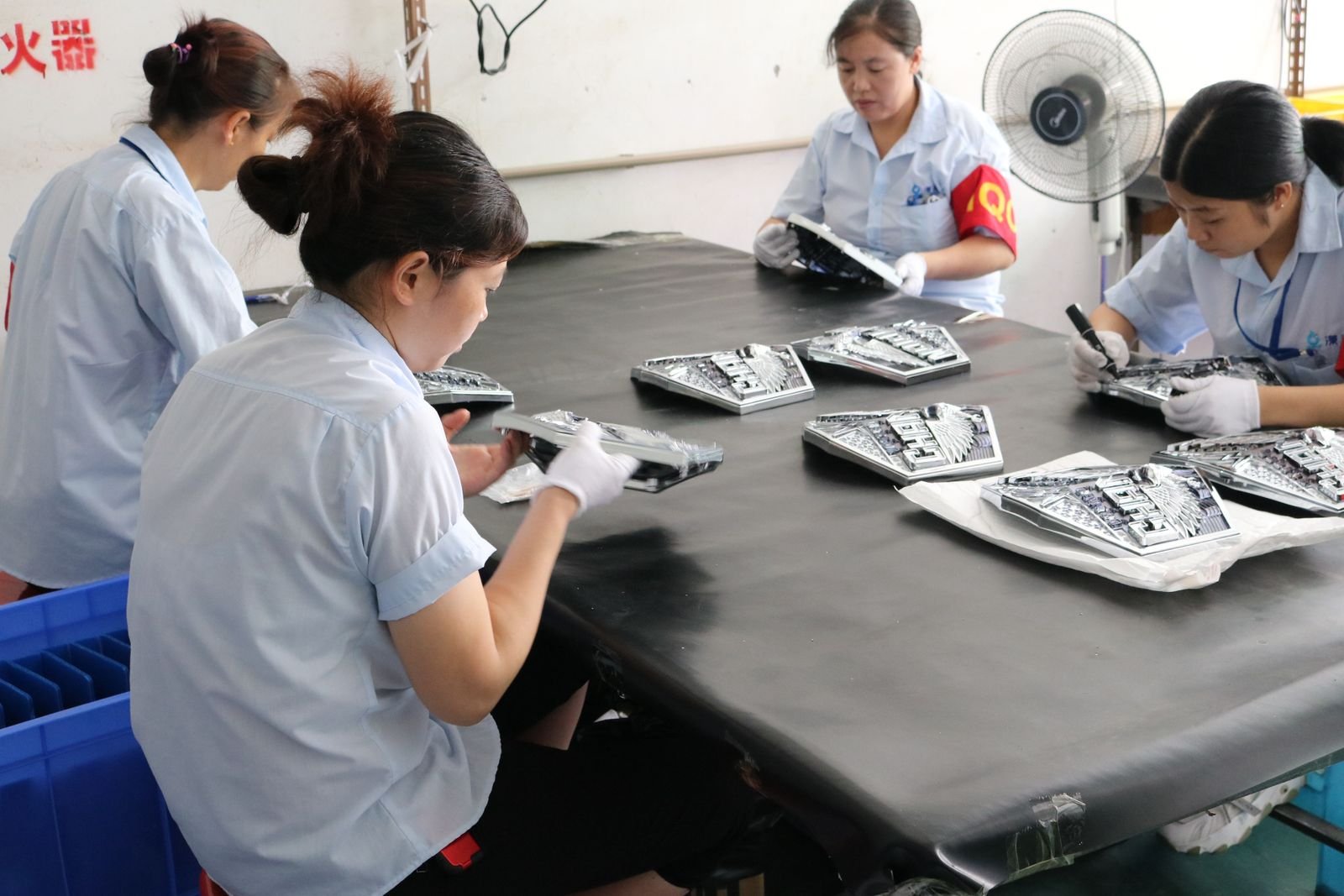
The approval record is what makes a repeat order safe. It is short, and it is worth insisting on in writing.
| Row | What it records | Why it is there |
|---|---|---|
| Sample reference and stage | Which sample, and what it proves | Stops a design sample being treated as a production standard |
| Artwork and drawing version | The exact file version approved | Artwork moves; an unnamed version cannot be enforced |
| Body and seal specification | Material, construction, seal specification | Separates the two parts in any later dispute |
| Finish and colour reference | Finish route and the physical reference used | Colour cannot be approved from a written name |
| Food contact evidence | The document and the supplier it names | The clearance belongs to a named supplier, not to a generic claim |
| Labelling and packaging | Label content, languages, package format | Labelling is market specific and is easy to miss |
| Quantity, delivery date, packaging | The commercial terms approved | Ties the physical reference to an order |
| Signature and date | Who approved and when | Identifies the person who carries the cost of a difference |
Two rows are skipped most often. The artwork version is skipped because the file on the desktop has no version in its name. The food contact evidence row is skipped because the clearance feels like a compliance matter handled elsewhere. Both cause arguments at the worst moment, which is the delivery of the first production run.
When the sample changes and when approval has to be repeated
A sample approval covers the specification it was given against. If the specification changes after approval, the approval no longer applies, and the change has to be re-approved even when the change seems minor. This is not an administrative nicety; it is how a quality system stays honest.
The current quality management systems requirements standard is ISO 9001:2026, the sixth edition, published in 2026 and replacing the 2015 edition. It requires the organisation to determine what it needs to control, and control of changes to product and service provision is part of that system. In a wine stopper programme the practical reading is straightforward.
Changes that normally require a fresh sample and a fresh approval: a change of the sealing element, including a change of supplier for it; a change to the body alloy; a change to the plating sequence or the colour process; a change to the packaging format; a change to the artwork that alters the body, the seal or the logo; and a change to the production site.
Changes that usually do not require one: a quantity increase within the same specification, a change in the delivery schedule, or a change to the outer shipping carton that does not touch the product or its packaging.
The practical discipline is to record changes in the order record as they happen and to decide at that moment whether the golden sample still describes the product. A programme that re-runs approval after every change is slow; one that never re-runs it eventually ships something nobody approved.
The sample release sign-off sequence
The table below puts the approval in the order the steps happen. It is the document to send to whoever has to sign, because it makes clear who decides what.
| Step | Action | Decides | Evidence produced |
|---|---|---|---|
| 1 | Receive and log the sample with its stage label | Project lead | Sample log entry with the stage named |
| 2 | Check the food contact and labelling file against this order | Quality or compliance reviewer | File check against the named supplier and market |
| 3 | Bench checks: fit, function, dimension, finish, decoration | Inspector | Inspection record, pass or fail per item |
| 4 | Record the specification the sample represents | Project lead | Specification sheet with artwork and drawing version |
| 5 | Approve, reject or approve with conditions | Named approver | Signed approval record |
| 6 | Retain the golden sample against the order | Factory | Labelled sample or a written reproduction commitment |
| 7 | Release production against the approved specification | Project lead | Production release note |
Where to take the programme next
A stopper order is decided by three documents: the artwork, the specification and the approval record. Align them before production and the programme runs on a schedule instead of a negotiation.
To take a specific stopper programme through sampling and approval, send the artwork, the quantity and the target date to our team at the custom wine stoppers for wineries page, or email sales@kingtopgift.com. We will come back with the decisions your current brief leaves open — body, seal, finish, packaging and market — and a sample plan that tells you what each sample proves.