A logo on a metal keychain is not a picture of a logo. It is a decision about tooling, a compliance obligation attached to whoever puts the brand name on the product, and a claim about who made the goods that a regulator may ask you to evidence. Buyers who approach the marking step as a graphic choice tend to discover the other two parts late: that the mark they wanted cannot be produced by the process they assumed, or that putting the mark on the product made them the manufacturer in law. This guide covers how to choose between the marking routes that are actually available for a custom metal keychain, how to prepare artwork for each of them, and what changes legally the moment your brand name is physically on the part.

Six ways to mark a metal keychain, and what each one commits you to
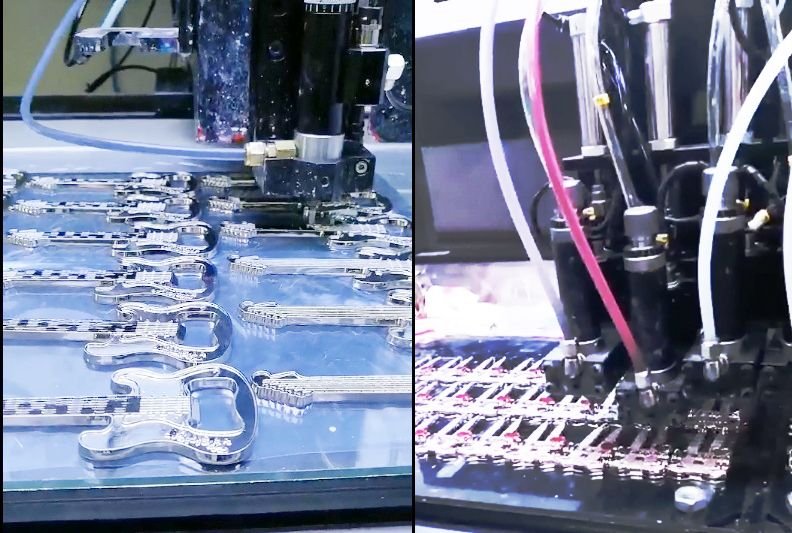
The confirmed marking methods for custom metal gift work at Kingtop are laser engraving, screen printing, embossing, debossing, moulded logo and enamel colour fill. Each of them places the brand in the metal in a different way, and the differences are not cosmetic. Three of them are subtractive or additive changes to the surface, two of them are changes to the tool itself, and one is a separate coloured material laid into a recess.
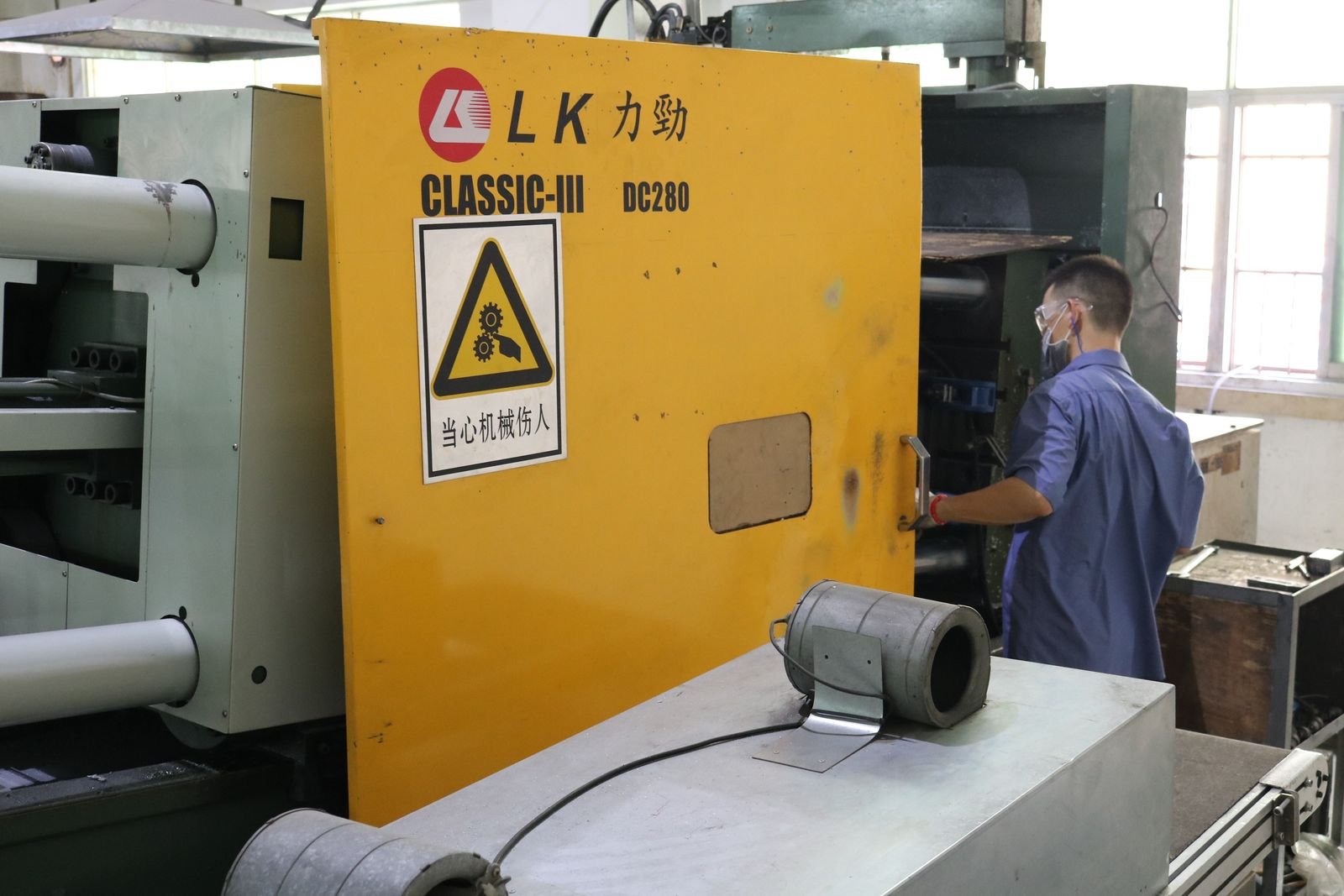
The distinction that matters most for a buyer is between a marking that lives on the surface and a marking that is part of the product. Screen printing and enamel colour fill put material on the part. Laser engraving, embossing and debossing change the surface of the part. A moulded logo is different again: it is formed by the cavity of the die, so it is a feature of the casting rather than an operation applied to it, which means it cannot be changed without a new tool.
| Method | How the mark is created | What it commits the programme to |
|---|---|---|
| Laser engraving | A focused beam removes material to expose the mark | The mark cannot be recoloured; on a plated part it exposes the base metal rather than adding colour |
| Screen printing | Ink is printed through a stencil and cured | Colour is limited to the ink chosen, and the surface must be flat enough to print cleanly |
| Embossing | The mark is raised from the sheet by pressing | A separate flat blank is required, so it applies to stamped rather than cast construction |
| Debossing | The mark is pressed into the sheet | The same flat blank constraint as embossing, and the mark reads by shadow |
| Moulded logo | The mark is formed in the die cavity | A new tool is required and every revision after that is a new tool cost |
| Enamel colour fill | Coloured enamel is placed into a recess and fired | The recess has to be cast, so the mark is tied to the tool and to the colour system |
Two consequences follow from that table. First, the marking method constrains the construction. A keychain with a stamped logo on a cast body is a hybrid, and it means the flat element and the cast element are two parts with their own fit and their own finishing. Second, the marking method constrains the artwork. Every process above has artwork rules that differ from each other, and artwork prepared for one of them will fail in another. Our article on custom metal keychain types covers the attachment and construction choices that sit underneath the marking decision, and they have to be settled together.
Preparing artwork for the process you have chosen
The single most common cause of a rejected first sample is artwork that was drawn for a screen and handed to a factory that was going to cast it. Each marking route expects a different kind of file, and asking the factory to convert a logo they were not given is asking them to redesign your brand.
Laser engraving wants a closed vector outline with no fill, and the line width has to survive the depth of the cut. A hairline in a logo disappears; a very fine detail in a small keychain is more likely to be lost than reproduced. Screen printing wants solid shapes, and it wants them separated by colour, because each colour is a separate screen and a separate pass. Embossing and debossing want a shape that can be pressed, which excludes shapes that would tear or that have nowhere for the metal to move. Enamel colour fill wants a recess with a defined boundary and a separate colour reference for each colour. A moulded logo wants the simplest possible silhouette, because every internal void in the mark becomes a core in the tool and every core is a cost and a risk.
Two habits remove most of the rework. The first is to ask for the factory’s artwork template for the chosen process before the artwork is finalised, and to work inside it rather than delivering a finished file and asking for it to be adapted. The second is to treat the artwork as a versioned document with a revision number, because a logo that changes after the tool has been cut is one of the most expensive mistakes in the whole programme.
Where the mark goes, and why position changes the outcome
Marking position is not a design decision only. On a keychain the position determines whether the mark interferes with the attachment, whether it lands on a surface that will be handled, and whether the marking process can physically reach the area.
A logo centred on a flat charm face is the easy case, and it is not the usual case for a promotional keychain, where the attachment, the split ring and the shape of the body all compete for space. A mark that crowds the attachment is hard to read at a distance and risks being distorted by the stamping of the attachment itself. A mark that runs into a radius loses definition, because the engraving depth has to stay consistent across a curved surface and a moulded relief has to be drafted so that it releases from the die. A mark placed where the part is handled will wear first, and for a plated finish that is a visible change of colour rather than a scratch.
There is also a question of consistency across a range. A brand that orders a keychain, a bottle opener keychain and a luggage tag with the same mark will get three different readings of the mark unless the proportion of the mark to the face is stated. The workable rule is to specify the mark as a proportion of the face, or as a maximum width in millimetres, and to let the factory apply it consistently across the range. That is a small decision with a large effect on how a collection looks when it is placed side by side on a shelf or in a photograph.
What changes legally when your brand is on the product
This is the part that surprises buyers. If you market a product under your own trade mark, you do not remain a neutral buyer of someone else’s product. Under the EU General Product Safety Regulation, Regulation (EU) 2023/988, the general safety requirement in Article 5 states that economic operators shall place or make available on the market only safe products, and Article 9 sets the obligations of manufacturers: manufacturers shall ensure that their products have been designed and manufactured in accordance with that general safety requirement, and before placing products on the market they shall carry out an internal risk analysis and draw up technical documentation containing at least a general description of the product and its essential characteristics relevant for assessing its safety. Article 16 adds that a product covered by the regulation shall not be placed on the market unless there is an economic operator established in the Union responsible for the tasks set out in Article 4(2) and (3) of Regulation (EU) 2019/1020. The regulation is published by the Publications Office of the European Union at the official ELI entry for Regulation (EU) 2023/988.
Article 19 is the one that connects most directly to branding, because it governs distance sales. Where economic operators make products available online, the offer must clearly and visibly indicate the name, registered trade name or registered trade mark of the manufacturer, together with the postal and electronic address at which they can be contacted, and where the manufacturer is not established in the Union it must indicate the details of the responsible person. A brand selling its own branded keychain online therefore has to be able to name itself as the manufacturer and be reachable, and the physical mark on the product is what makes the connection between the product and that name visible to whoever handles it.
The practical reading for a branded keychain programme is that the factory and the brand both have obligations, and they are different ones. The factory is responsible for the manufacturing, and for providing the documentation the brand needs in order to carry out its own risk analysis and to hold the technical file. The brand is responsible for the product as placed on the market under its name, for the risk analysis and the technical documentation, and for having an economic operator in the Union if it sells into the Union market. The most useful thing a buyer can do at the enquiry stage is ask the factory for the product description, the material and finish declarations, the inspection records and the batch identifiers that will form the basis of that file, and agree in advance which party holds the technical documentation after the order.
Trademark timing, because the mark on the part is dated
Branding a product is a public use of the trade mark, and it is a dated one. The United States trademark office gives a practical benchmark that is worth holding on to when a launch is being planned: the USPTO states that the registration process usually takes 12 to 18 months, with the application moving through several stages, and it sets out the detail in its guidance on how long a trademark registration takes.
That timeline shapes the production schedule. Moulding or embossing a mark into metal produces physical evidence of the mark that cannot be undone cheaply, so the sensible sequence is to establish the trademark position first, then produce. For a brand selling in more than one market, the international route is usually worth assessing early, and the WIPO Madrid System is the mechanism most buyers will encounter for filing across multiple contracting parties in a single procedure rather than through separate national applications. The Madrid System is described at the WIPO Madrid System pages.
Two questions belong in the purchase order as a result. First, what happens to the tool and to any plated or painted goods if a trademark claim is raised, and whether the factory will hold a buffer of unfinished stock. Second, whether the factory will indemnify, and on what terms. Neither is unusual to ask, and a supplier that answers both in writing is telling you that it has handled branded production before.
When the product is a children’s product, the mark can create a new risk
There is one category of keychain where the marking decision has an unexpected consequence, and it is the promotional keychain given away to children. Under United States rules, small parts are regulated as a physical test rather than a judgement call. 16 CFR Part 1501 of the Code of Federal Regulations covers toys and other articles intended for use by children under three years of age which present choking, aspiration or ingestion hazards because of small parts, and Section 1501.4 sets out the size requirements and the test procedure. The requirement is that a toy or other children’s article subject to the small parts rule must not be small enough to fit entirely within the cylinder with the dimensions shown in the figure, when tested in accordance with the procedure in the section. The regulation is published at 16 CFR Part 1501 in the Electronic Code of Federal Regulations.
The relevance to branding is direct. A charm on a keychain is a small detachable object by design, and a detachable charm on a promotional keychain distributed to children is exactly the kind of article the small parts rule addresses. The point is not that every promotional keychain is a children’s product, and not that every charm fails the test. The point is that the decision about whether the programme is aimed at children, and what happens to a detachable charm, has to be made before the shape is fixed, and it has to be recorded. A brand that has not asked the question cannot honestly answer it later.
The practical questions are short. Is the keychain intended for children under three years of age. Is any element detachable, and if so how securely. Would the assembly be offered as a children’s product in any market. And has the finished assembly, rather than the loose charm, been assessed. The last one matters because a component that passes the cylinder test can still fail when assembled, and because the decision belongs to the party that places the product on the market.
The quality system question, and what it does for branded goods
Buyers ask about ISO 9001 and are right to, but the answer needs sharpening for a branded programme. The current standard is ISO 9001:2026, the sixth edition published in 2026, which is a requirement for a quality management system rather than a statement about the quality of any particular part. What it establishes is that there is a documented system, controlled processes, defined treatment of nonconforming output, and records that can be produced when something needs to be traced.
For branded goods, the records are the point. A brand that has to demonstrate, years later, that a particular batch was made to the approved specification and carried the approved mark needs records that link the packed carton to the production run and the artwork revision that was in use at the time. Three questions settle whether a factory can support that: whether the artwork revision in use on a batch is recorded on the batch record, whether the mark on the part is verified against that revision, and whether the finished goods carry a batch identifier that reaches back to the casting run. Those three answers are worth more to a brand owner than the certificate itself, and they are the answers to insist on in the quotation.
| Programme question | Why it matters for branded keychains | What to put in the purchase order |
|---|---|---|
| Who applies the mark | Determines whether the mark is on the surface or in the tool | Named method, and the artwork revision it is applied from |
| Mark position and proportion | Decides readability, wear and consistency across a range | Position, and a maximum width or proportion per face |
| Artwork control | A change after the tool is cut is a new tool cost | Versioned artwork, and a change control route for revisions |
| Batch identification | Links the goods to the production run and the mark revision | Batch identifier on the carton and in the records |
| Product documentation | Feeds the brand’s own risk analysis and technical file | Product description, material and finish declarations, inspection records |
| Detachable elements | May place the product inside a small parts regime | Statement of whether any element detaches, and how it is secured |
How to brief a marking programme so it runs once
A marking programme runs once when the brief separates the things that can be changed freely from the things that cannot. The freely changeable items are the mark position within a stated area, the ink or enamel colour, and the order in which the operations happen. The items that cannot be changed after the tool is cut are the mark shape, the mark proportion and the recess geometry for enamel fill. A brief that makes this split explicit avoids the two expensive conversations: the one where the artwork is rejected after the tool is cut, and the one where a batch arrives with the wrong mark because the revision number was not on the drawing.
The brief should carry the product and its construction, the marked faces, the method, the artwork files with their revision, the colour references, the batch identification requirement, the documentation the factory will supply, and the answer to the children’s product question. It should also carry the approval sequence: which sample approves the mark, what the master is, and what the record says.
For the wider context of how a branded metal order runs, our custom metal keychain manufacturing guide covers the route from a 3D file to an approved sample, including where logo application changes the tooling rather than only the artwork. Our metal keychain plating options guide covers the finishes that a mark has to be judged against, which is a different question from how the mark is applied.
Send the artwork, the quantity per item, the target market and any dates you are working to, and we will return the marking method that suits the construction, the artwork template we need, and the approval sequence. Write to our team or to sales@kingtopgift.com, and we will tell you if your mark cannot be produced by the route you have in mind rather than discovering it on a sample. Custom keychains are covered in our custom metal keychains range, and a finished example can be seen in our enamel travel souvenir bottle opener keychain.