Personalized wine stoppers combine practical bottle resealing with custom branding, decorative design and gift presentation.
For wineries, corporate gift companies, retailers, souvenir brands and promotional projects, a wine stopper can be customized with a company logo, name, artwork, mascot, landmark or completely original shape.
The customization method matters because engraving, enamel, printed artwork and 3D metal casting produce very different visual results.
This guide explains the most common personalization methods, materials, finishes, packaging options and manufacturing steps so buyers can choose the right solution for their project.
For a broader introduction to wine stopper types and materials, see our Wine Stoppers Guide.
What Are Personalized Wine Stoppers?
Personalized wine stoppers are bottle closures customized with branding, artwork or decorative elements created for a specific customer or project.
Instead of using a standard generic stopper, buyers can personalize different parts of the product, including the decorative top, logo, shape, color, metal finish and packaging.
A personalized stopper may feature a simple engraved company logo, while a more complex design may use a fully three-dimensional zinc alloy sculpture.
For branded projects, personalized logo wine stoppers are a practical option for combining company identity with a reusable wine accessory.
Common customization ideas include company logos, winery names, initials, event dates, mascots, landmarks, animals, symbols and promotional messages.
For B2B buyers, the goal is often broader than personalization alone.
The stopper may become part of a winery merchandise collection, corporate gift program, souvenir product line or branded retail set.
How Can Wine Stoppers Be Personalized?
Different personalization methods are suitable for different artwork and product positioning.
A simple logo does not necessarily require the same production method as a detailed animal sculpture or colorful brand emblem.
Laser Engraving
Laser engraving is suitable for names, text, simple logos and line artwork.
It works particularly well on flat or slightly curved metal surfaces.
Engraving creates a clean and permanent appearance without requiring multiple colors.
Typical applications include corporate logos, winery names, initials, dates and event messages.
Buyers who want a minimalist or professional result may prefer engraving over highly decorative techniques.
For projects requiring a flat surface specifically designed for engraving, an engravable wine stopper can provide a practical base for customization.
Molded and Raised Metal Logos
A logo can also be incorporated directly into the metal structure.
Instead of applying the design after production, the logo becomes part of the mold.
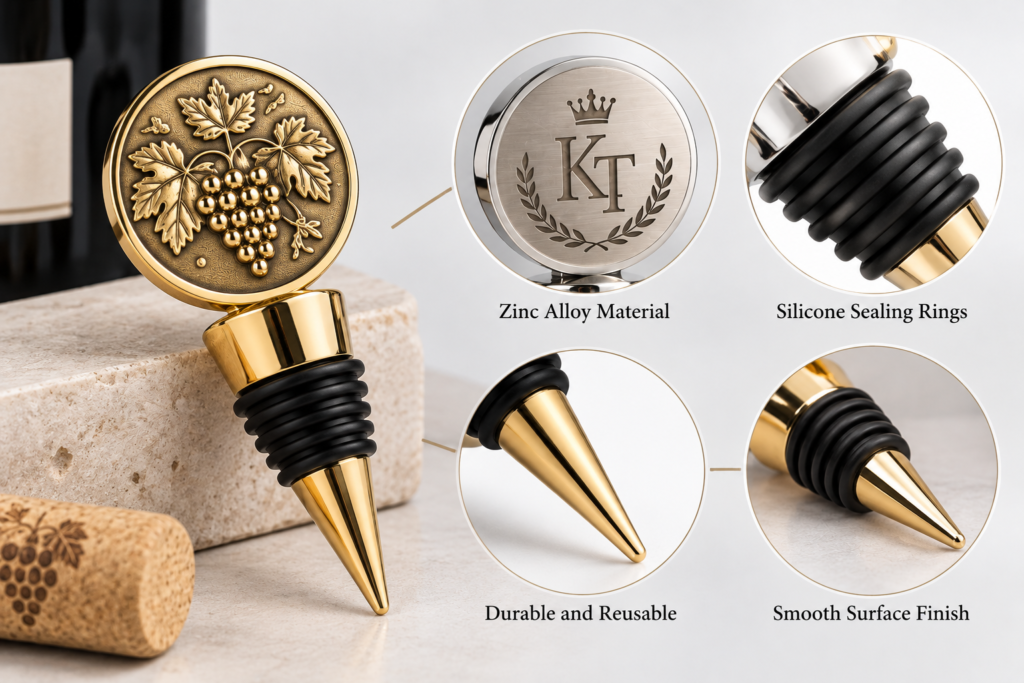
This method is suitable for raised logos, recessed logos, emblems and decorative relief.
Molded designs can provide more depth than simple engraving and are particularly useful when the stopper top needs a distinctive branded appearance.
For larger orders, mold-based production also helps maintain consistent shape and detail across the batch.
Soft Enamel and Hard Enamel
Enamel is useful when color is an important part of the brand identity.
Colored areas can be placed inside recessed metal sections, allowing logos and decorative graphics to combine metallic borders with brand colors.
Soft enamel usually provides more visible metal relief, while hard enamel creates a smoother finished surface.
Enamel is commonly used for logos, emblems, flags, mascots and colorful promotional designs.
Pantone references can be used when closer color consistency is required.
Printed and UV Printed Designs
Printing is another option for artwork containing fine graphic details, gradients or multiple colors.
It can be useful when the design would be difficult to reproduce through enamel alone.
Printed designs are particularly suitable for flat decorative tops.
Depending on the material and artwork, printing may be combined with metal plating or other surface treatments.
2D, 2.5D and 3D Custom Shapes
Personalization does not have to stop at the logo.
The entire stopper top can be developed into a custom shape.
A 2D design uses a primarily flat profile.
A 2.5D design introduces raised or recessed depth while maintaining a relatively simple structure.
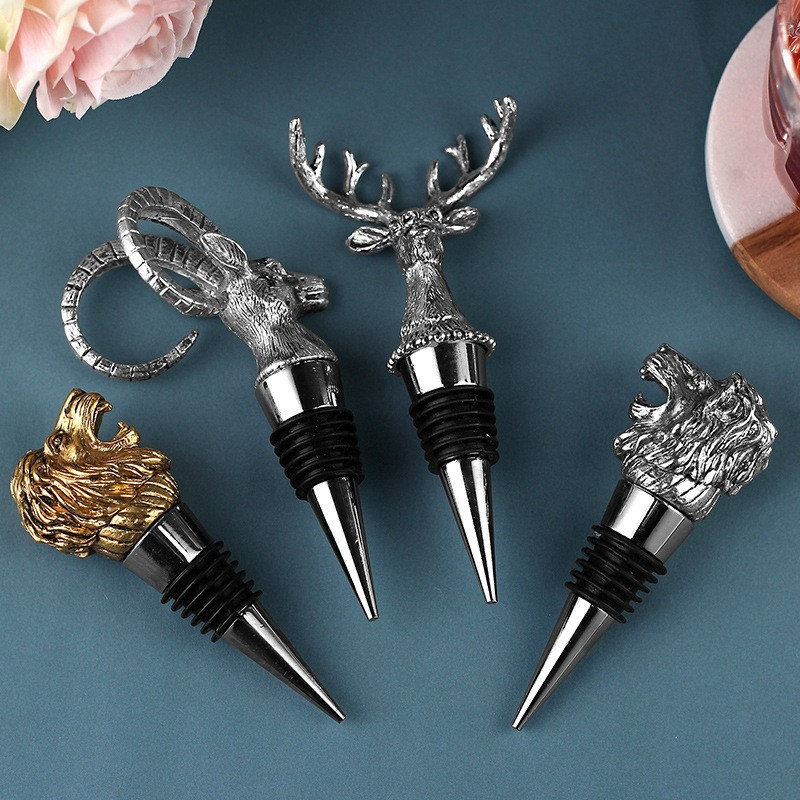
A full 3D design can reproduce animals, buildings, landmarks, mascots and sculptural objects from multiple viewing angles.
For complex shapes, zinc alloy die casting is often one of the most practical manufacturing methods.
Engraved vs Molded vs Enamel Wine Stoppers
The best customization process depends on the artwork.
| Method | Best For | Color | Depth | Typical Applications |
|---|---|---|---|---|
| Laser Engraving | Text, names, simple logos | No | Low | Corporate gifts, wineries, events |
| Molded Logo | Logos, emblems, symbols | Optional | Medium | Branded merchandise |
| Soft Enamel | Color logos and graphics | Yes | Medium | Promotional and souvenir products |
| Hard Enamel | Premium smooth color designs | Yes | Medium | Branded gift collections |
| Printed Design | Detailed artwork and graphics | Yes | Low | Promotional products |
| 3D Die Casting | Animals, landmarks, sculptures | Optional | High | Souvenirs, premium gifts, mascots |
For example, a winery looking for a simple logo on a polished metal top may choose engraving.
A tourism company developing a landmark souvenir may instead require full 3D die casting.
Materials Used for Personalized Wine Stoppers
The decorative top and the sealing structure do not always use the same material.
This is important because the visible decorative section determines much of the product’s appearance, while the lower section is responsible for fitting the bottle.
Zinc Alloy
Zinc alloy is especially suitable for personalized decorative wine stoppers.
It can be die-cast into complex shapes while maintaining relatively fine surface detail.
This makes it useful for animal figures, landmarks, mascots, logos and sculptural designs.
After casting, zinc alloy parts can be polished, plated, enamel-filled, painted or engraved.
For OEM projects requiring complex 2D or 3D designs, zinc alloy provides considerable design flexibility.
Stainless Steel
Stainless steel is often selected for modern and minimalist products.
It offers a clean metallic appearance and works well with polished or brushed finishes.
Stainless steel is generally better suited to simpler shapes than complex sculptural designs.
Brass
Brass provides a heavier feel and can be used for certain premium products.
Polished brass, antique brass and other decorative finishes can create a traditional or luxury appearance.
The appropriate material depends on design complexity, target price and product positioning.
Silicone and Rubber Sealing Components
Many decorative metal wine stoppers use silicone or rubber rings around the lower stopper section.
These flexible components help create contact with the bottle neck while the metal upper section provides the visual design.
When evaluating a personalized stopper, buyers should therefore consider both the decorative top and the sealing structure.
Custom Metal Finishes and Colors
Surface treatment can significantly change the appearance of the same design.
A single mold can produce very different visual styles depending on the plating and coloring process.
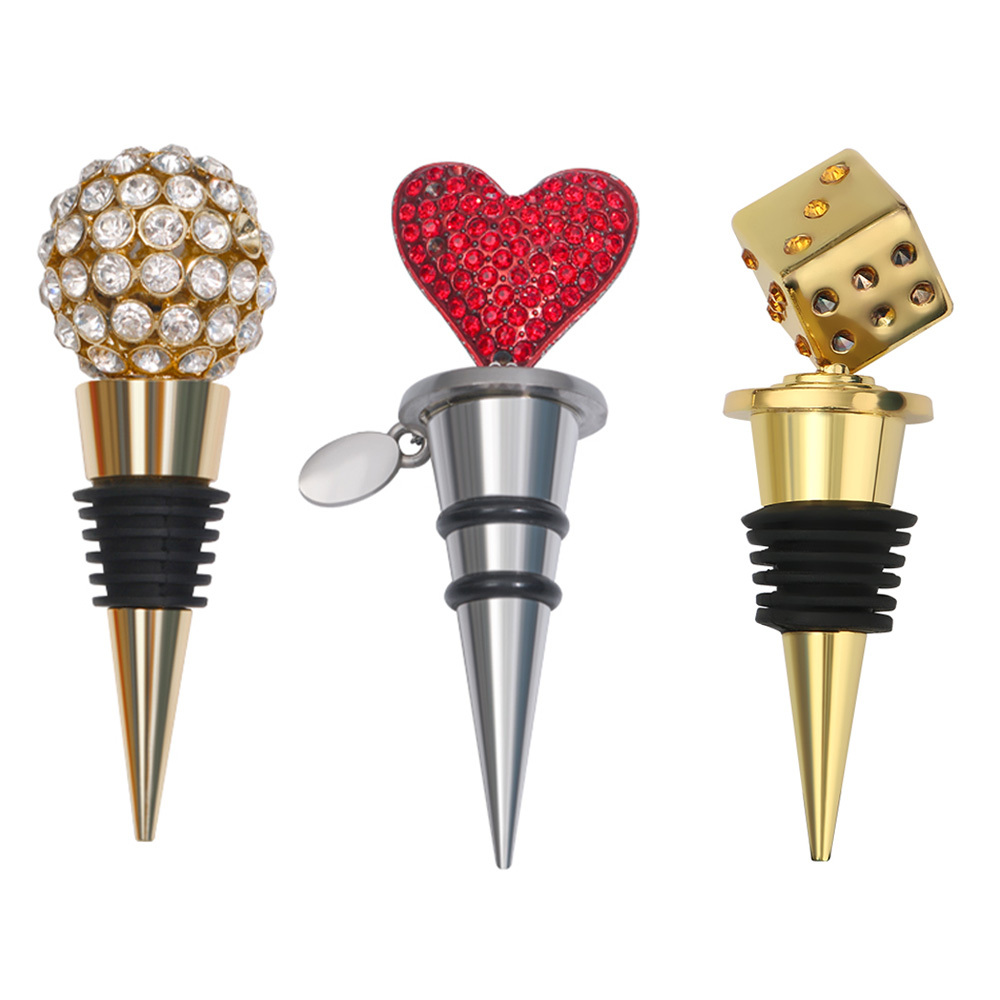
Common finishes include gold, silver, rose gold, antique brass, antique silver, antique copper and black nickel.
Polishing can create a brighter reflective appearance, while antique finishes emphasize recessed areas and surface detail.
Enamel or painted sections can also be added to introduce brand colors.
For B2B buyers, the finish should be selected according to the target market rather than appearance alone.
A modern winery may prefer polished silver or black nickel, while a souvenir brand may choose antique brass for a more traditional look.
Personalized Wine Stoppers for Different Projects
Personalized stoppers can serve very different markets.
Wineries and Wine Brands
Wineries can use customized stoppers for tasting rooms, wine clubs, merchandise collections and branded gifts.
Common designs include winery logos, vineyard symbols, grape motifs and representations of winery buildings.
A reusable branded stopper can remain with the customer after the wine has been consumed, extending the life of the branding.
Corporate and Promotional Gifts
Companies can add logos, campaign graphics or event information to wine stoppers.
They can be distributed individually or combined with other wine accessories in gift packaging.
Metal construction and customized packaging can help position the product as a more substantial promotional gift.
Weddings and Events
Names, initials and event dates can be engraved or molded onto wine stoppers.
Depending on the order size, personalized packaging can also be developed for weddings, anniversaries and private events.
Souvenir and Tourism Programs
Landmarks, animals, cultural symbols and city icons can be converted into 2D or 3D metal stopper designs.
This allows the wine stopper to function as both an accessory and a collectible souvenir.
Retail Gift Collections
Retail buyers may develop seasonal, decorative or themed stopper collections.
Different plating colors and packaging styles can be used to create multiple products from related design concepts.
Hotels and Hospitality
Hotels, restaurants and hospitality groups may use branded stoppers in gift sets, VIP programs or promotional packages.
Custom Packaging Options
Packaging is especially important when personalized wine stoppers are intended for retail or gifting.
A standard stopper can be packed in a simple individual box, while a premium product may use a rigid presentation box.
Common options include individual printed boxes, rigid gift boxes, EVA inserts, foam inserts, velvet pouches and multi-piece wine accessory sets.
The packaging can also include the customer’s logo, brand colors and product information.
For gift projects, packaging and product development should ideally be considered together rather than treating packaging as a final step.
For example, a Custom Wine Stopper Gift Set may require the stopper, additional wine accessories and the internal box insert to be designed as one complete product.
What Artwork Is Needed for a Custom Wine Stopper?
Good artwork helps reduce unnecessary revisions during mold and sample development.
For logos and graphic designs, vector files such as AI, EPS or editable PDF are generally preferred.
Pantone references can be provided when specific enamel or printed colors are required.
For three-dimensional products, buyers can provide sketches, reference photos or 3D files if available.
If only a JPG, PNG or basic concept is available, the artwork can often be redrawn and converted into production-ready artwork before mold development.
Important information normally includes the desired logo or artwork, approximate product size, preferred material, plating finish, color requirements, quantity and packaging requirements.
The more clearly these details are defined at the beginning, the easier it is to evaluate manufacturability.
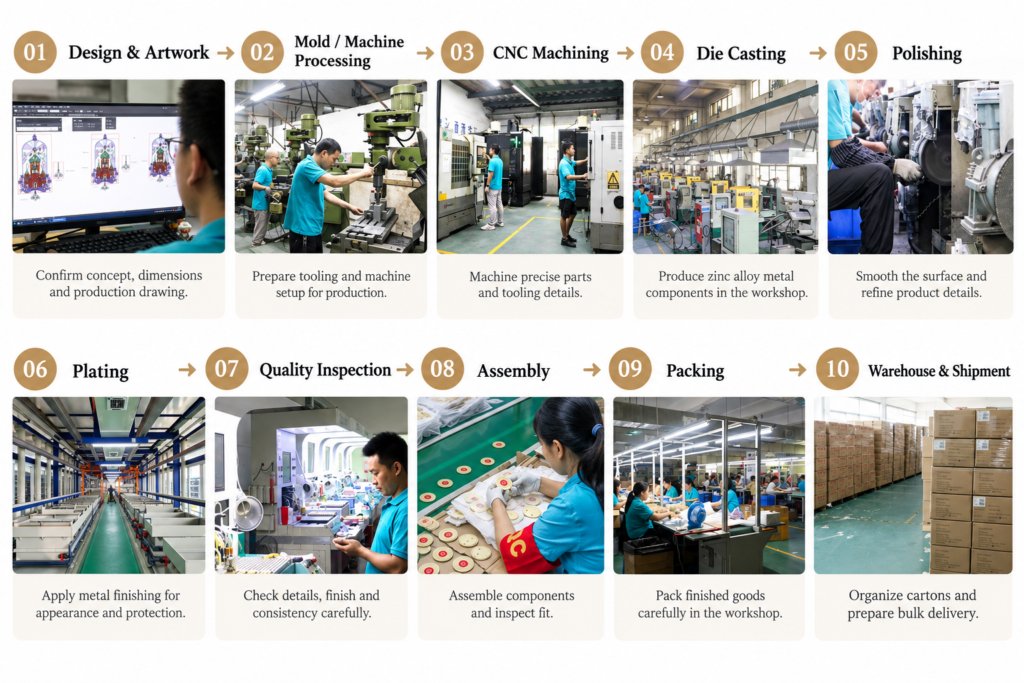
OEM & ODM Manufacturing Process
A typical custom wine stopper project moves through several manufacturing stages.
| Stage | What Happens |
|---|---|
| Artwork Review | Logo, shape, dimensions and product concept are checked |
| Design Development | Production artwork or 3D structure is prepared |
| Mold Development | Tooling is created for custom metal parts |
| Sampling | A physical sample is produced for approval |
| Die Casting | Zinc alloy or other metal components are produced |
| Polishing | Surfaces are prepared for finishing |
| Plating | Gold, silver, antique or other finishes are applied |
| Coloring | Enamel, painting or printed details are added |
| Assembly | Decorative top and stopper structure are assembled |
| Quality Inspection | Appearance, fit and assembly are checked |
| Packaging | Individual or custom gift packaging is added |
| Bulk Production | Approved specifications are repeated for the full order |
For buyers, the sample stage is particularly important.
It provides an opportunity to confirm dimensions, appearance, finish and overall product quality before mass production.
How to Choose the Right Personalization Method
The most expensive or complicated process is not always the best choice.
A simple engraved logo may look more appropriate for a premium corporate brand than a highly decorative 3D structure.
For text, dates and simple line logos, engraving is usually a practical solution.
For colorful logos, enamel or printing may provide better visual recognition.
For company symbols, badges and emblems, molded metal relief can create more depth.
For animals, landmarks, mascots and sculptural concepts, zinc alloy 3D casting usually offers greater freedom.
For premium gifting, the stopper design should also be considered together with plating and packaging.
The best approach is therefore to select the process according to the artwork, order quantity, target market and desired retail positioning.
Why Zinc Alloy Is Popular for Custom 3D Wine Stoppers
Among metal options, zinc alloy is particularly suitable for projects where shape and decorative detail are important.
Complex designs can be formed through die casting without requiring each piece to be machined individually.
This makes the material suitable for scalable OEM production.
After casting, different finishes and decorative treatments can be added to the same base structure.
A deer, landmark or mascot design, for example, may be produced in polished silver for one customer and antique brass for another.
This combination of shape flexibility and surface customization is one reason zinc alloy is commonly used for decorative metal wine accessories.
For complex decorative projects, 3D zinc alloy wine stoppers offer excellent flexibility for custom shapes, detailed relief and multiple plating finishes.
Personalized Wine Stoppers vs Standard Wine Stoppers
Standard wine stoppers are normally selected primarily for function and price.
Personalized stoppers add another layer of value through branding, design or presentation.
For a winery, the stopper can become branded merchandise.
For a corporation, it can become a promotional gift.
For a souvenir company, it can become a destination-specific collectible.
For a retailer, it can become part of a themed gift collection.
The value of customization therefore depends on how the product will be positioned after manufacturing.
Frequently Asked Questions About Personalized Wine Stoppers
Can wine stoppers be customized with a company logo?
Yes. Logos can be added through engraving, molding, enamel, printing or other decorative processes depending on the design and material.
Can personalized wine stoppers be made in custom shapes?
Yes. Metal stopper tops can be developed in 2D, 2.5D and full 3D structures.
Zinc alloy die casting is particularly suitable for complex custom shapes.
What is the best material for personalized wine stoppers?
There is no single best material for every design.
Zinc alloy is suitable for detailed decorative shapes, stainless steel works well for clean modern designs, and brass can provide a heavier premium feel.
Can wine stoppers be laser engraved?
Yes.
Flat or relatively smooth metal tops can be designed specifically for laser engraving.
This is useful for names, initials, text and simple logos.
What plating finishes are available?
Common options include gold, silver, rose gold, antique brass, antique silver, antique copper and black nickel.
Other finishes may be available depending on the project.
Can Pantone colors be used?
Pantone references can be used as a target for enamel, painting or printed areas.
Exact appearance can still vary slightly depending on materials and production processes.
Can you make custom packaging?
Yes.
Options can include individual boxes, printed boxes, gift boxes, EVA inserts, foam inserts, pouches and complete wine accessory gift sets.
What is the typical MOQ?
MOQ depends on the design, tooling, process and packaging.
For many customized metal projects, production is more economical at larger quantities because mold and setup costs are distributed across the order.
How long does sampling take?
For standard custom projects, a sample may often be completed in approximately seven days after artwork and mold requirements are confirmed.
More complex projects may require additional development time.
How long does bulk production take?
Production time depends on quantity, design complexity, plating, coloring and packaging.
A typical production schedule may be around 15–20 days after sample approval, although complex projects can take longer.
Create Personalized Wine Stoppers for Your Brand
Personalized wine stoppers can be developed from a simple engraved logo to a fully customized 3D metal design.
The right combination of shape, material, logo process, plating and packaging depends on the intended market and project requirements.
Kingtop supports OEM and ODM wine stopper projects from artwork and mold development through metal production, finishing, assembly, quality inspection and packaging.
For custom branding, bulk production and packaging options, explore our custom wine stopper manufacturing service.